Harold Percy BROWN
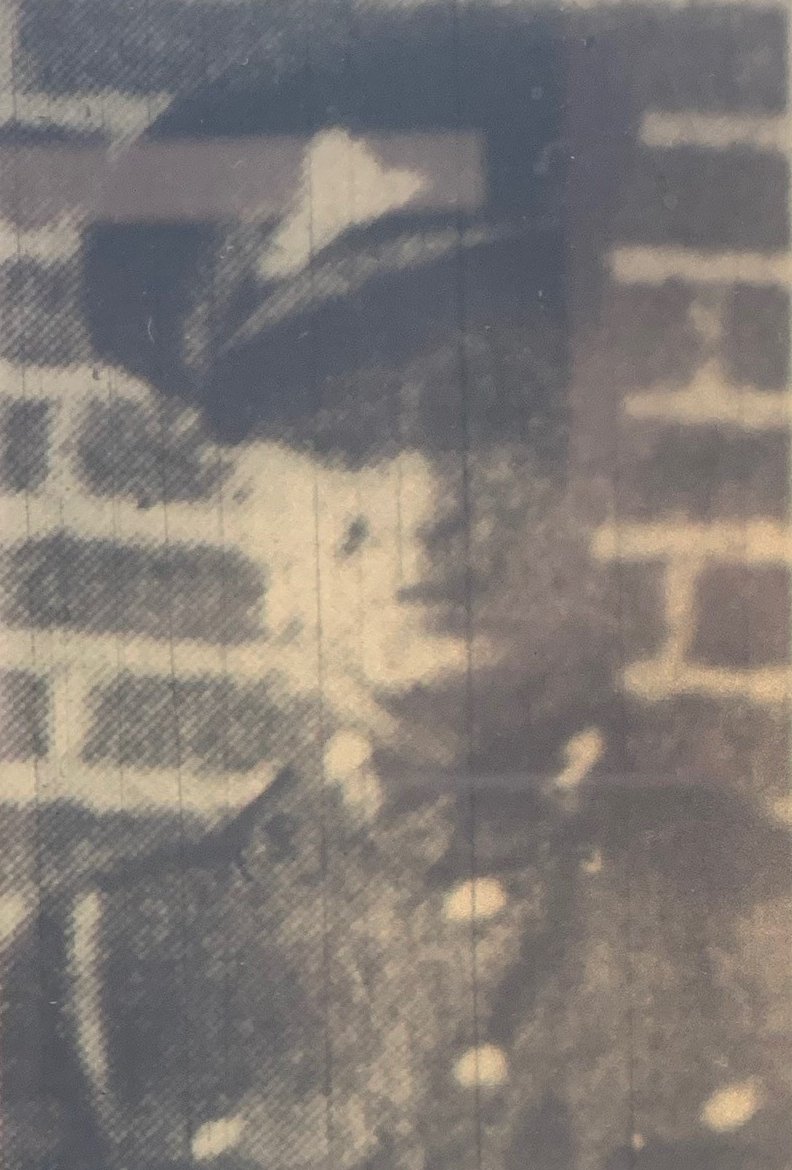
Image from the Oxford Mail, 16 July 1943.
Harold Brown was born in early 1921, the youngest of the three sons of Edith (née Packford) and her husband Percy, a gilder and publican. The family lived at the Star pub (sometimes called the Star of India) at 39 St Clement’s (now part of La Cucina restaurant). Percy died in December 1921, leaving Edith a widow of 41, with three young children. Harold was less than a year old.
After leaving school Harold worked for Greening & Co, Cabinet Manufacturers, in Randolph Street in East Oxford. By the time of the 1939 register, taken four weeks after the outbreak of war in September, his mother Edith had moved to 73 Sunningwell Road in New Hinksey. Harold’s oldest brother Jack, now a timber clerk, was living with her, but Harold, who was 18, was absent and so may have already enlisted.
Harold served as a Gunner in the 85th Anti-Tank Regiment of the Royal Artillery, which formed in September 1941 and did its training in Essex. In November 1941 the regiment left Britain, bound for Basra, Iraq, sailing via the Cape of Good Hope. They left Freetown, Sierra Leone, on 28 November and arrived in Durban, South Africa, on 18 December. In the meantime, on 7 December, the Japanese had attacked Pearl Harbour, and the next day invaded the Philippines, Malaya (Malaysia), Siam (Thailand) and Hong Kong. The 85th were diverted to Singapore to defend the British garrison there, arriving on 8 January 1942. From 14 January they operated from a rubber plantation near the palace of the Sultan of Johor Bahru, and on 8 February were sent to defend the airfield at the RAF base at Selatar. They evacuated the base the following day and withdrew to the residential district.
Singapore fell on 15 February 1942 and British and allied soldiers – including Harold Brown – were taken prisoner. They were initially housed in barracks at Changi, a former British army base, but many men, including Harold, were sent to Burma (Myanmar) or Siam (Thailand) and forced to help build the notorious 257-mile-long Burma Railway, also known as the ‘Death Railway’. The railway was built by thousands of Allied prisoners of war and other forced labourers in appalling conditions: men suffered from malnutrition, disease, physical cruelty, and back-breaking labour in tropical heat.
This photograph and short report on Harold was published in the Oxford Mail on 16 July 1943, but in fact he was already dead. He died of cholera on 9 July 1943, aged 21. He was initially buried at Nanchon Yai (now Chungkai), near the line of the railway, where there was a camp and a hospital built by prisoners of war. His body was reburied at the Kanchanaburi War Cemetery in October 1946. He is one of almost 7,000 men commemorated there. His grave bears the inscription: ‘Sleep on, my beloved one, in a far-off grave, till we meet again. RIP.’


Harold is also remembered on the Oxford City Second World War Roll of Honour, which is in the church of St Michael at the Northgate on Cornmarket in Oxford.
Harold’s mother Edith lived at 73 Sunningwell Road until her death in 1952.
Research by Siobhan Lancaster; with thanks to Lesley Dewhurst.