Albert Edward CARR
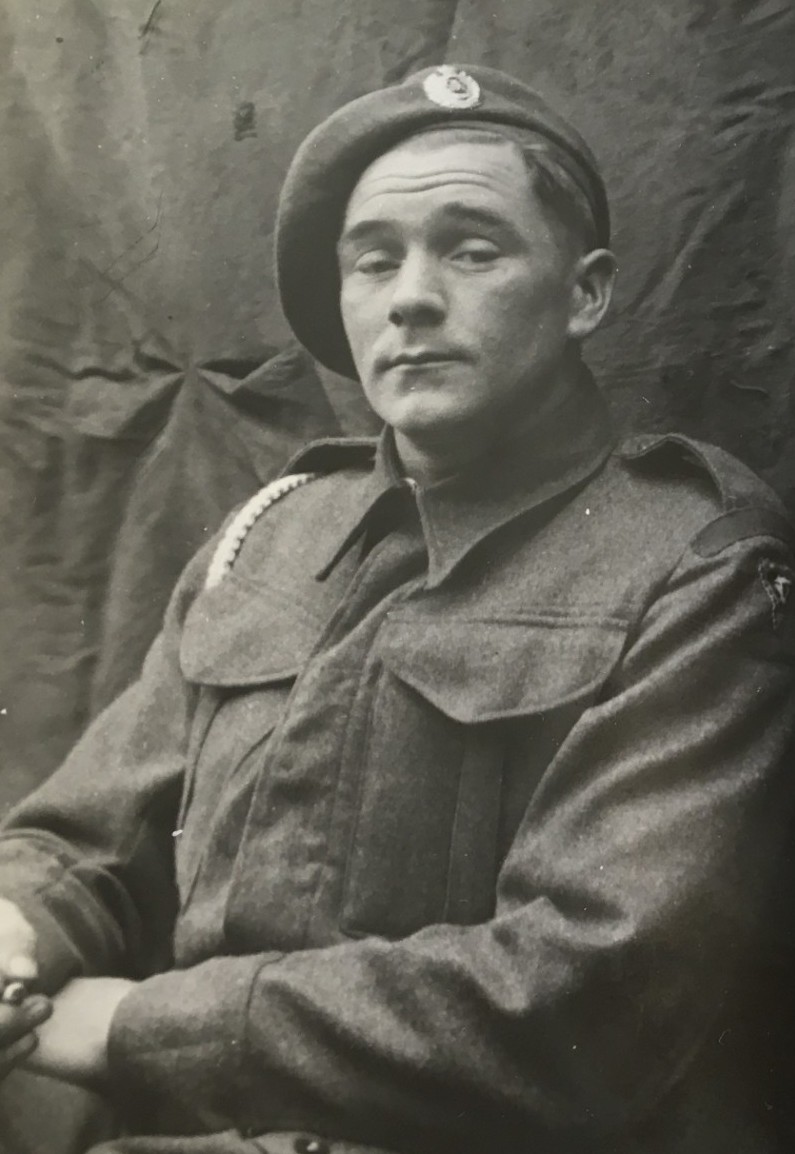
Image courtesy of Rhona Allen.
Albert Carr was born on 7 January 1915, the youngest of the three sons of Charles Carr, a waterside labourer with the Thames Conservancy (based at Osney) and his wife Florence (née Dancer), who had worked as a housemaid in Sevenoaks, Kent, before her marriage. The couple married on Boxing Day 1908 in Florence's home village of King’s Sutton, near Banbury, and settled at 47 Lake Street, New Hinksey, in Oxford. The were to remain living in the street for the rest of their lives.
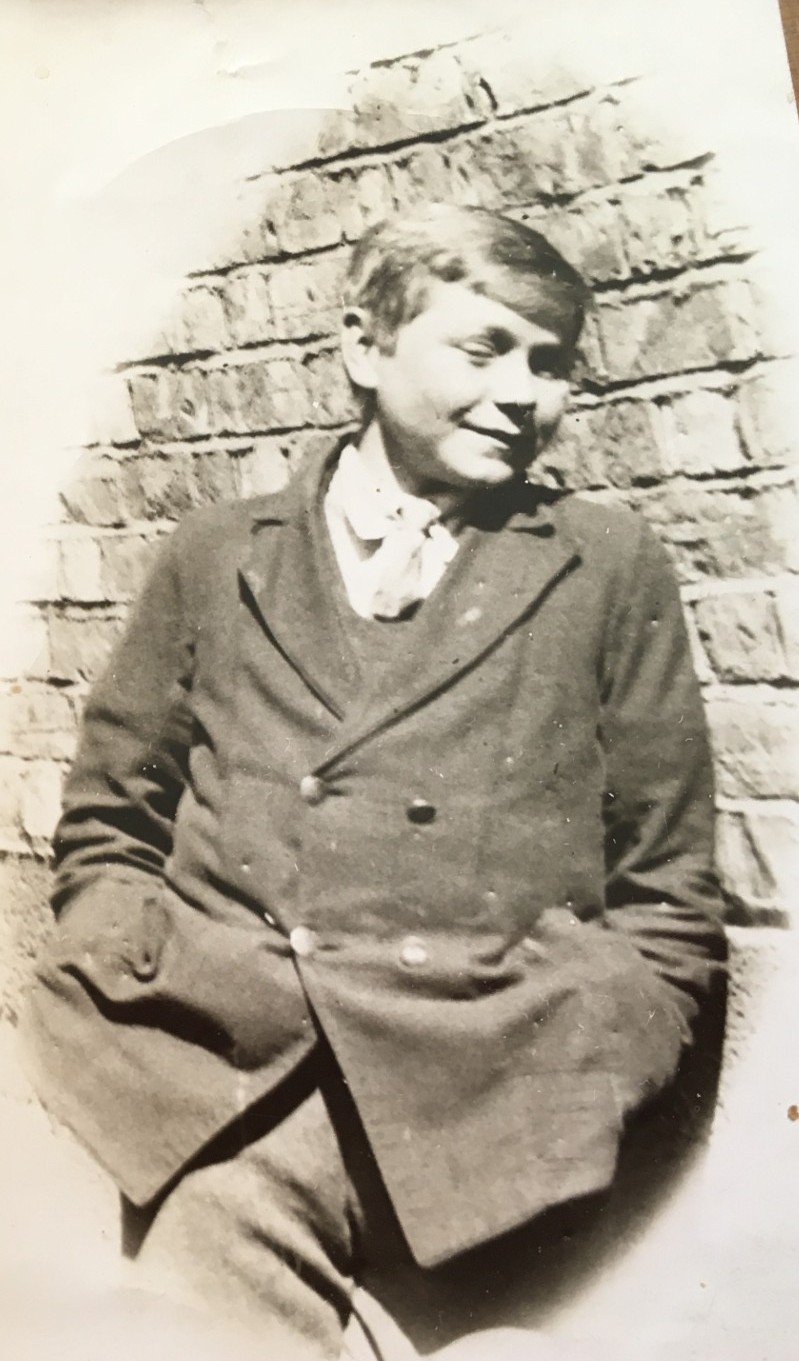
Charles and Florence's first son Charles junior was born in early 1911. Florence was admitted to the lunatic asylum at Littlemore on 5 July and remained there for just over three months. Two more sons, George and Albert, were born in 1912 and 1915. Here is a photograph of Albert as a child. It is likely that he and his brothers went to New Hinksey School.
Albert married Lilian Brown (sometimes known by her second name of Olive) in July 1938, when he was 23 and she was 26. Olive was from Bourton on the Hill in Gloucestershire, the daughter of a roadman.
In the 1939 register, taken on 29 September, four weeks after the Second World War broke out, Albert’s parents and his brothers Charles (a medical laboratory technician) and George (a manager at Mac Fisheries fishmongers) were living at 58 Lake Street. Albert’s wife Olive was living at 104 Wytham Street, with a lodger called Lilian Senior, aged 41, who was one of several London County Council teachers recently evacuated to south Oxford with their pupils.
Albert’s absence from the 1939 register suggests that he had already enlisted in the army, but his casualty card states that he joined up on 19 November 1942. He served as a Sapper with the 284th Armoured Assault Squadron of the Royal Engineers, a specialist unit handling armoured vehicles and mine-clearing equipment.
On 20 October 1944, at Ijzendijke in the southern Netherlands, there was a huge explosion due to a problem with refuelling a Conga, a tank which had been modified for use in clearing mines. Fifty-seven British and Canadian troops, including Albert Carr (aged 29), were killed, or missing, believed killed, and many more were injured. The incident was, and to some extent remains, controversial, as described by a survivor, George Herbert, fifty years later. (This article also explains how the Allied Soldiers Memorial at Ijzendijke, on which Albert Carr is named, came to be unveiled in 1997.)
Albert is also commemorated on panel 2 of the Groesbeek Memorial in Groesbeek Canadian War Cemetery, Nijmegen, Netherlands, and on the Oxford City Second World War Roll of Honour, which is in the church of St Michael at the Northgate on Cornmarket in Oxford.
Albert’s parents continued to live at 58 Lake Street until their deaths. His father Charles died in April 1945, six months after Albert, and his mother Florence died in August 1947. Both of Albert’s brothers remained in Oxford; Charles lived at 7 Plantation Road in Jericho and died in 1982. George married Ruth Higgs in 1947 and lived at 17 Cricket Road in East Oxford; he died in 1993.
Lilian Olive remarried and, as Mrs Busch, emigrated to America in June 1947. She kept in touch with the Carr family in Oxford, and made at least one visit to Lake Street, in 1951.
Research by Siobhan Lancaster, with thanks to Rhona Allen, Florence Carr’s great-niece, for sharing memories and photos, and to Janet Gunstone and Lesley Dewhurst for extra help.
Albert Carr as a boy, mid-1920s. Image courtesy of Rhona Allen. (Click image to close)