Henry Charles KITCHING
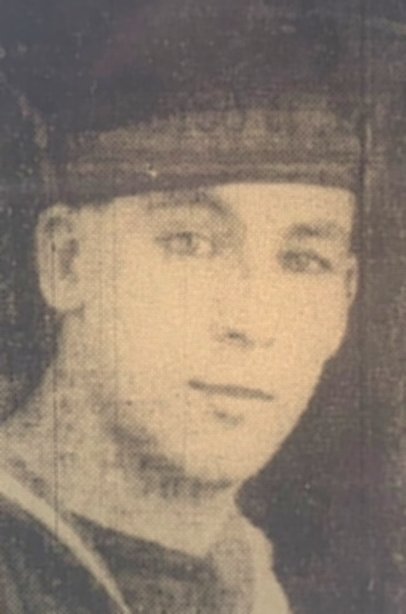
Image from the Oxford Mail, 10 October 1940.
Henry Kitching was the eldest of the eight children of Alfred Kitching, a college servant, and his wife Annie (née Coates). The spelling of the surname varies but ‘Kitching’ is used on the memorial at St John the Evangelist. The variants ‘Kitchen’, and occasionally ‘Kitchin’ or ‘Ketchen’, were more generally used by Henry’s ancestors.
Henry's parents married in the autumn of 1911; Alfred was 31 and Annie was twenty. They had six sons and two daughters: the first, Henry, was born on 25 May 1912 and baptised on 28 July at St John the Evangelist Church in New Hinksey, when the family was living at 39 Sunningwell Road. The subsequent children were: Nancy (born in January 1914, but lived only a few months); Alfred junior (born 1915); Betty (1917); Arthur (1919); Eric (1921); Frank (1923); and Ronald (1926). Alfred senior served in the First World War with the 3rd Battalion of the Oxfordshire and Buckinghamshire Light Infantry. By the time he joined up in 1915, the family had moved to 154 Sunningwell Road.
Henry attended New Hinksey School. The headmaster’s logbook for 23 July 1920 (when Henry was eight) records him as being in Class IV, and awarded a commendation during a Diocesan inspection. On 27 May 1924 Henry was awarded a free place at the Central School for Boys in Gloucester Green.
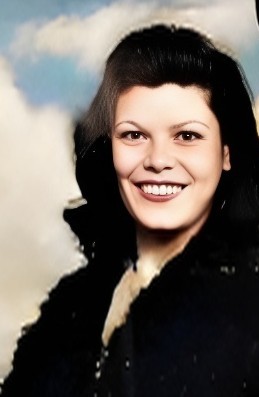
After leaving school, Henry joined the Royal Navy when he was eighteen, in 1930. In November 1936 he married Stella Maria Rizzo in the Catholic Basilica of Christ the King in Paola, Malta. Stella had been born in 1915 in nearby Senglea. In the marriage register Henry's name was recorded in Italian as 'Enrico Carlo Kitching' and his father as 'Alf Ernesto'.
At the outbreak of war in September 1939, Henry’s parents and three of his younger siblings were living at 54 Sunningwell Road in New Hinksey. Henry and Stella were lodging at 46 Union Street in Portsmouth, near the docks. Their landlords were a seaman, Albert Reynolds, his wife Isabella and their daughter Bertha, who was a naval tailor. Henry was serving as a stoker on the submarine HMS Narwhal, and Stella was doing ‘domestic work’, which, unusually, was ‘paid’. Another lodger, Isabella Sproates, was doing the same, so perhaps the two women were working together for the same employer.
Narwhal was a Porpoise or Grampus class submarine used for laying mines. In February 1940 it was deployed to Blyth submarine base in Northumbria, from where it laid mines in the North Sea and near the Norwegian coast. Its commander was Ronald Burch, who in June 1940 was awarded the Distinguished Service Order for ‘daring, endurance, and resource in conduct of hazardous and successful operations in submarines’.
Henry Kitching and his crewmates left the submarine base at Blyth on board the HMS Narwhal on 22 July 1940, bound for Kristiansund in Norway. It was later discovered that some of the Royal Navy’s codes had been broken, and that the Luftwaffe knew the likely routes that the Narwhal would take. A further danger was the time that the vessel took to submerge due to its large size: the average dive time for most submarines was 17 to 23 seconds, but the Narwhal took a minute and 32 seconds.
On 23 July 1940 the Narwhal came under attack from German planes, received a direct hit, and sank. All 61 crew members died. Henry Kitching was 28.
This article written by P Armstrong gives a vivid account of life for the submariners and their families at Blyth and a poem written in June 1940 by Stoker Clifford Stone called ‘Heroes’ suggests the awareness they had of the dangers they faced. Stone also died in the sinking of the Narwhal.
Henry Kitching’s family had to wait for confirmation that he had died. On 23 September 1940 the Oxford Mail reported him missing; on 10 October it confirmed his death. The paper reported Henry’s death again the next day, giving the date as 1 August (though the submarine sank with all hands on 23 July).
Henry is commemorated on the Chatham Naval Memorial in Kent and on the Oxford City Second World War Roll of Honour, which is in the church of St Michael at the Northgate on Cornmarket. Both these give his date of death as 1 August 1940; the memorial in the church of St John the Evangelist in New Hinksey gives it as 3 August.
At least four of Henry’s younger siblings served in the war. His sister Betty was an auxiliary nurse. Alfred joined the Royal Artillery in February 1934, when he was nineteen; Arthur served as a gunner in the Royal Artillery in France and Germany; and Eric joined the Royal Artillery in 1936, aged fifteen. During the war Eric served in the Anti-Tank Regiment, and he was taken prisoner in Malaya after the fall of Singapore in February 1942. His parents did not hear from him between then and July 1943; thereafter he remained a prisoner of war for another two years. On 13 September 1945 the Oxford Mail reported his release as one of the ‘Liberated Men From Oxford’.
Henry’s widow Stella married James Hoadley in 1943 in Battersea; she died in Surrey in 2005.
Research by Siobhan Lancaster; with thanks to Lesley Dewhurst.
Henry Kitching's wife Stella. Image from www.ancestry.co.uk, courtesy of David Ashley. (Click image to close)