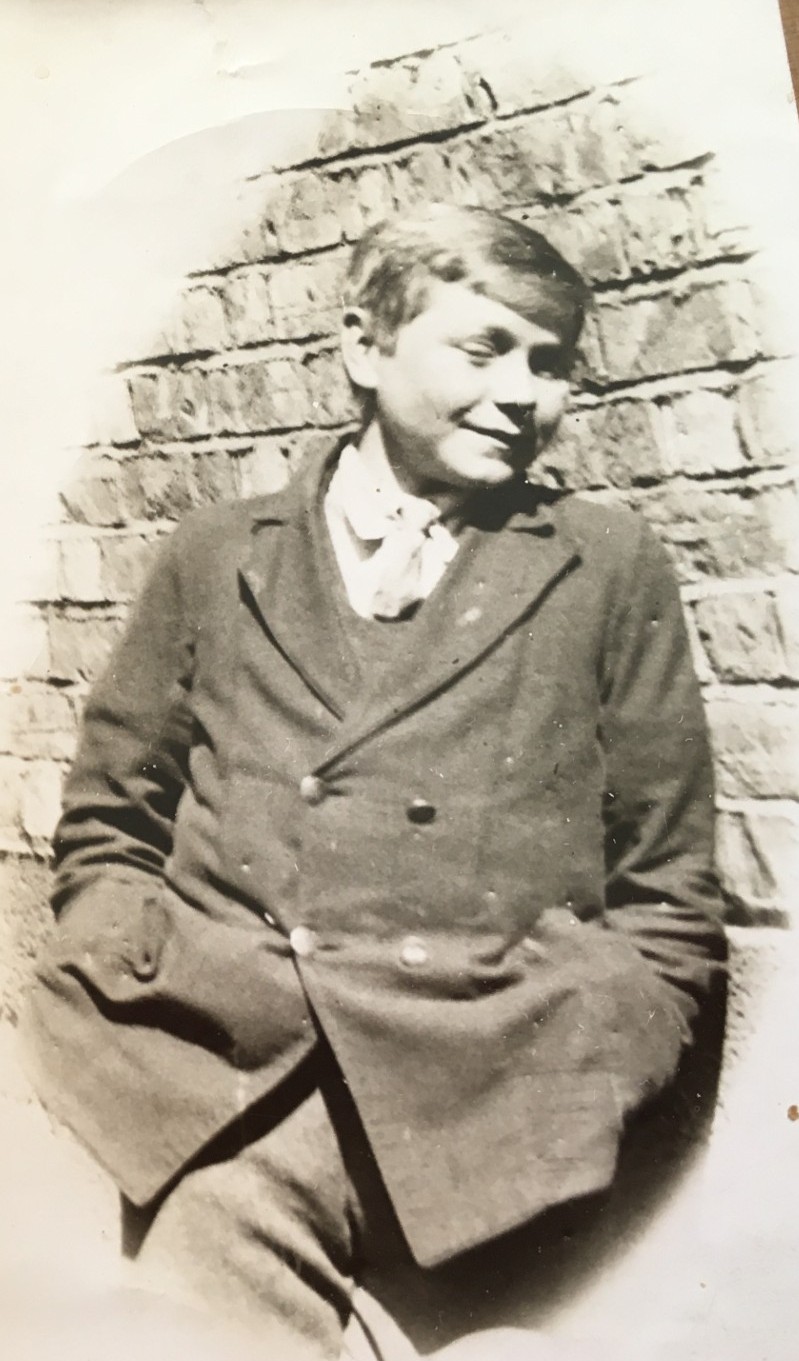
(Frederick) Peter John ATKINS
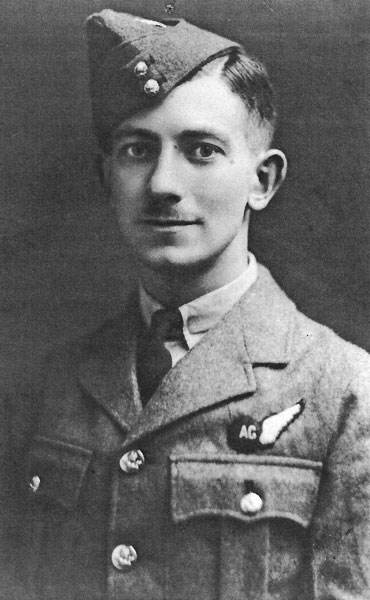
Image courtesy of John Moles, from the Battle of Britain Memorial website.
Frederick Peter John Atkins, known as Peter, was born on 29 June 1914, the son of Daniel and Eva Atkins. Daniel was from a family of bakers in New Hinksey. Eva (née Beesley) was from St Clement’s. She and Daniel married there in December 1909, and shortly afterwards moved to 62 Church Street (now Vicarage Road) in New Hinksey, where Daniel set up as a baker and grocer.
Daniel and Eva’s first child Ronald was born in September 1910, followed by Norah in 1912, and (Frederick) Peter in 1914. Daniel seems to have appeared before the military tribunal several times after the outbreak of the First World War, arguing for an exemption from conscription, but he was obliged to enlist in March 1917 and served for two years with the Ox & Bucks Light Infantry.
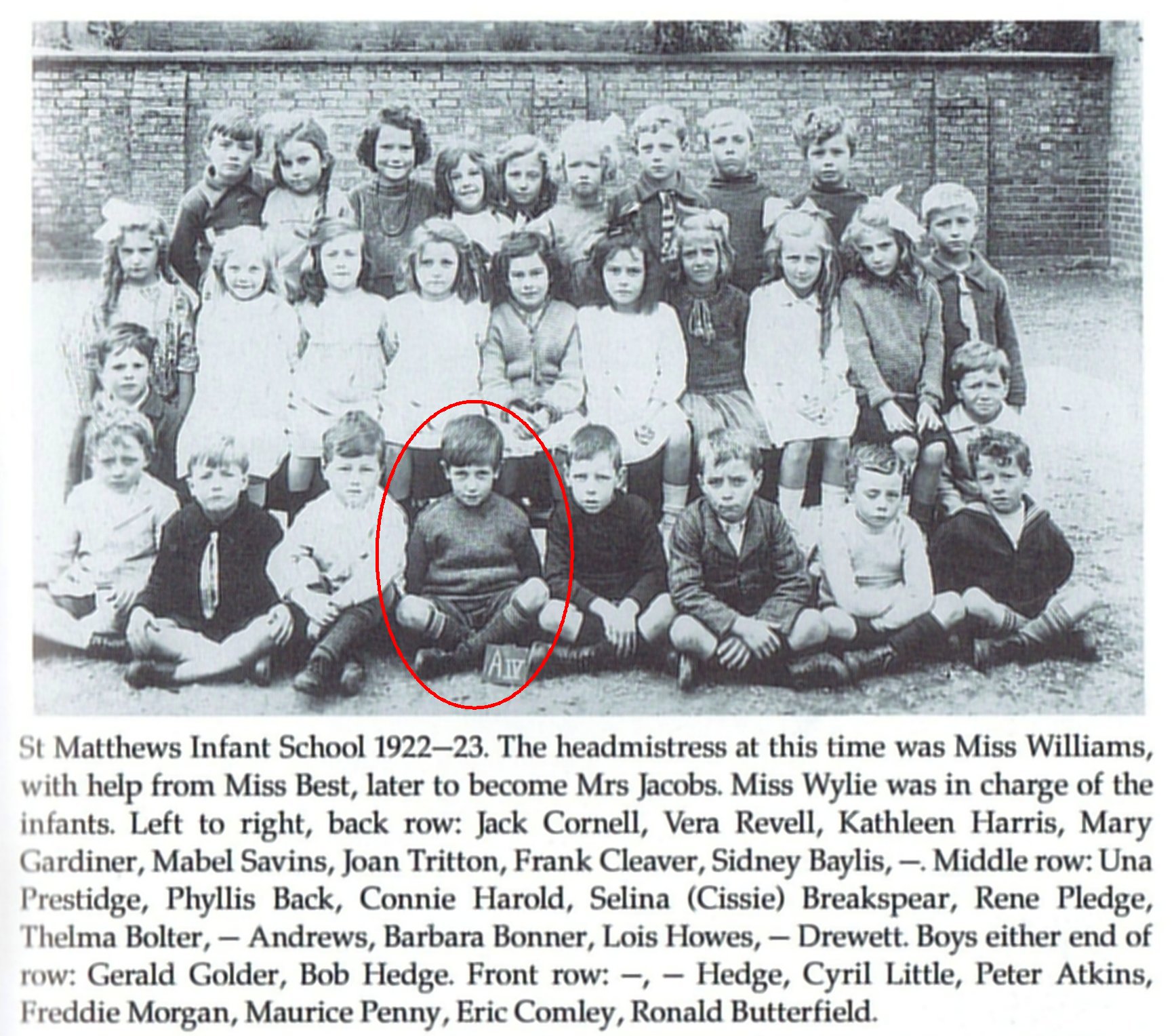
Peter (and probably his brother and sister as well) attended St Matthew’s Infant School on Marlborough Road in Grandpont, and in 1922-1923 Peter was in class AIV with Miss Wylie as his teacher.
Peter married Joyce Ethel Brinkhurst in April 1936, when he was 21. Joyce had been born in 1913 and baptised in Clapham, London. Her father Henry was a grocer at the time, but by the time of the 1921 census the family was living in Sussex and Henry was a postmaster. At some point in the 1920s the Brinkhurst family moved to Oxford.
Peter joined the Royal Air Force Volunteer Reserve on 19 August 1939 and trained as an Air Gunner, service no. 903401. In the 1939 register, taken four weeks after the outbreak of the Second World War in September, he and Joyce were living with her parents and her older sister Muriel at 4 Bartlemas Road in East Oxford. Joyce was working as a temporary clerk in the Ministry of Food, and Peter was a storekeeper at the motor works (almost certainly at Morris Motors in Cowley, where his father-in-law Henry Brinkhurst was a maintenance worker). Peter’s parents Daniel and Eva Atkins were still living at 62 Church Street in New Hinksey, and running the bakery and grocery business from there.
Peter was assigned to 141 Squadron in early July 1940, and stationed at Turnhouse in Edinburgh. The squadron was equipped with Defiant interceptor aircraft. These were designed to intercept bombers, and were effective against heavy aircraft, but were vulnerable to the more manoeuvrable German Messerschmitts. This was party because the position of the Defiant’s gun turret meant it could not fire forwards, and so it could be attacked from in front. Defiants were eventually withdrawn from use in daylight but were retained for night-time raids.
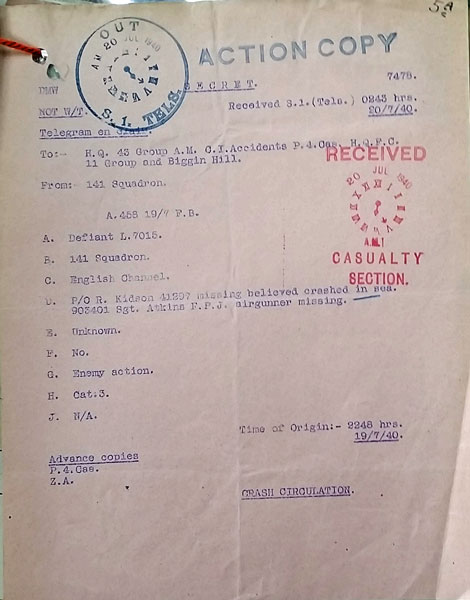
In mid-July 1940, 141 Squadron was sent to the Kent coast to participate in the Battle of Britain, the first major military campaign fought entirely by air forces, which lasted from 10 July until 31 October. On 19 July Peter Atkins’s plane, Defiant L7015, set off from near Dover with eight others to patrol the skies around Cap Gris Nez, between Calais and Boulogne. The squadron came under attack from Messerschmitts. Six aircraft and ten men were lost. Peter bailed out, but drowned; his body was washed up on the French coast. The plane crashed into the sea and the only other crewman, pilot Rudal Kidson (who was from New Zealand and aged 26), was also killed. Here is the telegram from 141 Squadron to RAF Biggin Hill reporting the two men missing.
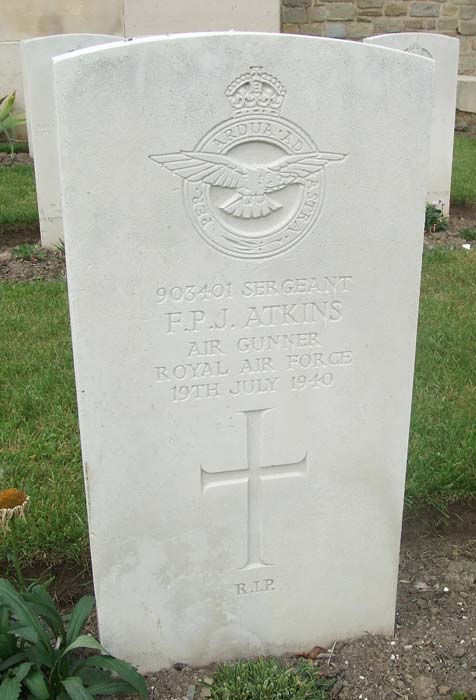
Peter was buried at Boulogne Eastern Cemetery in Pas de Calais, northern France; his gravestone carries the simple inscription ‘RIP’.
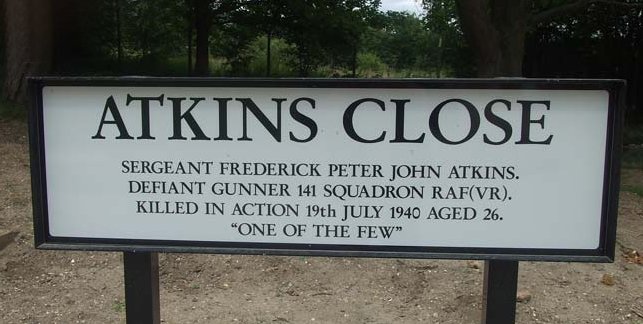
The memorial at St John the Evangelist in New Hinksey records Peter’s date of death as 16 July, but all other records give it as 19 July. He is also commemorated on the Battle of Britain Monument in London, on the Oxford City Second World War Roll of Honour, which is in the church of St Michael at the Northgate on Cornmarket, and in the name of Atkins Close at RAF Biggin Hill in Kent.
After the war Peter’s parents Daniel and Eva moved from Church Street to nearby Wytham Street in New Hinksey, and lived there until their deaths in 1962 and 1965 respectively. They are buried at Rose Hill Cemetery with their elder son Ronald who died in 1974.
Peter’s sister Nora married George Moles of 34 Newton Road, Grandpont, and in 2016 their son John Moles wrote an account of his uncle’s death for the Battle of Britain Monument website.
Peter’s widow Joyce married Claude Memess in 1944. She died in Norfolk in 2009, aged 95. Claude died in 2017, also aged 95.
Research by Siobhan Lancaster; with thanks to Lesley Dewhurst.
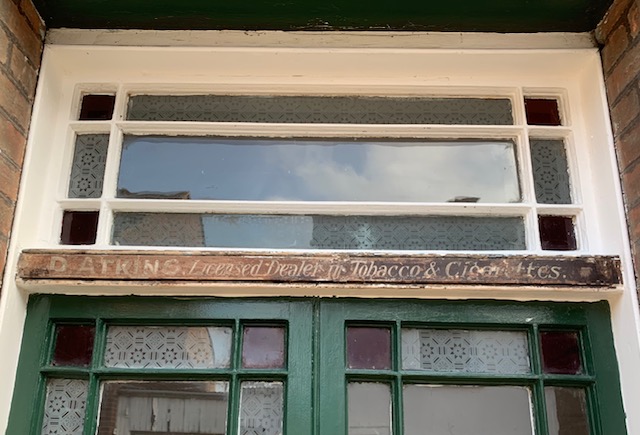
Daniel Atkins's name can still be seen above the door of the former bakery and grocer's shop at 62 Vicarage Road (formerly Church Street). (Click image to close)
Peter Atkins and his classmates at St Matthew's Infants School, 1922-23. Also in the class were Vera Revell, the sister of Leslie Revell, and Eric Comley, the brother of Dennis Comley; like Peter, Leslie and Dennis died in the Second World War. Image from The Changing Faces of South Oxford and South Hinksey, Book 2, by Carole Newbigging. (Click image to close)
The telegram sent by 141 Squadron to RAF Biggin Hill in Kent at 10:48pm on 19 July 1940 reporting that Pilot Rudal Kidson and Air Gunner Peter Atkins were missing. Image courtesy of John Moles, from the Battle of Britain Memorial website. (Click image to close)
Peter Atkins's Commonwealth War Grave in Boulogne Eastern Cemetery, Pas de Calais, northern France. Image courtesy of John Moles, from the Battle of Britain Memorial website. (Click image to close)
Atkins Close at RAF Biggin Hill in Kent. Image courtesy of John Moles, from the Battle of Britain Memorial website. (Click image to close)
Charles Henry BOWLEY
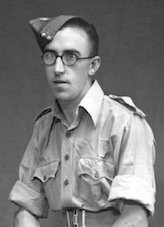
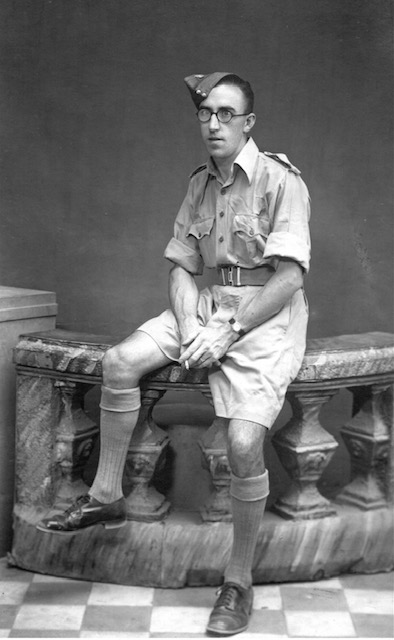
Image courtesy of Don Wildman.
Charles Henry Bowley, known as Charlie, was born on 9 April 1912, the oldest son of John Bowley and his wife Gertrude (née Martin), who were cousins. John and Gertrude both lived in New Hinksey and were married at the church of St John the Evangelist on 2 April 1911. John was originally from Gloucestershire and worked as a carpenter and joiner. Gertrude came originally from London and before her marriage was a draper’s clerk. The couple lived initially in Wolvercote, and they had four sons: Charles, born 1912; John, 1914; Arthur, 1918; and Norman, 1919. John died in 1918, aged four.
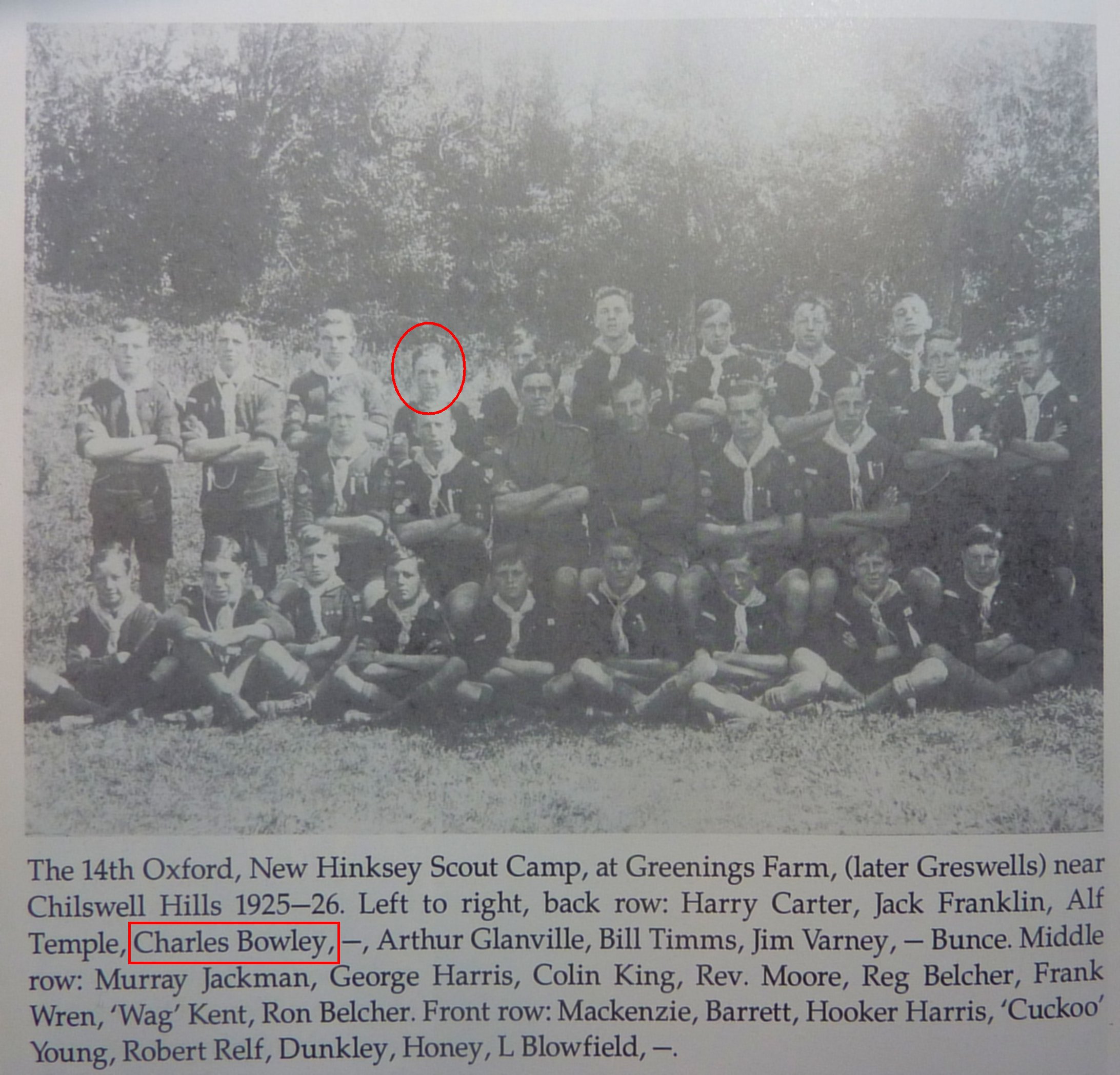
By 1921 the family had moved back to New Hinksey, to 35 Sunningwell Road, and John was working as a motor body maker for Morris Motors in Cowley. The surviving three boys probably attended New Hinksey School, and Charlie was a member of the 14th Oxford, New Hinksey Scout Group.
After school, Charlie worked as a carpenter and joiner, as his father and paternal grandfather had done before him. On 31 July 1937 he married Cynthia May Harriett Floyd. She was the daughter of Frederick and Laura Floyd; Frederick worked with the heavy horses used for ploughing and harvesting at Manor Farm, Ferry Hinksey, in west Oxford. Charlie and Cynthia had a daughter, Yvonne, in 1938.
The 1939 register, taken four weeks after the outbreak of the Second World War in September, shows Charlie, Cynthia and Yvonne living at Elmscroft, 9 The Avenue, Kennington, a village just south of Oxford (in Berkshire at the time). They may have had two evacuee children living with them, as there are two redacted lines on the register, and Cynthia’s son Don Wildman remembers her talking about a Dutch refugee who stayed with them during the war, and with whom Cynthia kept in touch for some years afterwards.
Charlie joined the Army Catering Corps and served as a Private, service no. 2372823. This family photograph shows him serving in the Middle East in 1942. At the time of his death in September 1944 he was attached to the Royal Corps of Signals. Cynthia’s son Don Wildman recalls that “The story my mother told about his death is that he became seriously ill serving overseas and required full hospital treatment in the UK. Apparently, the troopship repatriating him had to route far to the north because of U-boat activity, eventually sailing into Liverpool. Sadly, that delay led to his death.”
It’s not clear whether Charlie was treated in hospital in Oxford, but he was buried in St Laurence’s churchyard, in the village of South Hinksey (just to the south-west of the city). His gravestone bears the inscription 'Goodnight, Darling / God Bless'. He is also commemorated in the Oxford City Second World War Roll of Honour which is in the church of St Michael at the Northgate on Cornmarket.

Charlie’s parents were still living at 35 Sunningwell Road in New Hinksey in 1939; John died in 1951 and Gertrude died in 1961, having last lived at Horspath.
Charlie’s widow Cynthia continued living in Kennington until she married Maurice Wildman in 1947. She died in 1987 in Shropshire. Charles and Cynthia’s daughter Yvonne married Terence White in Bedford in 1958; she died in September 2025.
Research by Siobhan Lancaster, with thanks to Don Wildman, son of Charlie's widow Cynthia, for sharing information, family memories, and the photograph of Charlie.
Charlie Bowley in the Middle East, November 1942. Image courtesy of Don Wildman. (Click image to close)
Charlie Bowley with the 14th Oxford, New Hinksey Scout Group at Greenings Farm, near Chilswell Hills, 1925-6. Image from The Changing Faces of South Oxford and South Hinksey, Book 2, by Carole Newbigging. (Click image to close)
John Emerson BOYLE
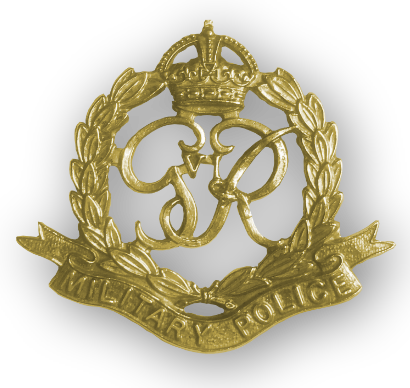
George VI Military Police cap badge (worn between 1936 and 1946); image courtesy of the Royal Military Police Association.
John Boyle does not seem to have lived in South Oxford himself, though his family had connections with the area. In the 1860s his great grandparents Jesse and Charlotte Dumbleton ran the Weirs Inn (also known as the University House) at Cold Harbour, and later his great grandmother ran the Farriers Arms at the far southern end of Abingdon Road. John’s grandparents and his mother Bessie Cooke lived briefly at 218 Marlborough Road, Grandpont in the early 1900s, when she was a teenager. The reason John is named on the memorial at St John the Evangelist is because he died here.
John’s parents William Boyle and Bessie Cooke were both living in Sidney Street in East Oxford when they married in 1908. William worked for the Great Western Railway, and over the previous decade had worked his way up from engine cleaner to 3rd, 2nd and then 1st class fireman. He started at Swindon station, and moved to Gloucester and then to Oxford, which is presumably where he met Bessie.
John was William and Bessie’s first child, born in September 1909 and baptised on Boxing Day at St Frideswide’s Church on the Botley Road. The family were living on ‘New Extension, Bridge Street’ (now Doyley Road), Osney Island, near the railway station. John’s brother Stanley was born in September 1912, by which time the family had moved to Earl Street, further along the Botley Road.
Soon afterwards, William was promoted to 3rd class engineman (train driver) at Swindon, and the family moved to Gloucestershire. He was badly injured whilst serving in the First World War. John’s two younger sisters Kathleen and Queenie were born in 1916 and 1920, when the family were living in Lechlade.
John Boyle became a gardener. In 1937, when he was 28, he was living at Mallards in Cholsey, South Oxfordshire, probably working for the Tollit family. In 1939 he was living at 26 Market Place, Brackley, on the Oxfordshire/Northamptonshire border, and working as head gardener at a school, almost certainly either Magdalen College School or Winchester House School in central Brackley.
John joined the Auxiliary Military Pioneer Corps on 28 November 1940 at the recruiting office in Reading. On 31 December the corps joined the 237 Company Pioneer Corps, which had been formed at Dovercourt in Essex the day before. The company moved to Colchester, to Aldeburgh in Suffolk, and then to Stowmarket. John was transferred to the Corps of Military Police in May 1941. He was in the Vulnerable Points Wing, a specialised branch which provided security for vital infrastructure such as ports, command headquarters and supply depots (and later for prisoner of war camps in western Europe).
John Boyle contracted pulmonary tuberculosis and was moved to Oxford, to the City Isolation Hospital at the far southern end of the Abingdon Road. The hospital cared for tuberculosis patients who were beyond hope of cure. He died there on 6 July 1942, aged 32. According to his death certificate, his younger brother Stanley was with him when he died; the address given for both was 66 Norreys Avenue, New Hinksey. (In the 1939 register this house was occupied by two families, the Bucks and the Earls, comprising fifteen people; perhaps Stanley was lodging there later in the war, whilst his brother was ill in hospital nearby.)
John was buried at St Laurence’s Church in South Hinksey; his Commonwealth War Graves headstone bears the inscription 'In loving memory / Of my beloved son / Thy will be done'. He is also commemorated on the Oxford City Second World War Roll of Honour which is in the church of St Michael at the Northgate on Cornmarket.
John’s father Willam Boyle died in Oxford in 1946 and is buried in Botley Cemetery; his mother Bessie died in Oxford in 1972.
Research by Siobhan Lancaster; with thanks to Lesley Dewhurst and to Paul Brown of the Royal Pioneer Corps Association.
Harold Percy BROWN
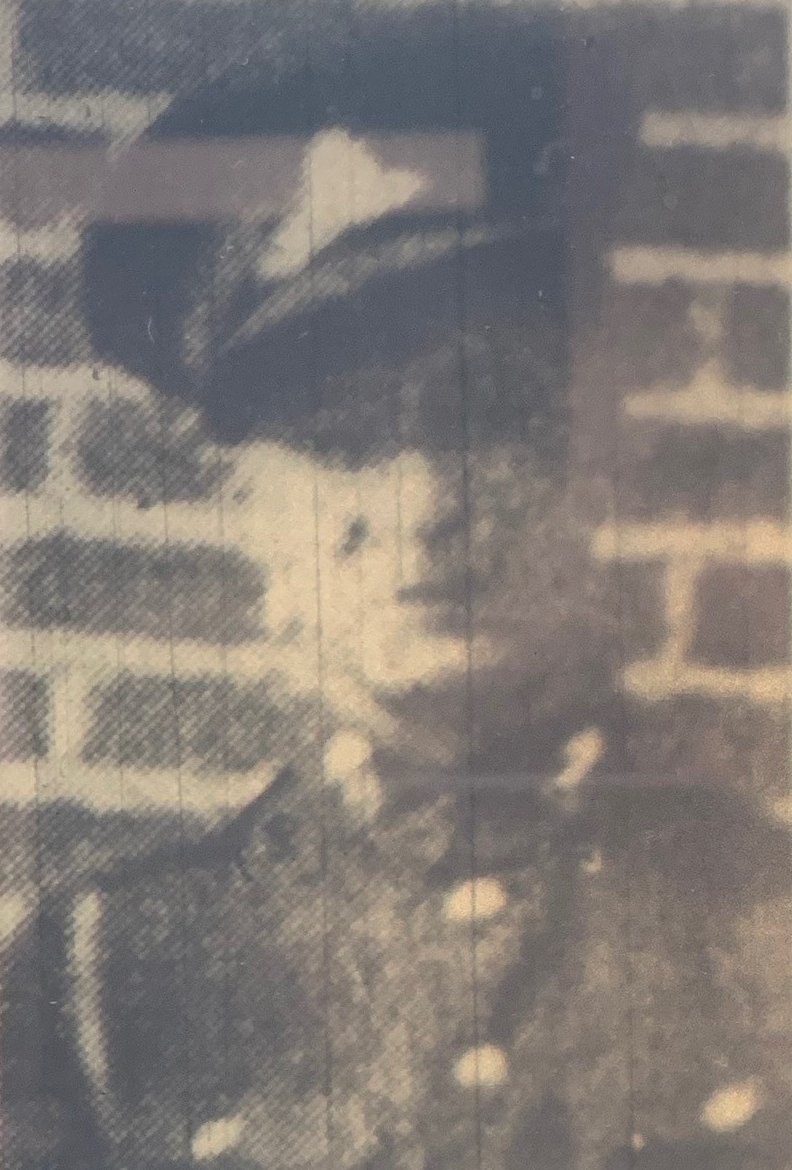
Image from the Oxford Mail, 16 July 1943.
Harold Brown was born in early 1921, the youngest of the three sons of Edith (née Packford) and her husband Percy, a gilder and publican. The family lived at the Star pub (sometimes called the Star of India) at 39 St Clement’s (now part of La Cucina restaurant). Percy died in December 1921, leaving Edith a widow of 41, with three young children. Harold was less than a year old.
After leaving school Harold worked for Greening & Co, Cabinet Manufacturers, in Randolph Street in East Oxford. By the time of the 1939 register, taken four weeks after the outbreak of war in September, his mother Edith had moved to 73 Sunningwell Road in New Hinksey. Harold’s oldest brother Jack, now a timber clerk, was living with her, but Harold, who was 18, was absent and so may have already enlisted.
Harold served as a Gunner in the 85th Anti-Tank Regiment of the Royal Artillery, which formed in September 1941 and did its training in Essex. In November 1941 the regiment left Britain, bound for Basra, Iraq, sailing via the Cape of Good Hope. They left Freetown, Sierra Leone, on 28 November and arrived in Durban, South Africa, on 18 December. In the meantime, on 7 December, the Japanese had attacked Pearl Harbour, and the next day invaded the Philippines, Malaya (Malaysia), Siam (Thailand) and Hong Kong. The 85th were diverted to Singapore to defend the British garrison there, arriving on 8 January 1942. From 14 January they operated from a rubber plantation near the palace of the Sultan of Johor Bahru, and on 8 February were sent to defend the airfield at the RAF base at Selatar. They evacuated the base the following day and withdrew to the residential district.
Singapore fell on 15 February 1942 and British and allied soldiers – including Harold Brown – were taken prisoner. They were initially housed in barracks at Changi, a former British army base, but many men, including Harold, were sent to Burma (Myanmar) or Siam (Thailand) and forced to help build the notorious 257-mile-long Burma Railway, also known as the ‘Death Railway’. The railway was built by thousands of Allied prisoners of war and other forced labourers in appalling conditions: men suffered from malnutrition, disease, physical cruelty, and back-breaking labour in tropical heat.
This photograph and short report on Harold was published in the Oxford Mail on 16 July 1943, but in fact he was already dead. He died of cholera on 9 July 1943, aged 21. He was initially buried at Nanchon Yai (now Chungkai), near the line of the railway, where there was a camp and a hospital built by prisoners of war. His body was reburied at the Kanchanaburi War Cemetery in October 1946. He is one of almost 7,000 men commemorated there. His grave bears the inscription: ‘Sleep on, my beloved one, in a far-off grave, till we meet again. RIP.’


Harold is also remembered on the Oxford City Second World War Roll of Honour, which is in the church of St Michael at the Northgate on Cornmarket in Oxford.
Harold’s mother Edith lived at 73 Sunningwell Road until her death in 1952.
Research by Siobhan Lancaster; with thanks to Lesley Dewhurst.
Albert Edward CARR
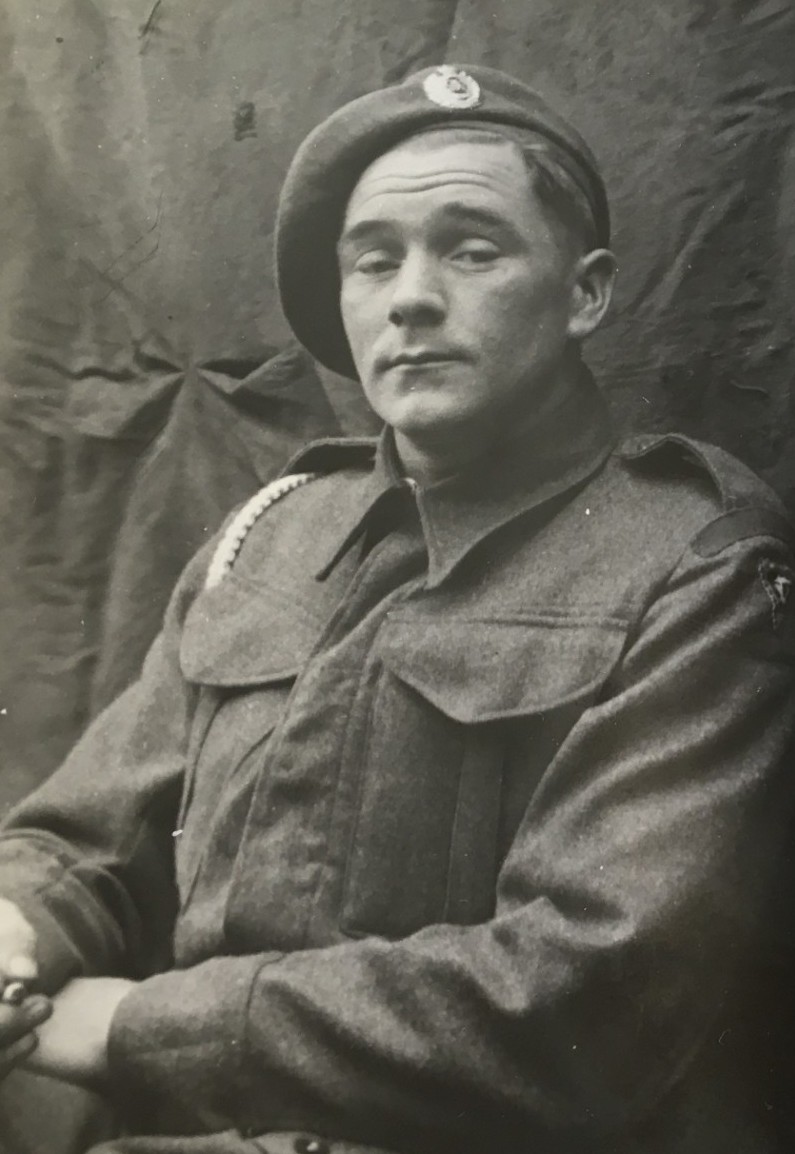
Image courtesy of Rhona Allen.
Albert Carr was born on 7 January 1915, the youngest of the three sons of Charles Carr, a waterside labourer with the Thames Conservancy (based at Osney) and his wife Florence (née Dancer), who had worked as a housemaid in Sevenoaks, Kent, before her marriage. The couple married on Boxing Day 1908 in Florence's home village of King’s Sutton, near Banbury, and settled at 47 Lake Street, New Hinksey, in Oxford. The were to remain living in the street for the rest of their lives.
Charles and Florence's first son Charles junior was born in early 1911. Florence was admitted to the lunatic asylum at Littlemore on 5 July and remained there for just over three months. Two more sons, George and Albert, were born in 1912 and 1915. Here is a photograph of Albert as a child. It is likely that he and his brothers went to New Hinksey School.
Albert married Lilian Brown (sometimes known by her second name of Olive) in July 1938, when he was 23 and she was 26. Olive was from Bourton on the Hill in Gloucestershire, the daughter of a roadman.
In the 1939 register, taken on 29 September, four weeks after the Second World War broke out, Albert’s parents and his brothers Charles (a medical laboratory technician) and George (a manager at Mac Fisheries fishmongers) were living at 58 Lake Street. Albert’s wife Olive was living at 104 Wytham Street, with a lodger called Lilian Senior, aged 41, who was one of several London County Council teachers recently evacuated to south Oxford with their pupils.
Albert’s absence from the 1939 register suggests that he had already enlisted in the army, but his casualty card states that he joined up on 19 November 1942. He served as a Sapper with the 284th Armoured Assault Squadron of the Royal Engineers, a specialist unit handling armoured vehicles and mine-clearing equipment.
On 20 October 1944, at Ijzendijke in the southern Netherlands, there was a huge explosion due to a problem with refuelling a Conga, a tank which had been modified for use in clearing mines. Fifty-seven British and Canadian troops, including Albert Carr (aged 29), were killed, or missing, believed killed, and many more were injured. The incident was, and to some extent remains, controversial, as described by a survivor, George Herbert, fifty years later. (This article also explains how the Allied Soldiers Memorial at Ijzendijke, on which Albert Carr is named, came to be unveiled in 1997.)
Albert is also commemorated on panel 2 of the Groesbeek Memorial in Groesbeek Canadian War Cemetery, Nijmegen, Netherlands, and on the Oxford City Second World War Roll of Honour, which is in the church of St Michael at the Northgate on Cornmarket in Oxford.
Albert’s parents continued to live at 58 Lake Street until their deaths. His father Charles died in April 1945, six months after Albert, and his mother Florence died in August 1947. Both of Albert’s brothers remained in Oxford; Charles lived at 7 Plantation Road in Jericho and died in 1982. George married Ruth Higgs in 1947 and lived at 17 Cricket Road in East Oxford; he died in 1993.
Lilian Olive remarried and, as Mrs Busch, emigrated to America in June 1947. She kept in touch with the Carr family in Oxford, and made at least one visit to Lake Street, in 1951.
Research by Siobhan Lancaster, with thanks to Rhona Allen, Florence Carr’s great-niece, for sharing memories and photos, and to Janet Gunstone and Lesley Dewhurst for extra help.
Albert Carr as a boy, mid-1920s. Image courtesy of Rhona Allen. (Click image to close)