The 66 Men of Grandpont 1914-18 documentary film has been given public screenings at:
| 26/05/2016 | Oxford Town Hall (launch) |
| 27/05/2016 | St Matthew's Church |
| 22/06/2016 | Pembroke College |
| 28/06/2016 | Oxford University Press |
| 16/07/2016 to 08/10/2016 | Oxford Town Hall Gallery |
| 07/09/2016 | Pegasus Grange, Whitehouse Road |
| 10/09/2016 | Ultimate Picture Palace Cinema, Cowley Road |
| 23/09/2016 | Summer Fields School, Summertown |
| 20/10/2016 | Oxford U3A (at Rewley House, Wellington Square) |
| 27/10/2016 | Oxford Civic Society (at Jesus College, Ship Street Centre) |
| 04/11/2016 | The Cathedral, Christ Church |
| 09/11/2016 | St John the Evangelist Church, New Hinksey |
| 11/11/2016 | Magdalen College School |
| 11/11/2016 | South Oxford Community Centre, Lake Street |
| 12/11/2016 | St Matthew's Church |
| 12/11/2016 | International Society for First World War Studies Roadshow (IT Services building, 13 Banbury Road) |
| 13/11/2016 | The Story Museum, Pembroke Street |
| 20/11/2016 | St Margaret's Institute, Polstead Road (with an exhibition about three Oxford WWI memorial projects, including 66 Men of Grandpont) |
| 22/11/2016 | New College School |
| 22/11/2016 | Brasenose College |
| 16/01/2017 | Archway Foundation, St Columba's Church, Alfred Street |
| 22/02/2017 | Headington School |
| 27/04/2017 | Oxford Brookes University Documentary Film Club |
| 20/06/2017 | Cowley Local Histoy Society |
| 12/06/2018 | Stanford in the Vale & District Local History Society |
| 15/11/2018 | Sibfords Society |
| 29/04/2019 | Launton Historical Society |
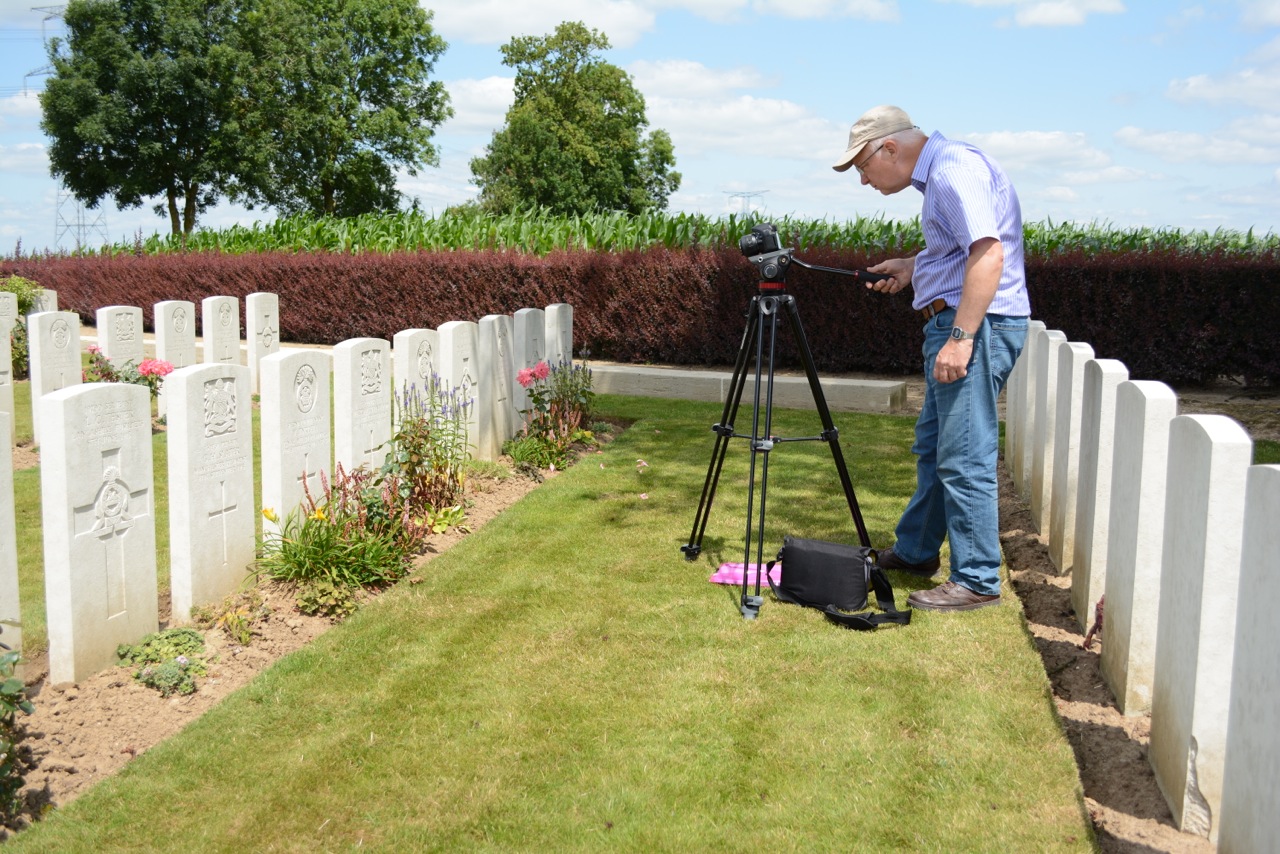
Film maker Simon Haynes filming the gravestone of Walter Tyrrell at the Varennes Military Cemetery, the Somme, summer 2015. Simon made two trips to the battlefields of northern France to take footage for the film.
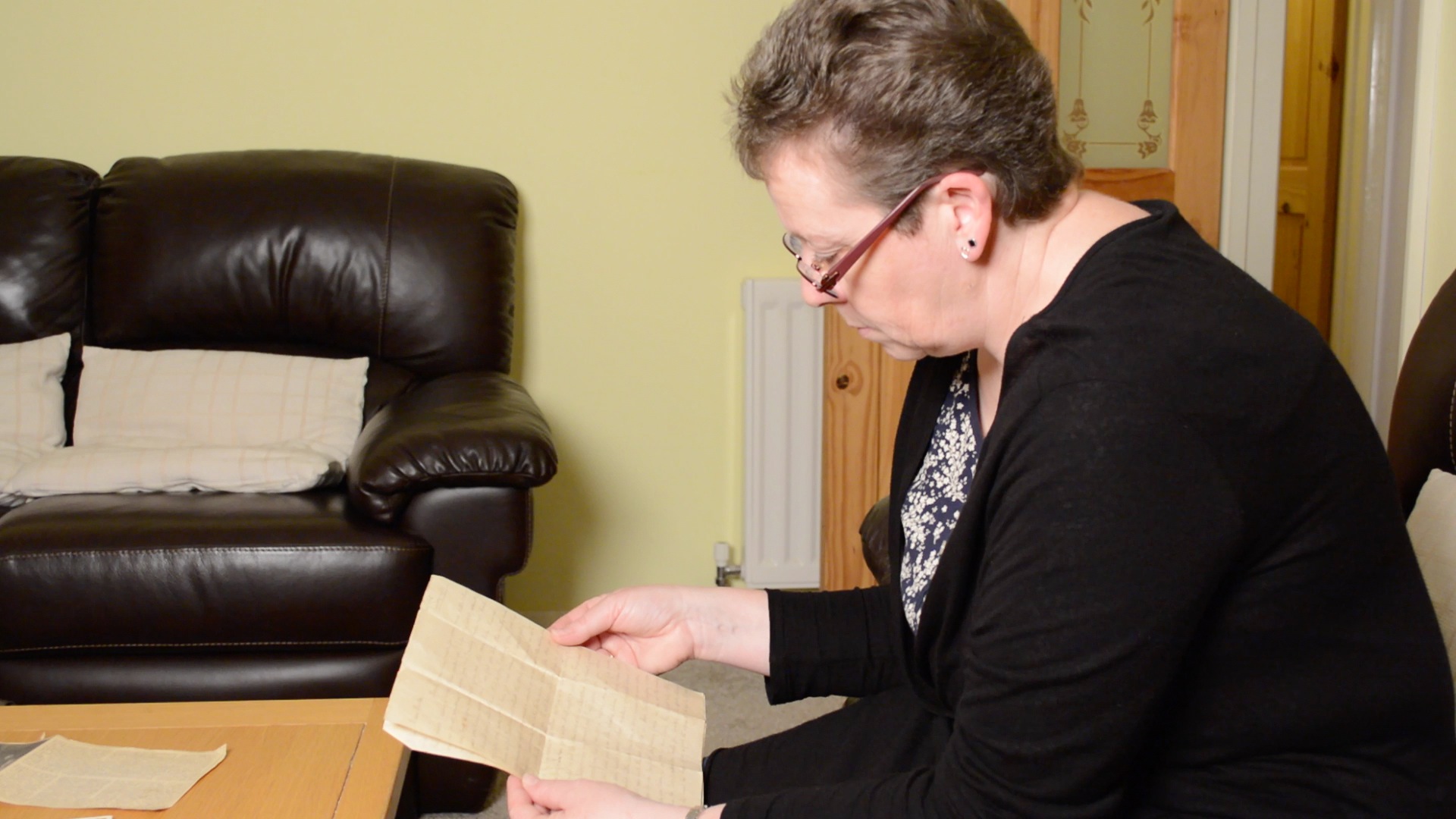
A shot from the film: Annabel Panting, great niece of Arthur Dolley and great granddaughter of Thomas Townsend, reading a letter written by Arthur Dolley in the trenches, November 1915.
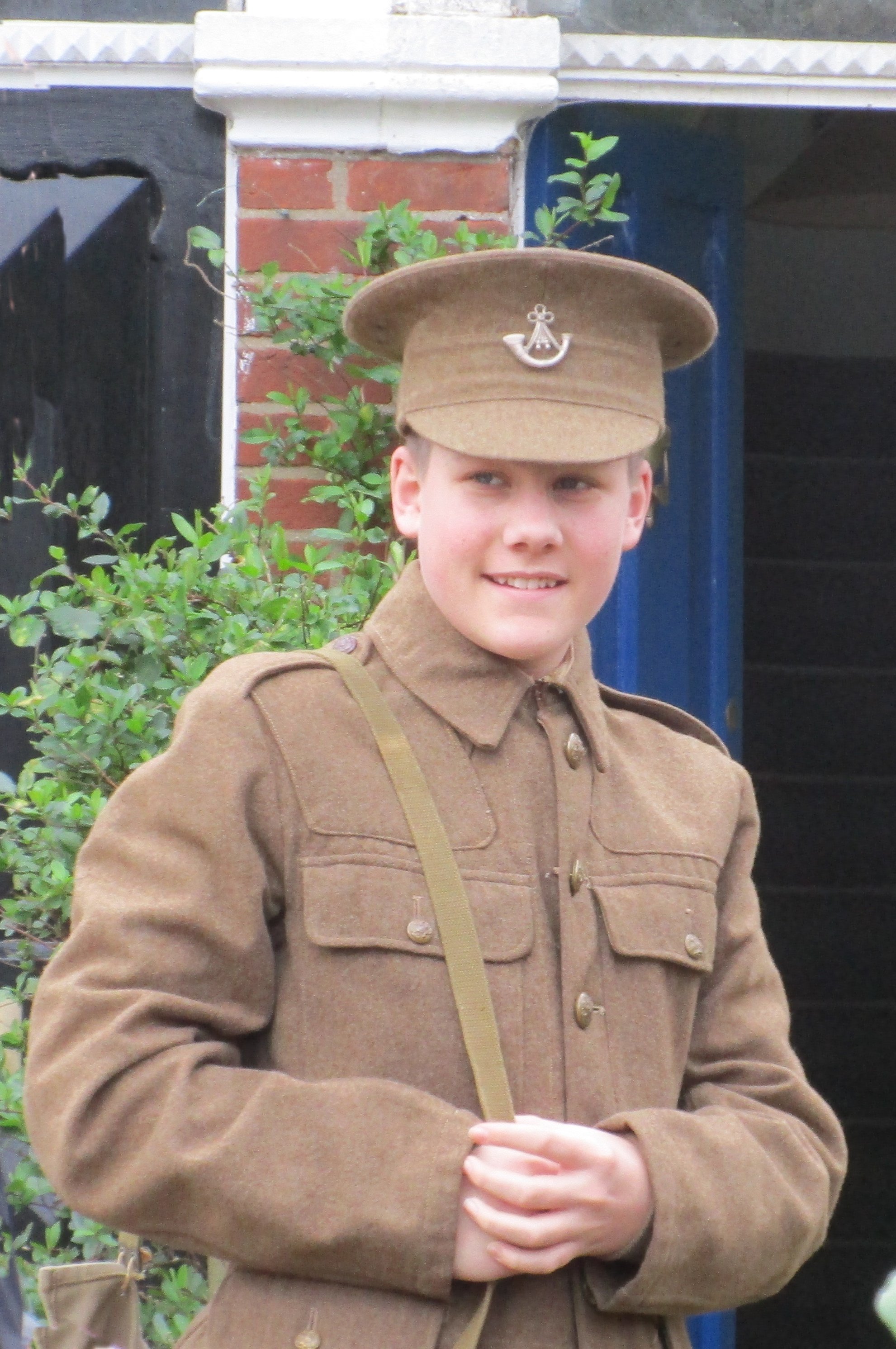
Cadet Ewan Baggett in original WWI uniform during filming in February 2016. The badge on his cap is Arthur Dolley's.
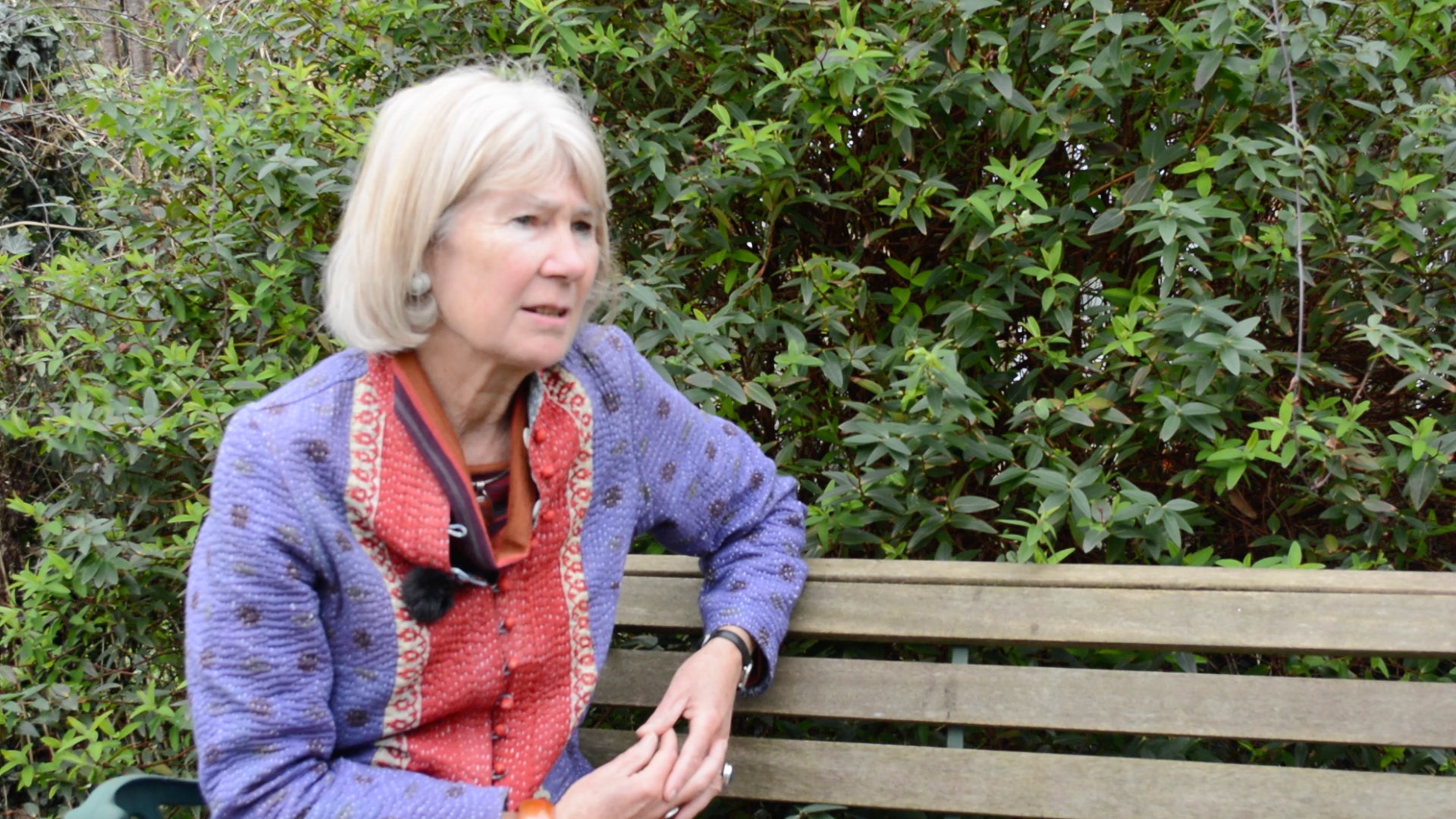
A shot from the film: Brenda Stones of 15 Cobden Crescent, former home of George Tyrrell.
Our 40-minute documentary film had its premiere at Oxford Town Hall on 26 May 2016, attended by 160 people, and the first public screening the following evening at St Matthew's church, attended by another 260. For a list of other screenings click here.
To see a short trailer of the film click here and to watch the whole film click here.
Film maker Simon Haynes spent fifteen months making the film, which features interviews with descendants of the 66 men, with local people who now live in the houses which they once occupied, and with Oxford and military historians. These are intercut with footage of local remembrance ceremonies and of Commonwealth War Grave Commission cemeteries in France and Belgium, and with images of documents and other items from local, college, workplace and and family archives.
Music for the film was specially composed by local musician and composer Bruno Guastalla; you can hear it here and read about it here. A special recording was also made of a recruiting song called Every Man a Soldier, written by Oxford photographer Henry Taunt in 1914. It may not have been heard for another 100 years until boys from the choir of Our Lady's Abingdon sang the song in March 2016 for our film's soundtrack. You can hear the recording here. The soundtrack of the film also features birdsong recorded in Grandpont by Bruno Guastalla, and First World War bugle calls by RSMI Phil King, Bugle Major, Oxfordshire (The Rifles) Army Cadet Force.
A marvellous piece of work. The amount of information, variety of material, and the pace of the film combine perfectly. It's also very moving without (wisely) trying to be flagrantly emotional. Dr Robert Peberdy, Former Assistant Editor, Victoria County History of Oxfordshire
We really enjoyed the film...it's wonderful to have that small piece of history on record and also interesting to hear the story of the other families involved. It was very moving to think that those men had made such a sacrifice for us. Member of the family of Ernest, Frederick and Hubert Little
The film is beautifully done and very touching. Grandpont resident
Terrific, a very powerful piece of local history and some remarkable stories. Tom Buchanan, Professor of Modern British and European History, University of Oxford
The film was very well balanced, with a good mix of interview and commentary, text and image. The editing was perfect - the result was long enough to learn something substantial about the Grandpont men who sacrificed their lives, but short enough and selective enough to keep hold of the thread of the story, and not lose track of who was who. We were presented with a small jigsaw piece of our national history, helping to relate through local examples the chronology and the impact of World War I; but there was also the strong emotional connection with the locality, the community around South Oxford. Viewers were able to step inside the story and feel some pride and sadness at the contribution and sacrifice of South Oxford, and to multiply that across so many communities across the country. Mark Lawrence, Oxfordshire History Centre Manager
Our exhibition was on tour around Oxfordshire from June 2015 until the end of 2016; our trail around Grandpont (for which we put a poppy and information about each man on the gate of the house in which he lived before he went to war) was in place in June and again in September 2015; and our documentary film was launched in May 2016. Below are some of the comments we received about the exhibition, trail and film, and about the project in general.
Many, many congratulations on this really exemplary project - exemplary in so many ways: the research, the collation of the research, the technicalities of making the film with added sound and specially-composed music and raising awareness of the project so that so many people know about it. It has been an enormous undertaking, and an enormous contribution to local history, and to the history of WW1. Grandpont resident
Terrific, a very powerful piece of local history and some remarkable stories. Tom Buchanan, Professor of Modern British and European History, University of Oxford
The intensity of the concentration in the hall this evening showed how effective and compelling everyone found the film. The music was lovely. The stories are so moving and came over so clearly. It also showed very well how much sheer hard work goes into getting all the information together. Osney resident
Your research and creative teams should be very proud of what you've achieved. The film, I thought, was very well balanced, with a good mix of interview and commentary, text and image. Mark Lawrence, Oxfordshire History Centre Manager
We were very impressed with the film... there was obviously a huge amount of research that had made this possible. A great sacrifice by these men 100 years ago, and your film restored our memories of them. A big thank you to you and your team. Relatives of one of the 66 men
The entire project has been a great success, and I am very pleased that the Greening Lamborn Trust has been able to be a supportive part of this success. The Clerk to the Trustees of The Greening Lamborn Trust, part-funder of the project
I appreciate the effort that goes into the background research and I commend the project team and the local community on unearthing such a treasure trove of primary source material. Brigadier RA Draper, Former Honorary Colonel, Oxfordshire (The Rifles) Battalion Army Cadet Force
The film was very moving and the way it had been put together, with the stories told by relatives today, and their memories, alongside the research provided by you (and others!), gave a coherent and informative narrative. We loved the music too. Relative of one of the 66 men
We really enjoyed seeing the film. It's wonderful to have that small piece of history on record and also interesting to hear the stories of the other families involved. It was very moving to think that those men had made such a sacrifice for us. Relative of three of the 66 men
The film was excellent. A great piece of history ... it really captured the mood and sentiment of the time. Hopefully it will influence others and may encourage people to make positive choices in their lives rather than go to war. Relative of three of the 66 men
The film [was] beautifully done and very touching. A great collaboration. Marlborough Road resident
The exhibition in Westgate Library is so moving and so beautifully put together - and of course made me think of all the thousands of other war memorials, right across europe, representing so much futile destruction. East Oxford resident
So many names…and you have restored them into people again with lives and families and homes. Marlborough Road resident
It’s incredible…just seeing the houses [on the trail], the density of the loss, and imagining, as a mother of sons, what it must have been like for families around here - something about seeing the poppies and reading about each man/boy makes it so vivid. It’s really powerful. Western Road resident
My 15-year-old came home very late from school one day, having gone round [the whole trail] (without any prompting from me) and had found it captivating and very well put together. South Oxford resident
[The website is a] great tribute to the men of Grandpont … a huge amount of work has been done here. Oxford primary school archivist
What an excellent exhibition at St Matthew's. The background information on life in Grandpont at the turn of the last century balanced the content describing the individual men who served really well. The poppy memorial markers have made a lasting impression on me. Grandson of a close friend of the family of one of the 66 men
The 66 Men of Grandpont project is the best of tributes to WW1, so much more interesting and touching than many of the meaningless and grandiose celebrations that have been taking place. It adds a new dimension to our sense of the war and of the neighbourhood. I haven't see all 66 yet, but I've got to know quite a few of them. Thank you. Marlborough Road resident
I feel privileged to have been involved in the '66 Men of Grandpont ' project and to be able to find out so much new information. The way the project has developed to have meaning and relevance today is what adds the real value and makes it so special. Granddaughter of the wife of one of the 66 men
The exhibition is fascinating and impressive and I'm sure will have appeal well beyond the local Grandpont community. Oxford City Councillor
It really puts another perspective on the War and on those who fought and died. Marlborough Road resident
Overwhelming. Fantastic bit of research and presented well. Thank you. Visitors to the exhibition, from Didcot
A brilliant exhibition and a spectacular idea. Moving, powerful, meticulously researched. Visitor from Shipston-on-Stour
An amazing display and we’ve learnt some new info about our ancestor. Descendants of the family of one of the 66 men
An incredible piece of research, beautifully presented, very moving. Marlborough Road resident
My little girl, who is just 6, and I have been fascinated to look out for the poppies and stories about each of these brave men and their families, who if it weren't for you would not have their important stories told 100 years on. The concept is so simple - no apps or anything digital required! - but so well thought-through and engaging, we have been blown away by it all and very touched. Edith Road resident
[The trail is] a great idea, nicely executed - congratulations to everyone involved in such a personal and dignified act of commemoration. I wonder if these men thought they'd be remembered this way when they went off to serve… But I'm sure their families would be pleased and proud that they have been. Visitor from Cumnor
Placing information about the men outside the houses where they lived … was a real master stroke. Just wandering down Western Road and seeing the number of white signs outside the former homes really brought it home as to what utter devastation that war brought to just one small area. The downloadable map of the area was a great idea, especially adding the men who had served and returned. Again, very thought-provoking. WWI historian
A really terrific piece of work, a wonderful idea and absolutely fascinating to walk down the road and read all the posters. Grandpont resident
A real honour to read about the men who allowed the community to become what we see today. Lake Street resident
- Read further comments on the poppy trail here.
Read coverage of the 66 Men of Grandpont project in the Oxford Mail and The Oxford Times:
- Documentary to commemorate lives of '66 men of Grandpont' lost in battle (25 May 2016)
- Exhibition at Oxfordshire History Centre shows the neighbourhood men who fought in the First World War (12 January 2016)
- Exhibition on Great War dead is staged all over Oxfordshire (13 November 2015)
- The Men of Grandpont 1914-18 (The Oxford Times's Limited Edition magazine, November 2015)
- Memorial exhibition is set for county tour following success (1 August 2015)
- Trail brings World War soldiers’ tales back to their old doorsteps (4 July 2015)
- The Little brothers who gave such a major sacrifice to war (22 June 2015)
- Heroes remembered at Turning the Pages ceremony (22 June 2015)
- Exhibit to honour the 66 from same suburb who died in war (20 June 2015)
- Cathedral service to honour war sacrifice (19 June 2015)
- City suburb to recall how a generation was lost to war (5 January 2015)
The men below are listed on the First World War memorial in St Matthew's church, and this is what we've found out about them so far. If you know more, please
|
Something of a mystery: PC Ash didn't die in the War, and so this entry on the memorial seems to have been made in error. |
||
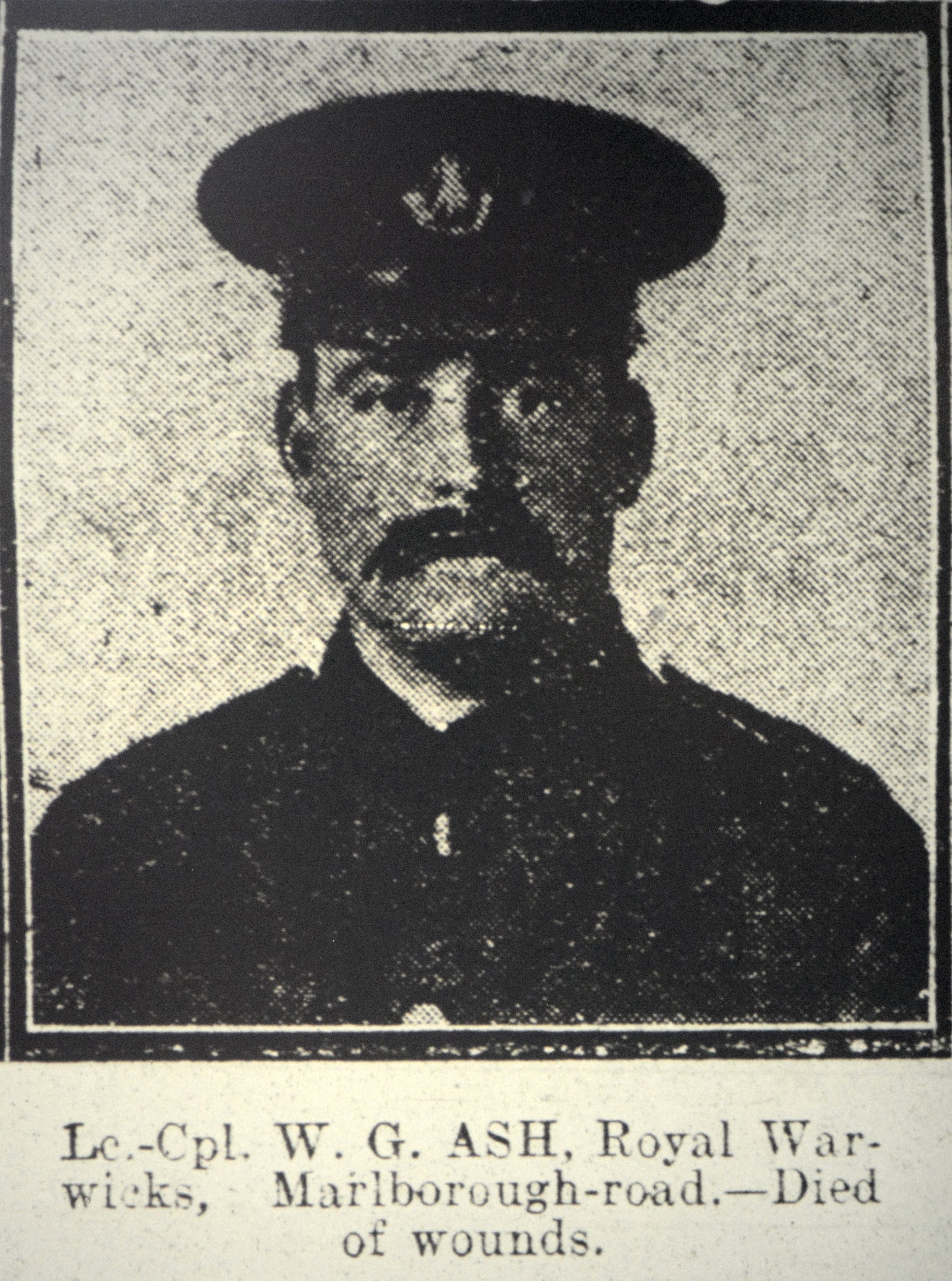
Image from the Oxford Journal Illustrated, 20 June 1917, p.6. |
Lived at 164 Marlborough Road.
Lance Corporal with the 2nd Battalion of the Royal Warwickshire Regiment, service no. 29968.
Buried at the Achiet le Grand Communal Cemetery Extension, Pas de Calais, France. |
William Ash was born in Oxford in the spring of 1890, the second of six brothers. The boys' father Thomas was a Police Constable in the Oxford City force. William was a dairyman. On 22 December 1915, when he was 25, he married Emily Louisa Edgington at St Peter’s church in Cassington. He died less than 18 months later.
|
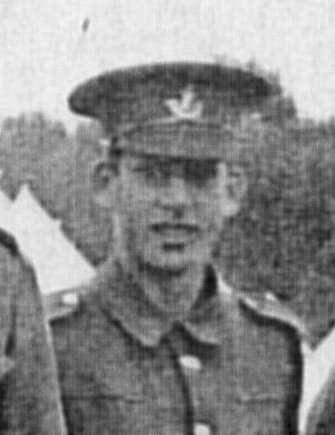
Image courtesy of Jim Tallett. Click here to see the whole photo. |
Lived at 21 Marlborough Road and then 48 Chilswell Road.
Sergeant in the 2/4 Battalion of the Oxf & Bucks Light Infantry, service no. 200883. Some sources give his rank as Lance Sergeant, a slightly more junior rank.
Buried at the St Sever Cemetery Extension in Rouen, France. |
Arthur Belcher was born in Oxford in April 1896, the eldest son of Joseph and Annie Belcher. The family were living at 21 Marlborough Road in 1901, but by the 1911 census they had moved to 48 Chilswell Road, next door to the family of James Prestidge (see below). On leaving school Arthur was employed as a clerk at Elliston & Cavell, the well-known department store on Magdalen Street (which later became Debenhams).
|
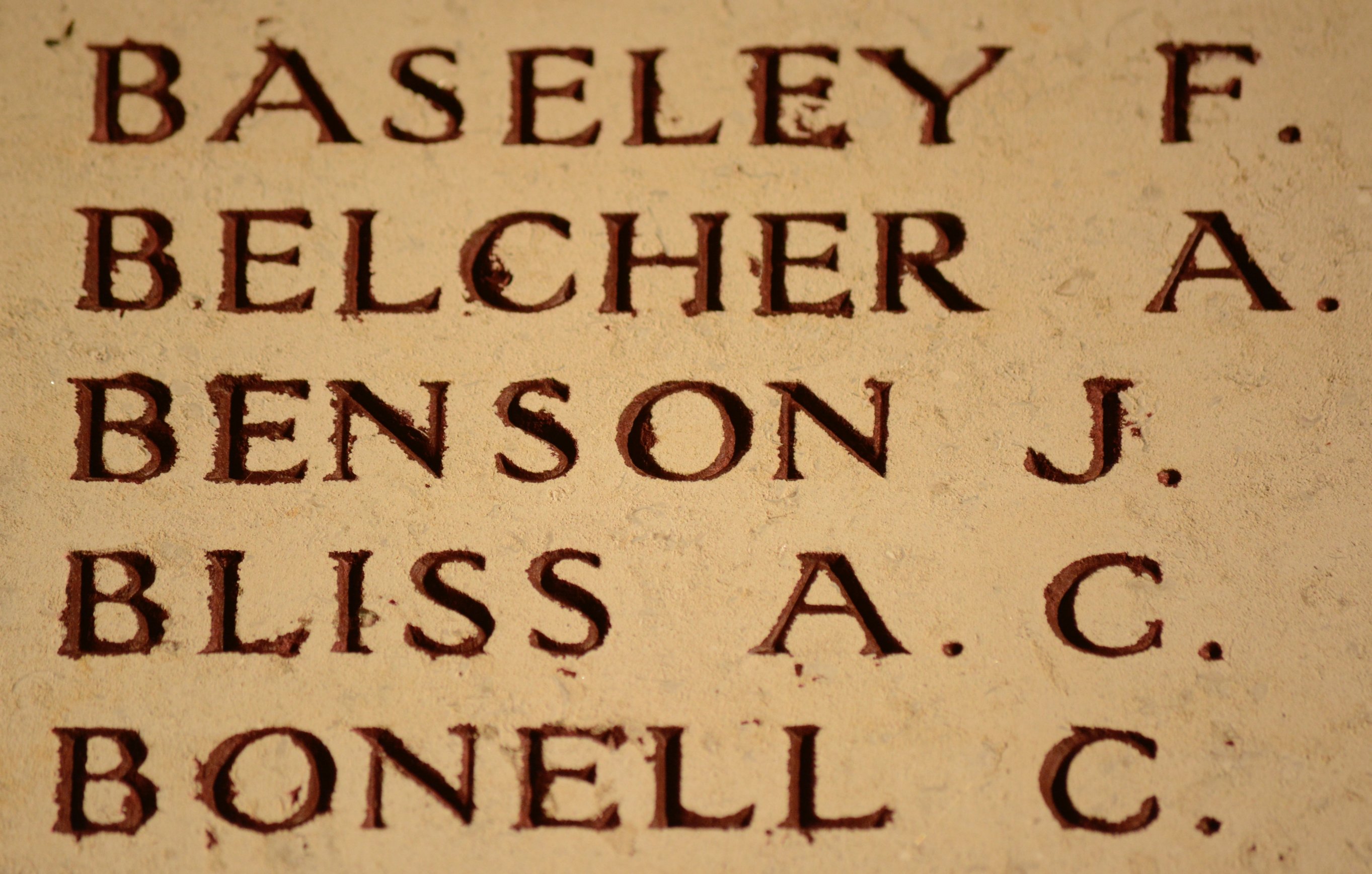
John Benson's name on the Menin Gate in Ypres, Belgium. Image courtesy of Simon Haynes. |
Probably lodged at Eastwyke Farm on the Abingdon Road.
Lance Corporal with the 5th Battalion of the Oxf & Bucks Light Infantry, service no. 10594.
Commemorated on the Menin Gate in Ypres, Belgium. |
John Benson was born in April 1896 in Walworth, part of Southwark (then in Surrey, but now in London). He came to Oxford between 1911 and 1914 to work for the butchers RR Alden & Son, who were based at Eastwyke Farm on the Abingdon Road. He was one of 18 employees of RR Alden's who went to fight, three of whom died. John and his colleagues are commemorated on the company's Roll of Honour.
|
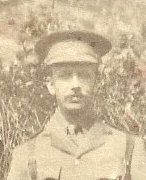
Image courtesy of Clive Organ. Click here to see the whole photo. |
Lived at 7 Whitehouse Road.
Captain with the 6th Battalion of the Oxf & Bucks Light Infantry.
Buried at the Cement House Cemetery, West Vlaanderen, Belgium. |
Ernest Brooks was born in Oxford in September 1887, the son of George and Emma Brooks. He had a sister, Dorothy, who was a year younger. Both Ernest and Dorothy were teachers. After his death at Passchendaele, a senior officer wrote that Ernest's men were devoted to him; another said that he had died a true soldier's death and that even though wounded Ernest was 'quite calm, cheerful and in no pain'.
|
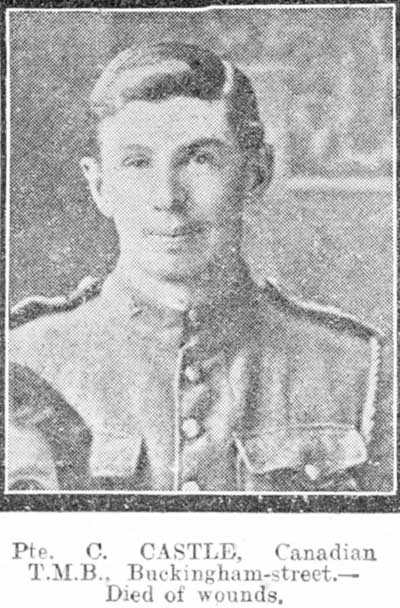
Image from the Oxford Journal Illustrated, 29 September 1918, pp.6-7. |
His wife Annie lived at 20 Buckingham Street.
Private in the 9th Canadian Light Trench Mortar Battery of the 3rd Canadian Division, service no. 775462.
Buried in the Villers Bretonneux Military Cemetery at the Somme, France. |
Charles Castle was born in Cumnor in 1891. He was the illegitimate son of Emily Florence Clemson, who was herself the illegitimate daughter of a pedlar woman. Charles worked as a jobbing gardener and in 1913 he emigrated to Canada. His sweetheart, Annie Greenwood, who was from Grandpont, followed him a few months later and they were married in April 1914. They had a son. When Charles joined the Canadian Army in mid-1916, Annie came back to Oxford and lived at 20 Buckingham Street, her childhood home.
|
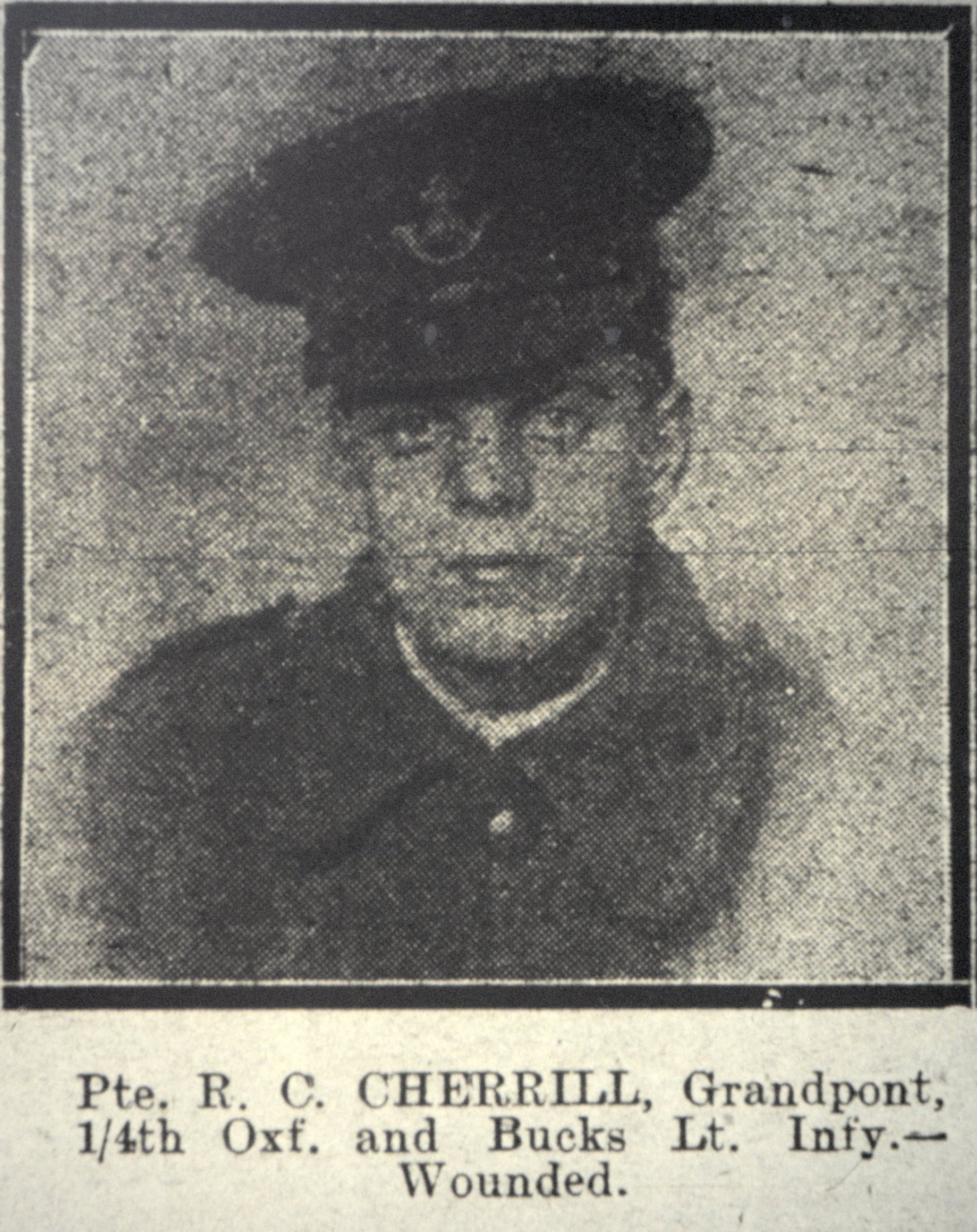
Image from the Oxford Journal Illustrated, 16 August 1916, p.6. |
Lived at 72 Marlborough Road.
Private with the 1/4 Battalion of the Oxf & Bucks Light Infantry, service no. 3591.
Buried at Pozieres British Cemetery, Ovillers La Boisselle, France. |
Richard Cherrill was born in Oxford in September 1893, the younger of the two children of Edward and Emily Cherrill. By 1901 the family had moved to 72 Marlborough Road and Richard's older brother William was working as an assistant at Frank Cooper's marmalade factory in Park End Street; Richard was a porter at a chemist's shop. Both fought in the War, but William survived. Their parents remained in Marlborough Road until their deaths in the late 1920s.
|
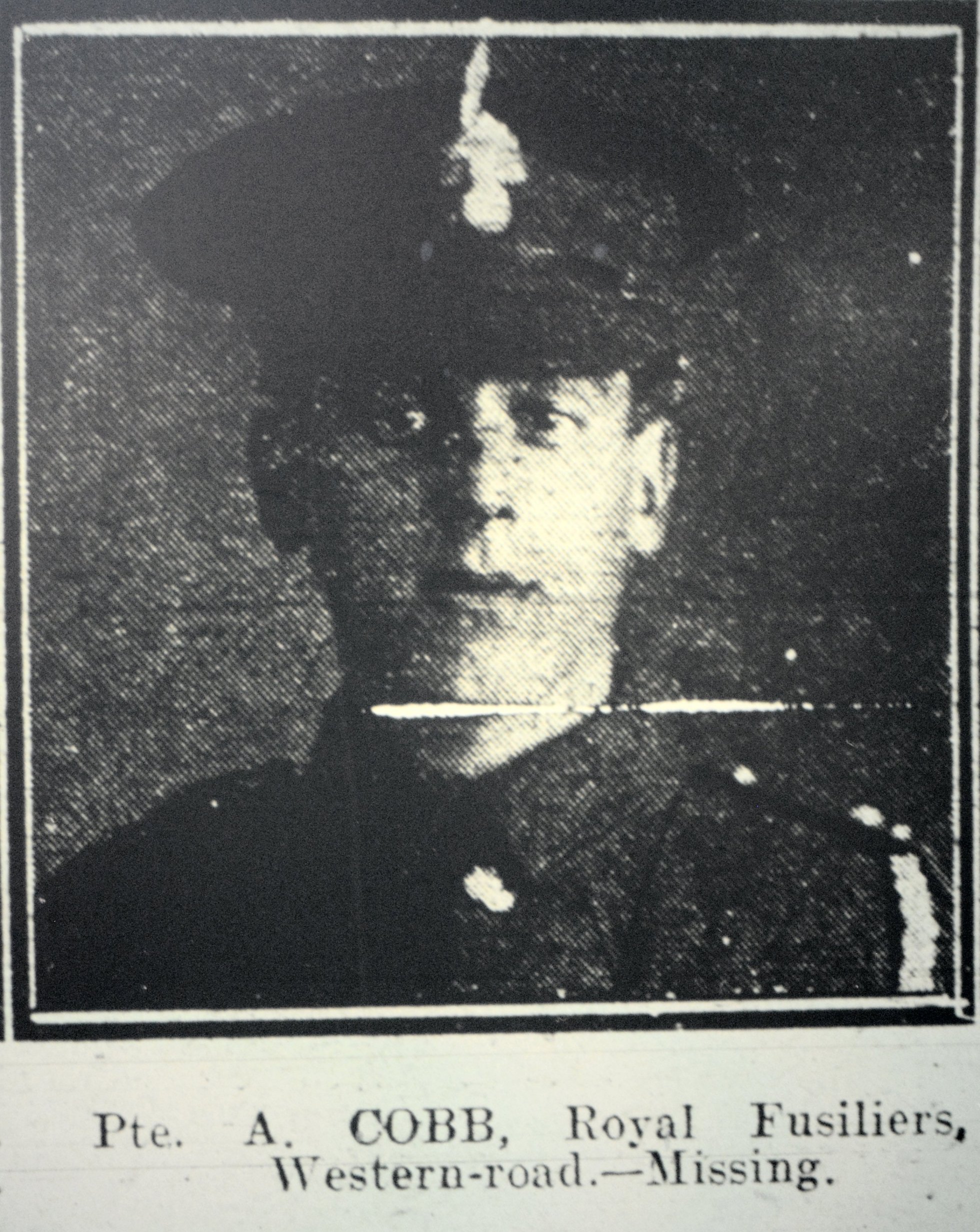
Image from the Oxford Journal Illustrated, 11 April 1917, p.6. |
His family lived at 31 Western Road.
Private with the 2nd (City of London) Battalion of the Royal Fusiliers, service no. 11060.
Buried at the Sailly Saillisel British Cemetery, France. |
Albert Cobb was born in late 1892 in Islington in London, and grew up in Finsbury Park. He was employed as a paperhanger. He enlisted in Holloway in Middlesex but by 1917 his family had moved to Oxford and were living at 31 Western Road in Grandpont. Albert was killed soon afterwards.
|
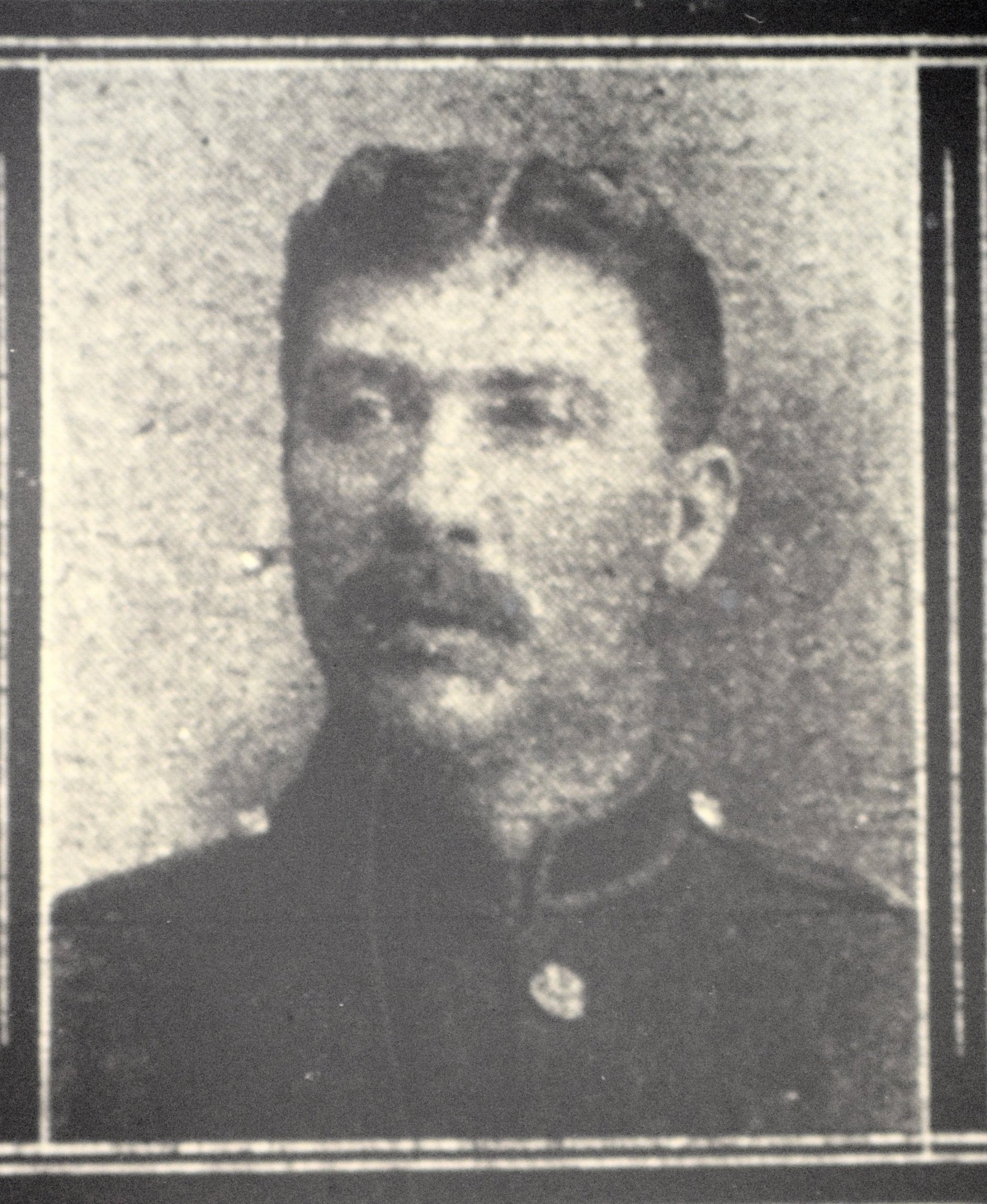
Image from the Oxford Journal Illustrated, 10 May 1916, p.6. |
Lived at 218 and then at 220 Marlborough Road.
Sapper with the 11th Field Company of the Royal Engineers, service no. 6798.
Buried at the Le Touret Military Cemetery, Richebourg l’Avoue, south-west of Lille in France.
|
Charles Collett was born on 1 June 1882 in Oxford, the third of the 12 children of Charles and Laura Collett. His father worked as a fireman, tending the furnaces at the nearby St Ebbe's gasworks. On leaving school Charles junior worked as a blacksmith and in 1900, at the age of 18, he enlisted in the regular army. He was sent to South Africa to participate in the Second Boer War. In 1907 he was stationed in Sierra Leone and by 1911 he was serving in Malta. On the outbreak of the First World War Charles was sent to France and he died on 11 January 1915 as a result of a bomb explosion in the explosives shed. Four of Charles's brothers also fought in the War, but survived.
|
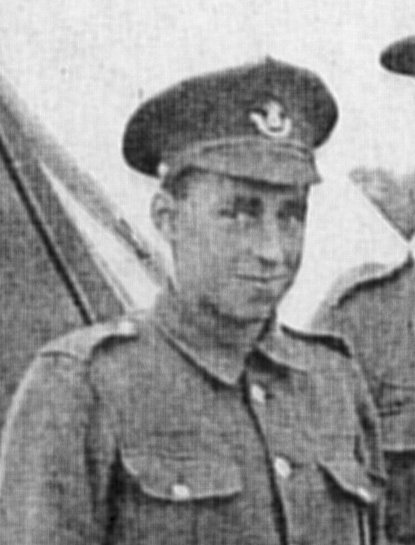
Image courtesy of Jim Tallett. Click here to see the whole photo. |
His family lived at 33 Newton Road.
Originally with the 2/4 Battalion of the Oxf & Bucks Light Infantry, service no. 3218, but later with the Sherwood Foresters and then a Private with the 7th Battalion of the King's Shropshire Light Infantry, service no. 204853.
Buried at Vraucourt Copse Cemetery, Vaulx Vraucourt, Pas de Calais, France. |
Percy Collinson was born in the summer of 1893 in the parish of St Peter le Bailey, in the centre of Oxford. His father worked as a painter for Salter's Steamers. Percy was educated at the City Technical School in St Ebbe's (which later became Oxford Polytechnic, now Oxford Brookes University) and he was an active member of the Oxford YMCA. He died at the Somme whilst endeavouring to rescue a wounded comrade; both were killed by enemy machine gun fire. Percy is also commemorated on the St Peter le Bailey war memorial and on the war memorial of the Roman Catholic church of St Aloysius on the Woodstock Road.
|
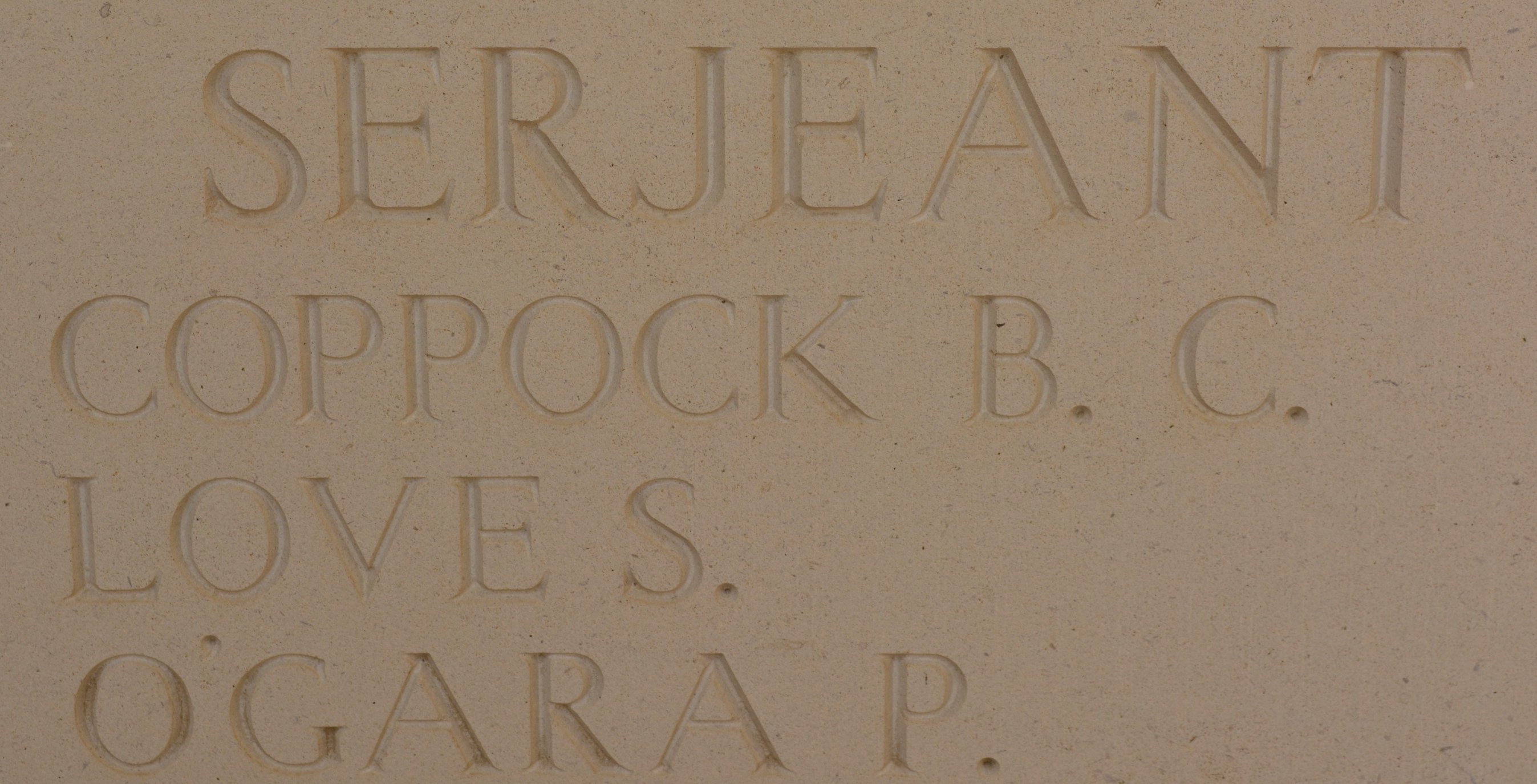
Bertram Coppock's name on the Cambrai Memorial, France. Image courtesy of Simon Haynes. |
His family lived at 80 Chilswell Road.
Sergeant with the 2nd Battalion of the Hampshire Regiment, service no. 41706.
Commemorated on the Cambrai Memorial, Louverval, France. He has no known grave. |
Bertram Coppock was born in Leamington Spa in early 1896 but his father came from Oxford and he was baptised at St Clement's church in April of that year. He had an older brother, Frederick, who moved (with their mother) to Oxford in around 1915, to live at 80 Chilswell Road in Grandpont. It's possible that Bertram had moved here as well. Both brothers fought in the War, and Frederick survived.
|
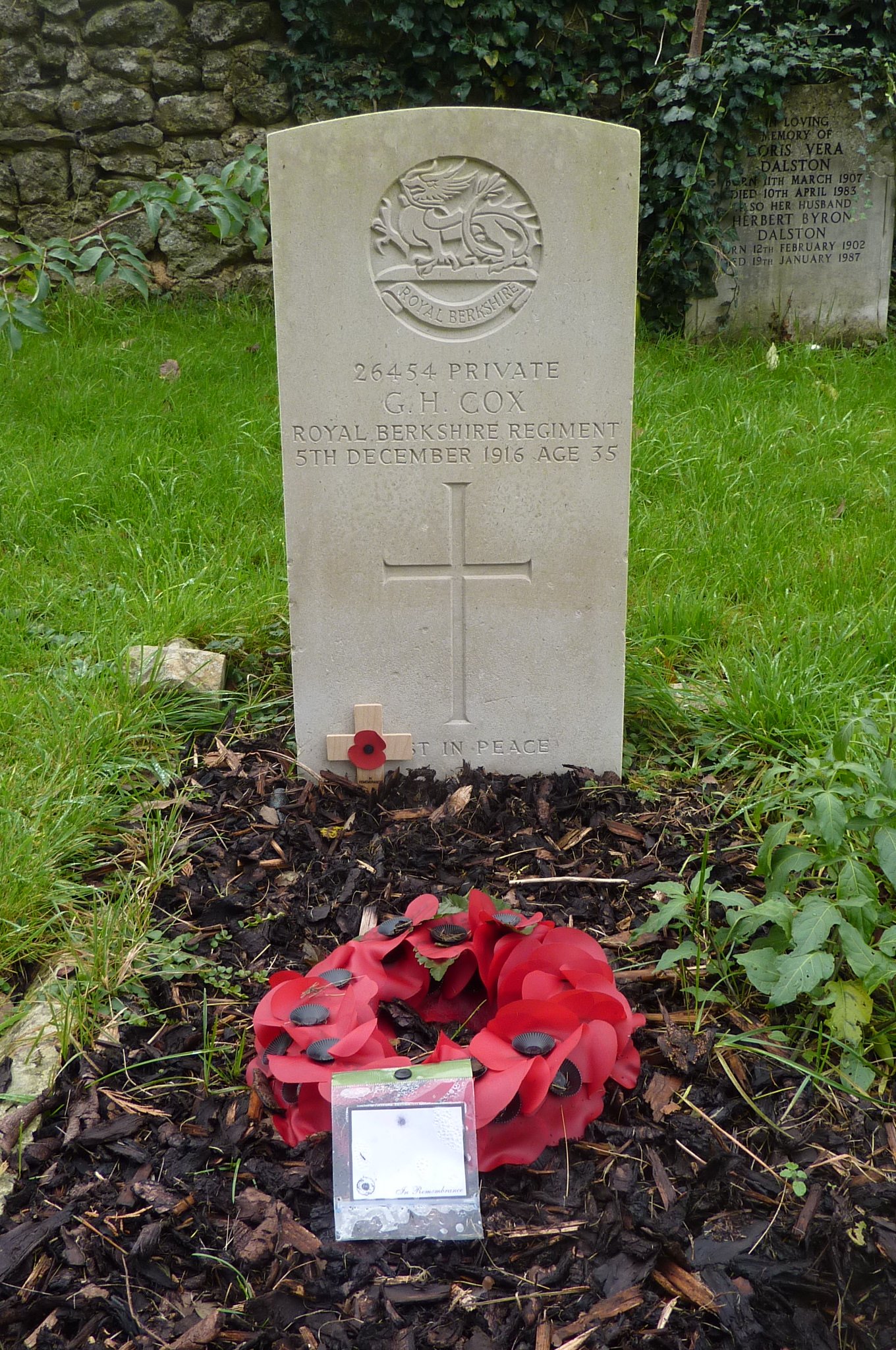
George Cox's grave in the churchyard of St Laurence, South Hinksey. |
Lived at 'The Haven' at the far southern end of the Abingdon Road, in the area known as Cold Harbour.
Private with the 11th (Labour) Battalion of the Royal Berkshire Regiment, service no. 26454.
Buried in the churchyard of St Laurence, South Hinksey. |
George Cox was born in the spring of 1883 in Asthall near Witney, the only child of William Cox (an insurance agent) and his second wife Mary. When George was 21 he married Fanny Greenaway; they moved to Oxford and by 1910 were living in a house called 'The Haven' at the far southern end of the Abingdon Road. They had two sons and George worked as a groom and gardener, probably at a large house nearby. During the War he served in France but he died in England and is buried in Oxford. He is commemorated on the St Matthew's war memorial and on the memorial in the church of St John the Evangelist, New Hinksey (which lists men from both New Hinksey and South Hinksey who died in the War).
|

Arthur Cross's grave in Osney Cemetery, West Oxford. Image courtesy of Anne Kiltie. |
Lived at 26 Buckingham Street.
Private in the (Royal) Army Service Corps, service no. 19999, later transferring to the Labour Corps, service no. 301728.
Buried in Osney Cemetery in West Oxford. |
Arthur Cross is not named on the St Matthew's memorial, but he lived in Buckingham Street, so we feel he ought to be. He was born in Ledwell near Chipping Norton in 1870/71; his father died when Arthur was still an infant. Arthur married Mary Goodgame in 1866/67 and they moved to Oxford and had 6 children. Their oldest son Harry also fought in the War, but survived. However, Mary's brother Joseph Goodgame was killled.
|
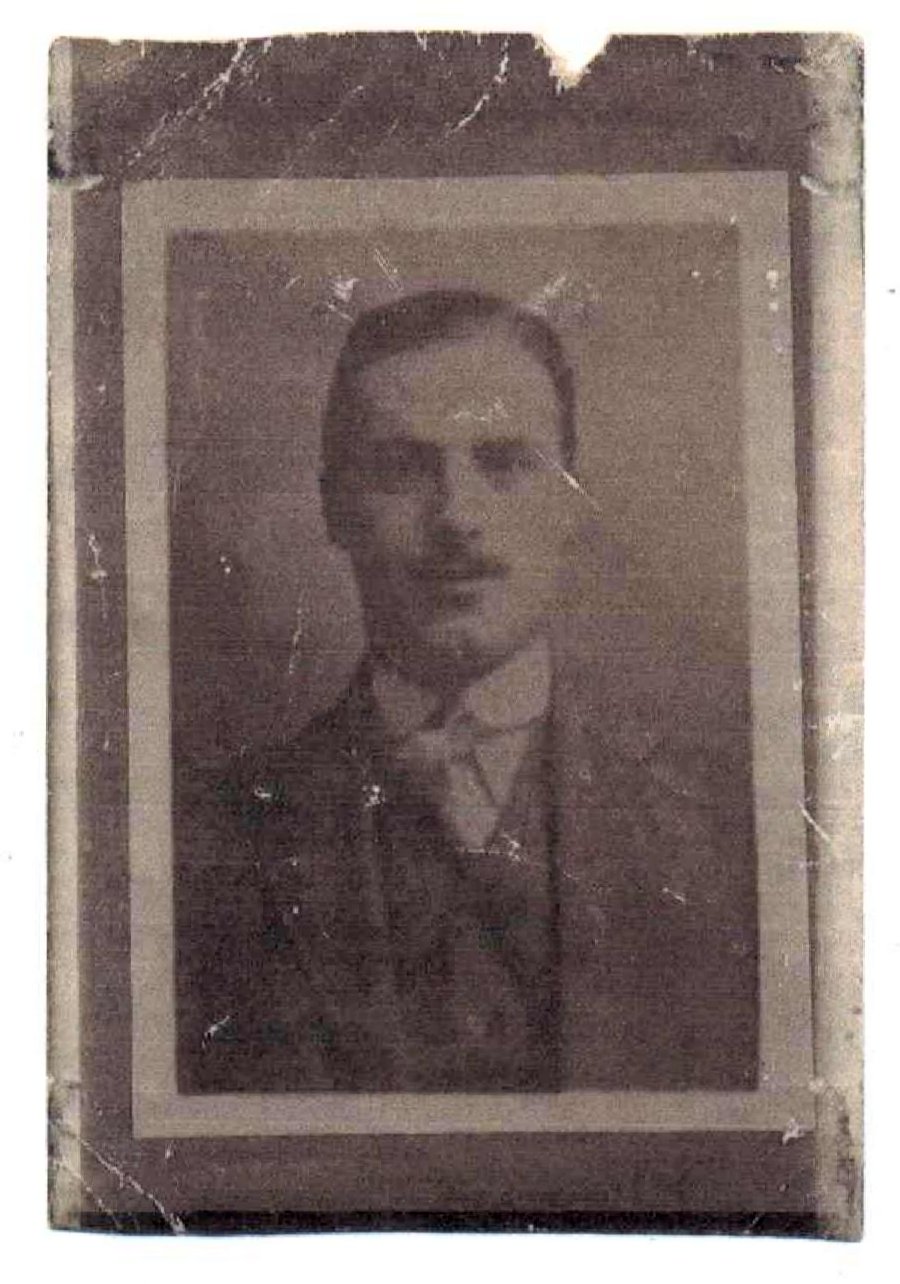
Arthur's sister Freda kept this photograph of Arthur with the letter he wrote to her from the trenches, just before he died. Image courtesy of Annabel Panting. |
Lived at 21 Western Road, 42 and 78 Chilswell Road, and then 73 Abingdon Road.
Private with the 1/4 Battalion of the Oxf & Bucks Light Infantry, service no. 2649.
Buried at Hebuterne Military Cemetery, Pas de Calais, France. |
Arthur Dolley was born in early 1892 in Oxford, the oldest of the four children of George and Maria Dolley. The Dolley family had for several generations been landlords of the Dolphin & Anchor pub at 43 St Aldates. Arthur himself worked as a clerk at the nearby St Ebbe's gasworks. Four days before he died in a trench collapse he wrote to his younger sister Freda, who was ten, describing the awful conditions in the trenches. Freda later married Reginald Townsend, the son of Thomas Townsend (see below).
|
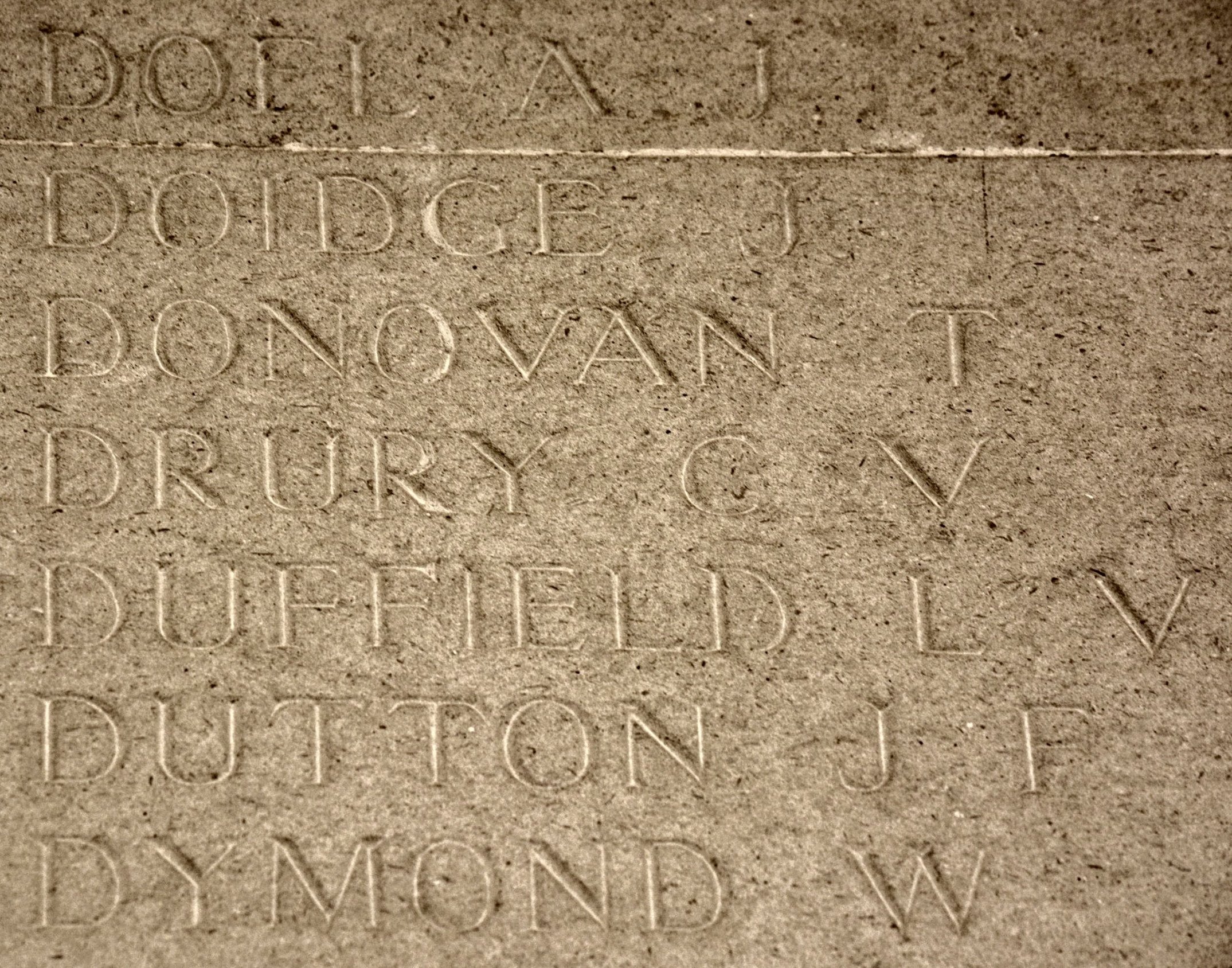
Cyril Drury's name on the Arras Memorial in France. Image courtesy of Simon Haynes. |
Lived at 3 Bridewell Square off St Aldates; his family moved to 266 Marlborough Road in 1915/16.
Enlisted with the Oxf & Bucks Light Infantry (service no. 27521) but was transferred to be a Private with the 5th Battalion of the Royal Berkshire (Princess Charlotte of Wales’s) Regiment, service no. 37737.
Commemorated on the Arras Memorial at Pas de Calais, France. He has no known grave. |
Cyril Drury was born in the parish of Holy Trinity, just to the north-west of Grandpont, in late 1891. He was the youngest of six children; his father was a tailor. His mother died when Cyril was only four, and his sister Elsie died in the same year, when she was seven. On leaving school Cyril worked as an assistant grocer.
|
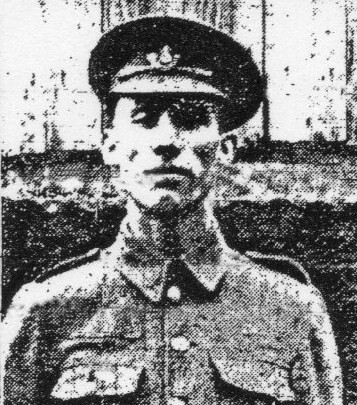
Image from the Oxford Journal Illustrated, 11 July 1917. |
Lived at 218 Abingdon Road, Cold Harbour.
Private, initially with the 1/4 Battalion of the Oxf & Bucks Light Infantry, service no. 4341, and later with the 5th Battalion of the Oxf & Bucks Light Infantry, service no. 201496.
Commemorated on the Arras Memorial at Pas de Calais, France. He has no known grave. |
Percival Edens is incorrectly recorded on the St Matthew's war memorial as 'LG Edens'. Lionel George Edens was from North Oxford and so is commemorated on the St Margaret's war memorial, but Percival Edens lived on the Abingdon Road and is commemorated on both St Matthew's and St Ebbe's war memorials. He was born in Jericho in 1884, one of the thirteen children of George and Annie Edens. He was educated at St Barnabas School and followed his father in becoming a plasterer. When he was 22 he married Edith Cheer and they had six children. The family had moved to the Abingdon Road by 1908.
|
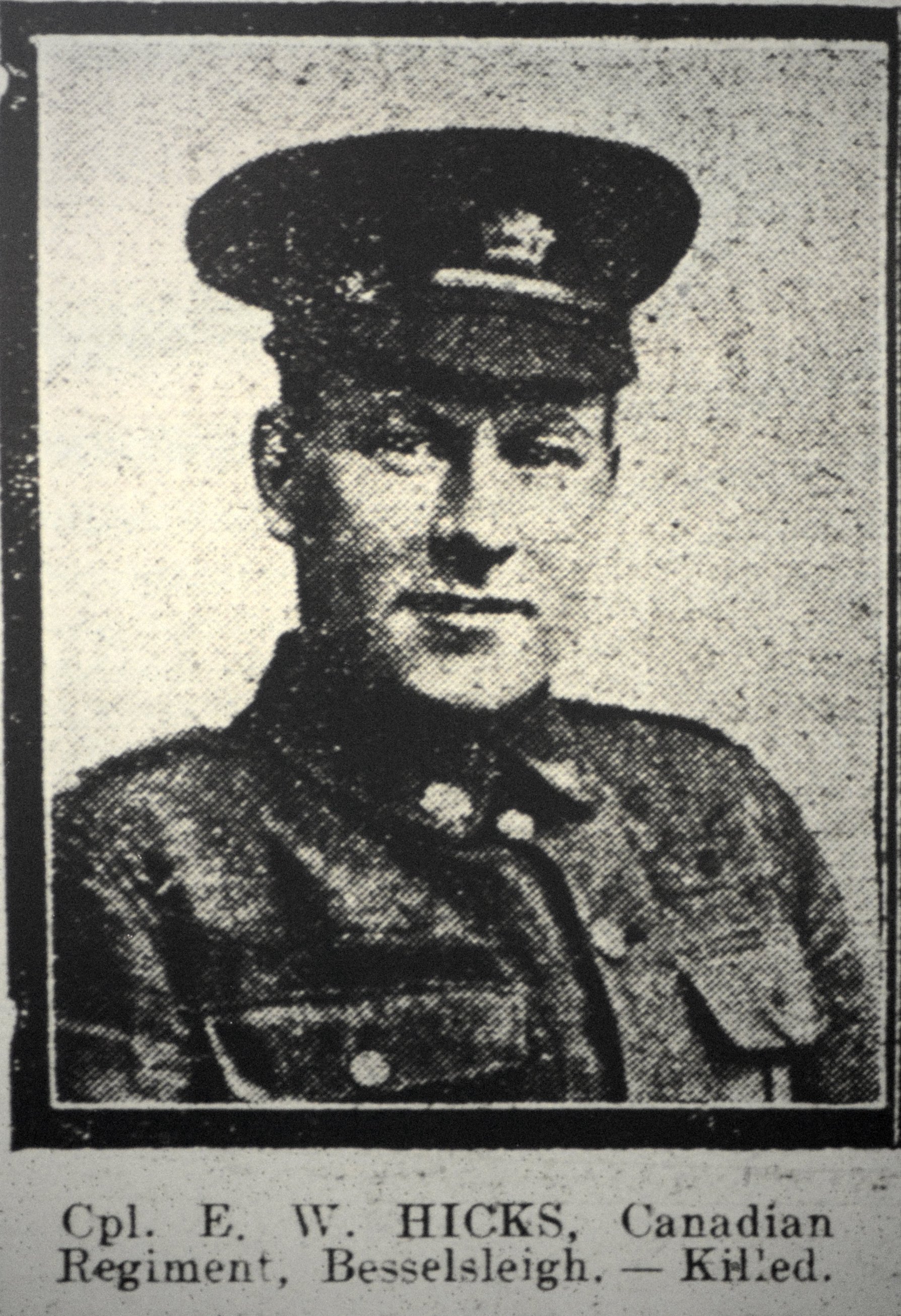
Image from the Oxford Journal Illustrated, 17 April 1918, p.6. |
His mother lived in Cumnor after the War.
Corporal with the 1st Canadian Motor Machine Gun Brigade, service no. 45517.
Commemorated on the Canadian National Vimy Memorial near Arras in France. He has no known grave. |
Edward William (also known as William Edward, or Ted) Hicks was born in Besselsleigh near Abingdon in December 1888. His parents Joseph and Sarah married in Chelsea but moved to Oxford soon afterwards and the first five of their twelve children were born here. In 1888, shortly before Edward was born, the family moved to Besselsleigh and took on the licence of the Greyhound pub. In around 1905, when he was about 17, Edward emigrated to Canada. At the outbreak of War he enlisted with the Sifton Machine Gun Battery, eventually joining the Canadian Motor Machine Gun Brigade. Four of Edward's brothers also fought in the War, but appear to have survived.
|

Image from the Oxford Journal Illustrated, 9 October 1918, p.6. |
His wife and her family lived at 29 Western Road.
Sergeant with the 9th Battalion of the Royal Inniskilling Fusiliers, service no. 47039. Formerly Corporal with the Oxf & Bucks Light Infantry, service no. TR/12205.
Buried at the Mont Noir Military Cemetery, St Jans Cappel, France. |
Edgar Hook was born in Oxford in the spring of 1889, the only child of Thomas and Laura Hook. Thomas worked for the Post Office and the family lived in East Oxford. Edgar became a school teacher. He joined up to fight in the War, and then in November 1917 married Winifred Lucas at St Matthew's church in Grandpont. Her family lived at 29 Western Road and following her marriage Winifred continued to live here whilst Edgar was away fighting. He was killed only nine months later.
|
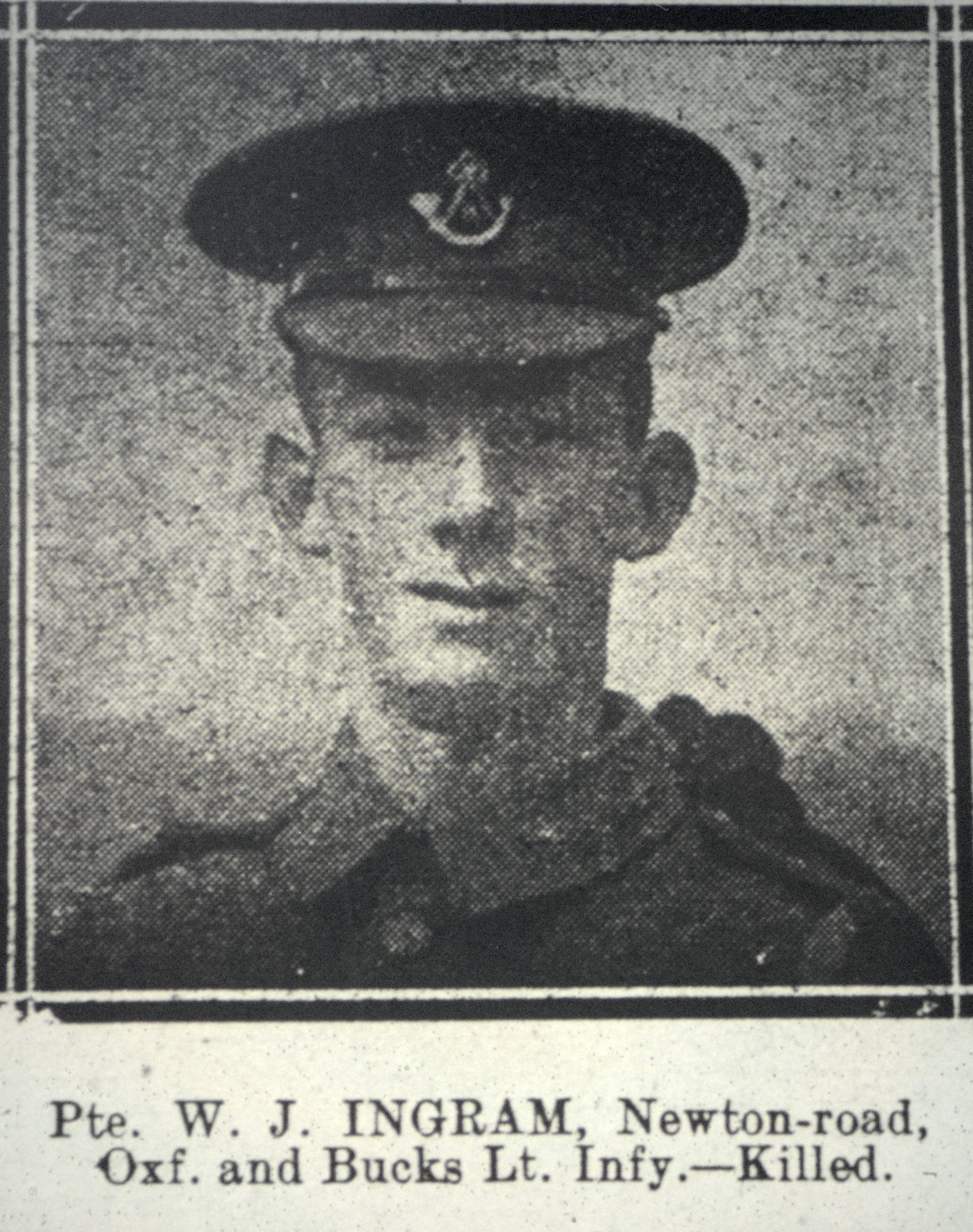
Image from the Oxford Journal Illustrated, 13 September 1916, p.7. |
Lived at 14 Newton Road.
Private with the 1/4 Battalion of the Oxf & Bucks Light Infantry, service no. 4788.
Commemorated on the Thiepval Memorial in the Somme, France. He has no known grave. |
William Ingram was born in 1898/99 in South Africa, the oldest child of John and Rosina Ingram. The family moved to England and by 1911 they were living at 33 Norreys Avenue off the Abingdon Road, and John was working as an assistant pawnbroker. By 1916 they had moved to 14 Newton Road in Grandpont. William must have enlisted as soon as he was able to, because he was only 18 when he died. William's father John also fought in the War (despite being almost 40 when it started) but survived.
|
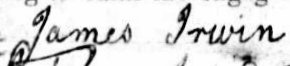
James Irwin's signature on his military attestation (sign-up) papers. |
His wife's family lived at 34 Western Road.
Gunner with the 103rd Company of the Royal Garrison Artillery, service no. 33342, and then Pioneer (or Sapper) with the Royal Engineers, Railway Troops, service no. WR/143031.
Buried at Ramleh War Cemetery, Israel. |
James Irwin was born in Birmingham in August 1890, the youngest of three children. He enlisted in the army in May 1910 when he was 19. He served in Jamaica and then, when War broke out, in France. On Christmas Day 1915, whilst on leave, he married Lilian Yeatman at St Matthew's church in Grandpont. Three months later he was posted to India, then to Aden, and thence to Egypt, where he was involved in the building of military railways. He died of bronchial pneumonia in Alexandria, six weeks after the armistice.
|
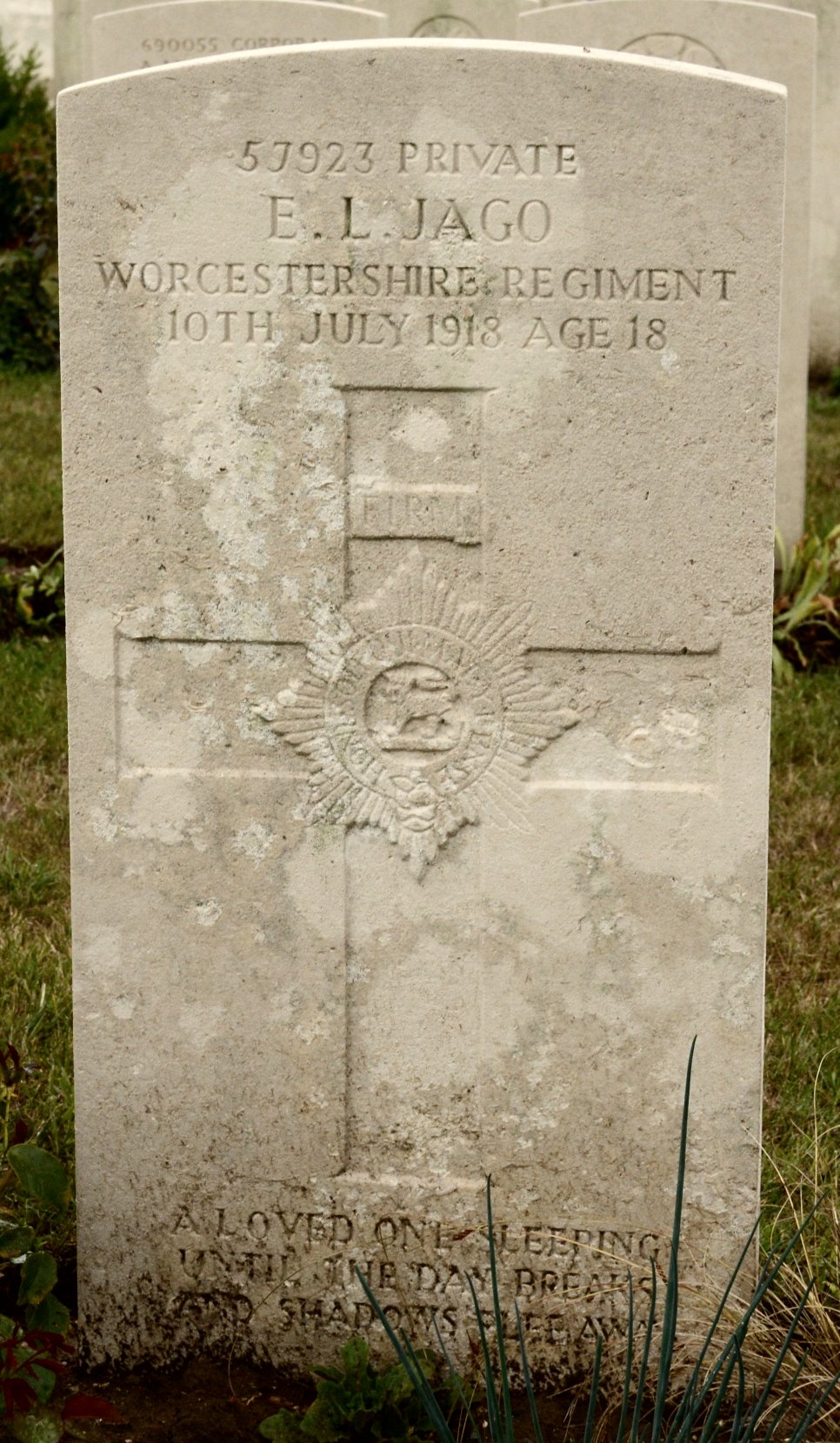
Ernest Jago's grave in the St Venant Robecq Road British Cemetery, Pas de Calais, France. Image courtesy of Simon Haynes. |
Lived at 4 Edith Road.
Private with the 2nd/8th Battalion of the Worcestershire Regiment, service no. 57923.
Buried at the St Venant Robecq Road British Cemetery, Robecq, Pas de Calais, France. |
Ernest Jago was born in Ashford (now in Kent) in September 1899, the only child of Ernest and Kate Jago. By 1911 the family had moved to Oxford and were living at 4 Edith Road in Grandpont. In the early part of the War Ernest worked in the Secretary's Office at the Oxford University Press in Jericho. He enlisted in the army in October 1917, a month after his 18th birthday. He died near Ypres only four months before the War ended. Ernest is also remembered on the Oxford University Press war memorial, together with Albert Margetts (see below).
|
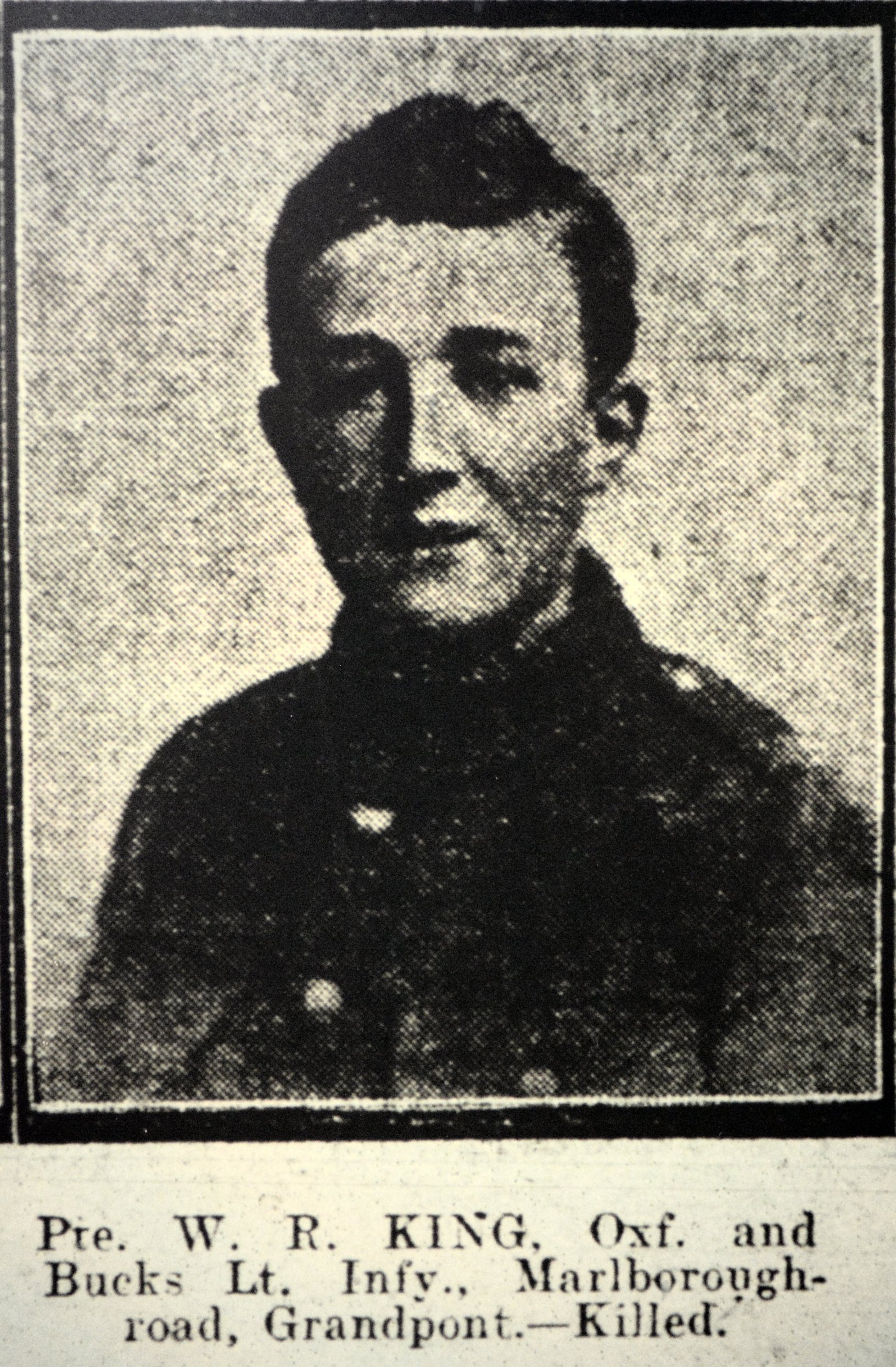
Image from the Oxford Journal Illustrated, 6 March 1918, p.6. |
Lived at 60 Marlborough Road.
Private with the 5th Battalion of the Oxf & Bucks Light Infantry, service no. 200381.
Buried in the Grand Seraucourt British Cemetery, Aisne, France.
There is a marble memorial to him on the northern wall of St Matthew’s church. Its design is identical to that of the memorial to Charles George Tyrrell (see below). |
William (sometimes recorded as Reginald) King was born in late 1897 in the parish of St Aldates. He was the only child of William and Rose King. William's father, a grocer's manager, died when William was 14. Whilst fighting on the Somme William suffered from trench foot and was gassed.
|
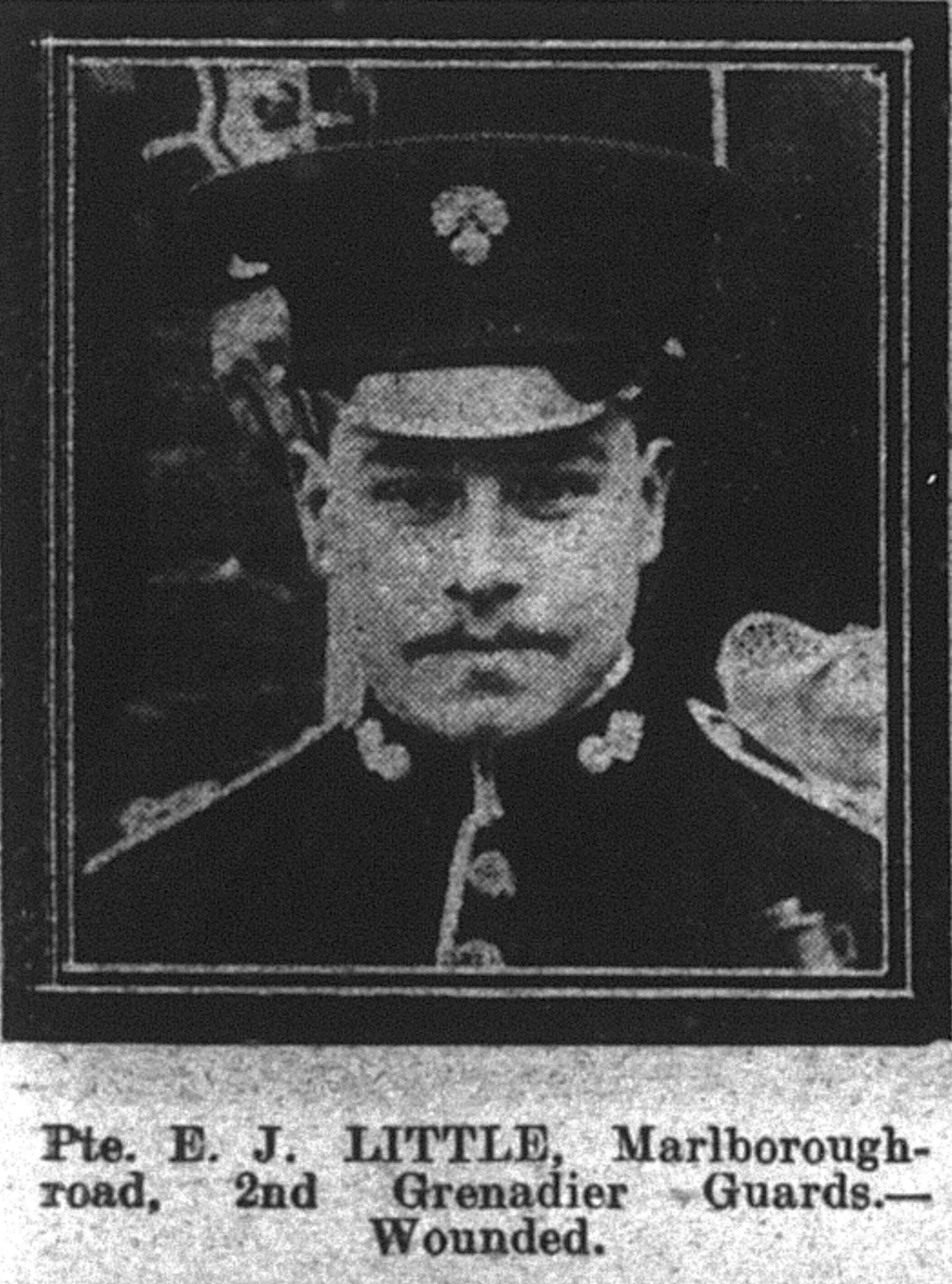
Image from the Oxford Journal Illustrated, 3 November 1915, p.7. |
Lived at 198 Marlborough Road.
Private in the 2nd Battalion of the Grenadier Guards, service no. 13992
Buried in the Botley Cemetery, Oxford. |
Ernest Little was born in Oxford in 1886/87, the eldest son of a jobbing gardener. He was one of three brothers - Ernest, Frederick and Hubert (see below) - who died in the War. Their parents William and Mary had nine children in total, two girls and seven boys. After leaving school Ernest worked as an errand boy for Boots the Chemist on Queen Street and later as an assistant to a shoemaker. In 1908 he enlisted in the Grenadier Guards, and by 1911 was living in St George's Barracks in Hanover Square, London.
|
|
Frederick Charles Squires LITTLE 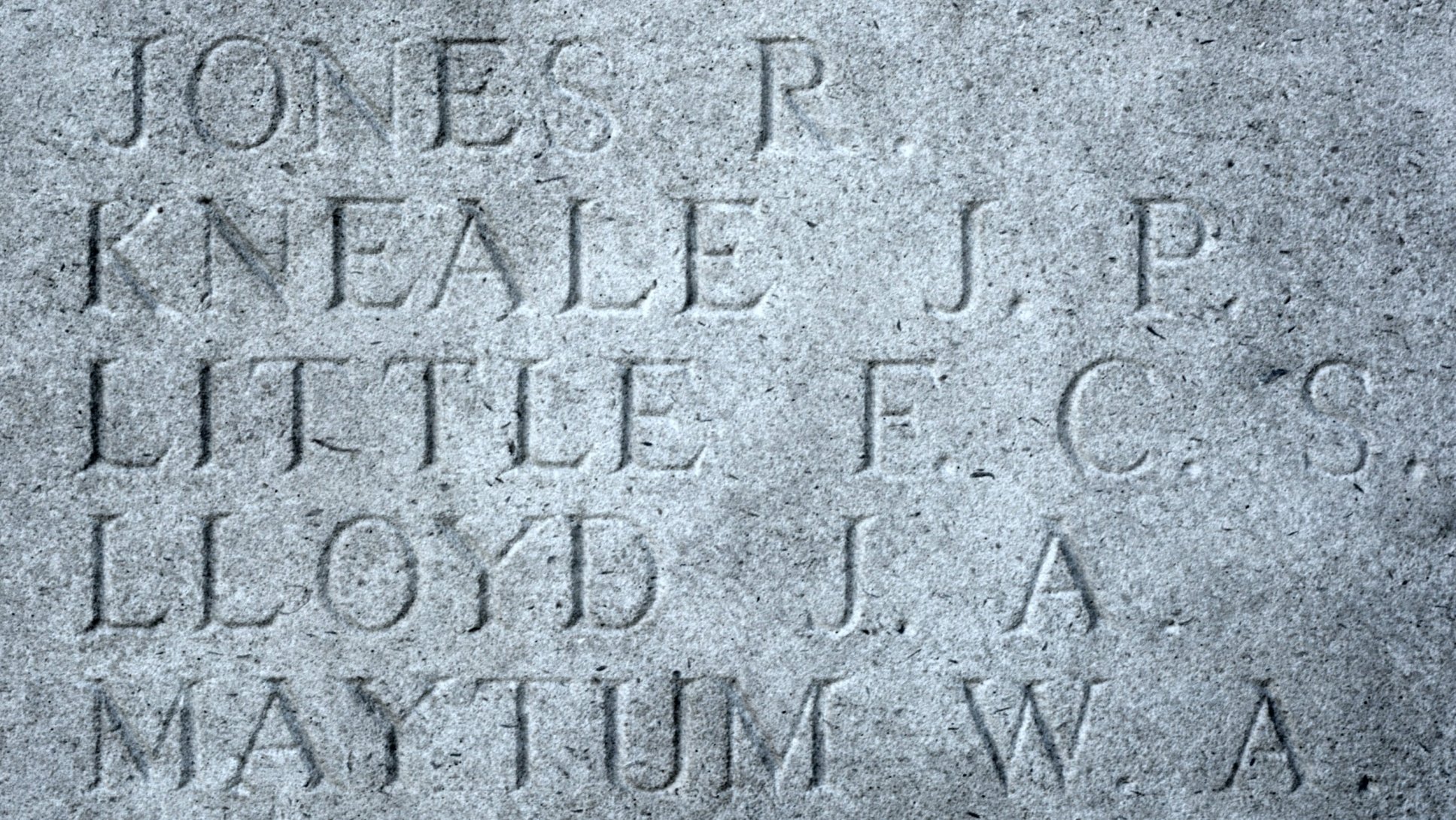
Frederick Little's name on the Pozieres Memorial in France. Image courtesy of Simon Haynes. |
Lived at 198 Marlborough Road.
Initially enlisted with the Queen’s Own Oxfordshire Hussars (service no. 1938), but later transferred to the 4th Squadron of the Machine Gun Corps (Cavalry) in which he was a Private, service no. 105100.
Commemorated on the Pozieres Memorial, on the Somme, France. He has no known grave. |
Frederick Little was one of three brothers - Ernest, Frederick and Hubert - who died in the War (see above and below). He was born in 1890 in Oxford and was given his mother's maiden name (Squires) as his second middle name. By 1911 he was working as a college servant at Christ Church and he was to be one of more than fifty Christ Church servants who did military service during the First World War. He is named on the Christ Church war memorial, which lists all members of the college and cathedral community who lost their lives in the First and Second World Wars.
|
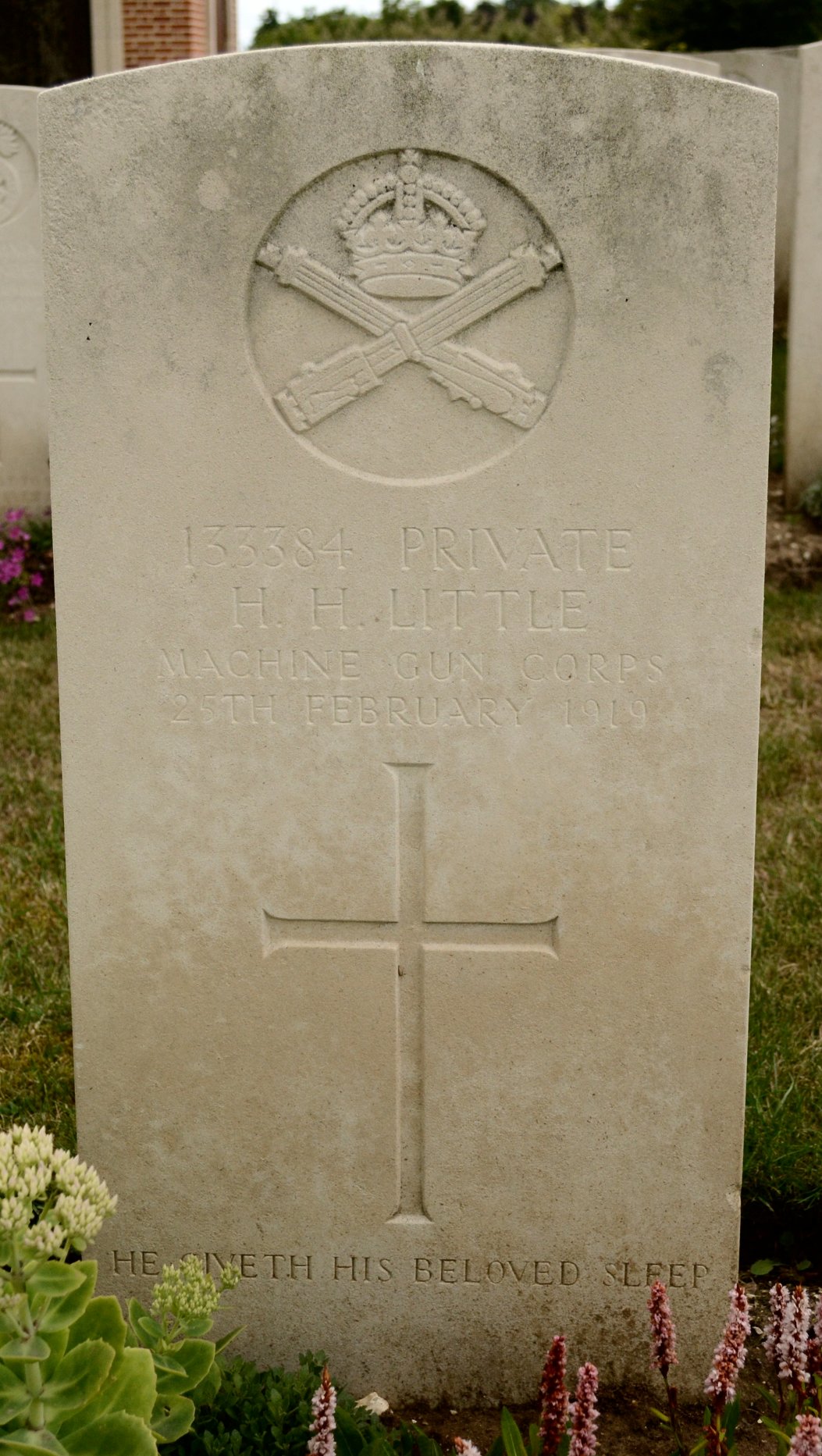
Hubert Little's grave at the Abbeville Communal Cemetery Extension, France. Image courtesy of Simon Haynes. |
Lived at 198 Marlborough Road.
Private with the 61st Company Machine Gun Corps, service no. 133384.
Buried at the Abbeville Communal Cemetery Extension, on the Somme, France. |
Hubert Little was the youngest of three brothers - Ernest, Frederick and Hubert - who died in the War (see above). Hubert was born in 1899 in Oxford and like his older brother Frederick he served with the Machine Gun Corps. Two other Little brothers - William and Arthur - also went to fight but survived. The youngest child of the family, Cecil, was only ten or eleven when war broke out, and hence too young to go.
|
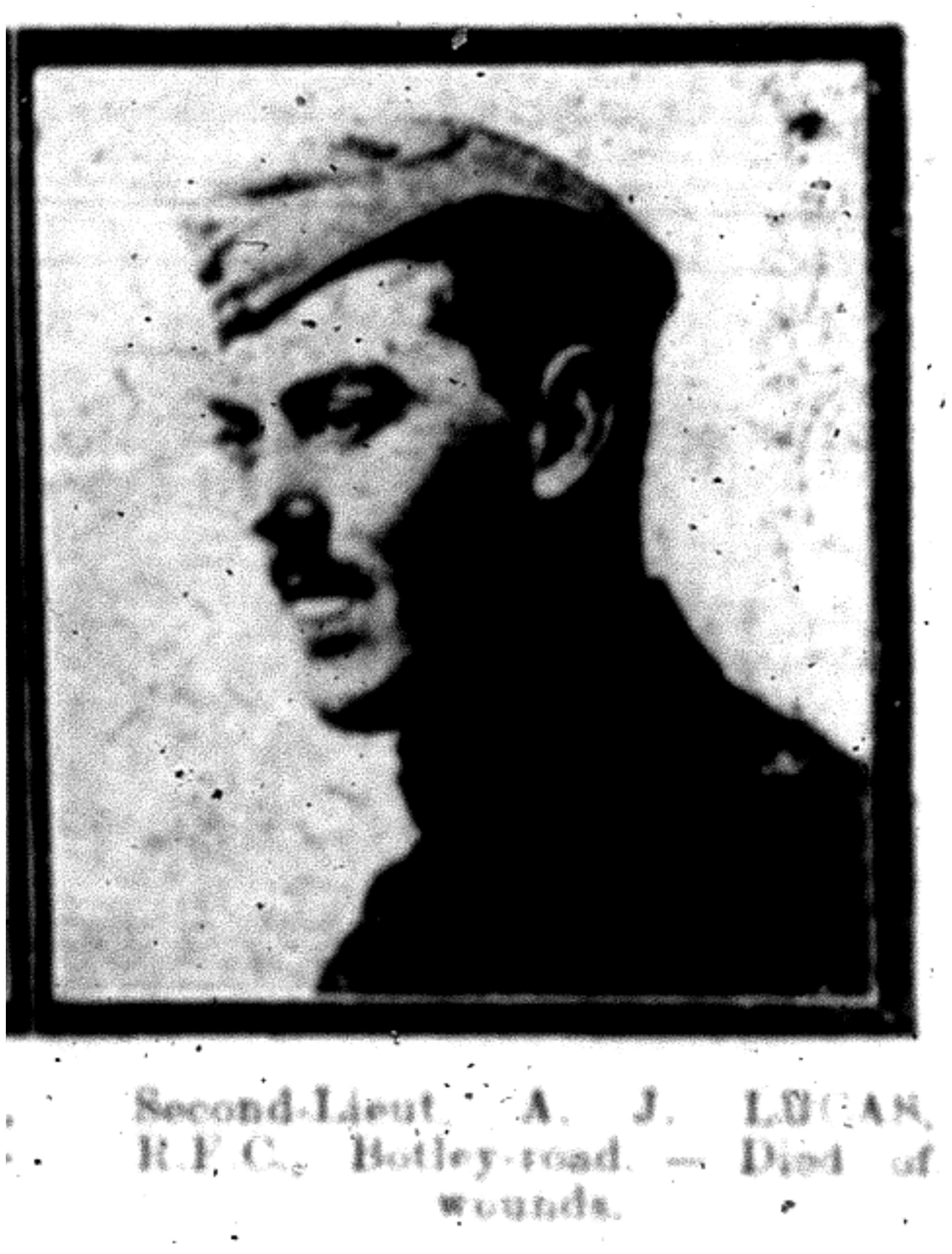
Image from the Oxford Journal Illustrated, 6 June 1917, p.6. |
Lived at Sunnyside, now 92 (then 66) Botley Road. His father and grandparents lived at 106 and later 110 Abingdon Road.
Second Lieutenant in the 66th Squadron (and General List) of the Royal Flying Corps.
Buried at Warlincourt Halte British Cemetery, Saulty, France. |
Albert (known as Bertie) Lucas was born in late 1894 in Oxford, the eldest child of John Butler Lucas and his wife Mary Bate Lucas. John was a councillor on the City Corporation and a partner in a successful hide and skin brokerage business in Park End Place. Bertie joined the Royal Flying Corps as an air mechanic in 1915 and obtained his commission on 1 August 1916, when he was 21. On the same day he married his first cousin, Violet Chauncy, at St Frideswide's church on the Botley Road. They had a daughter, Peggy, who was born three months after her father's death. She went on to fly spitfires in the Second World War and to have four husbands.
|
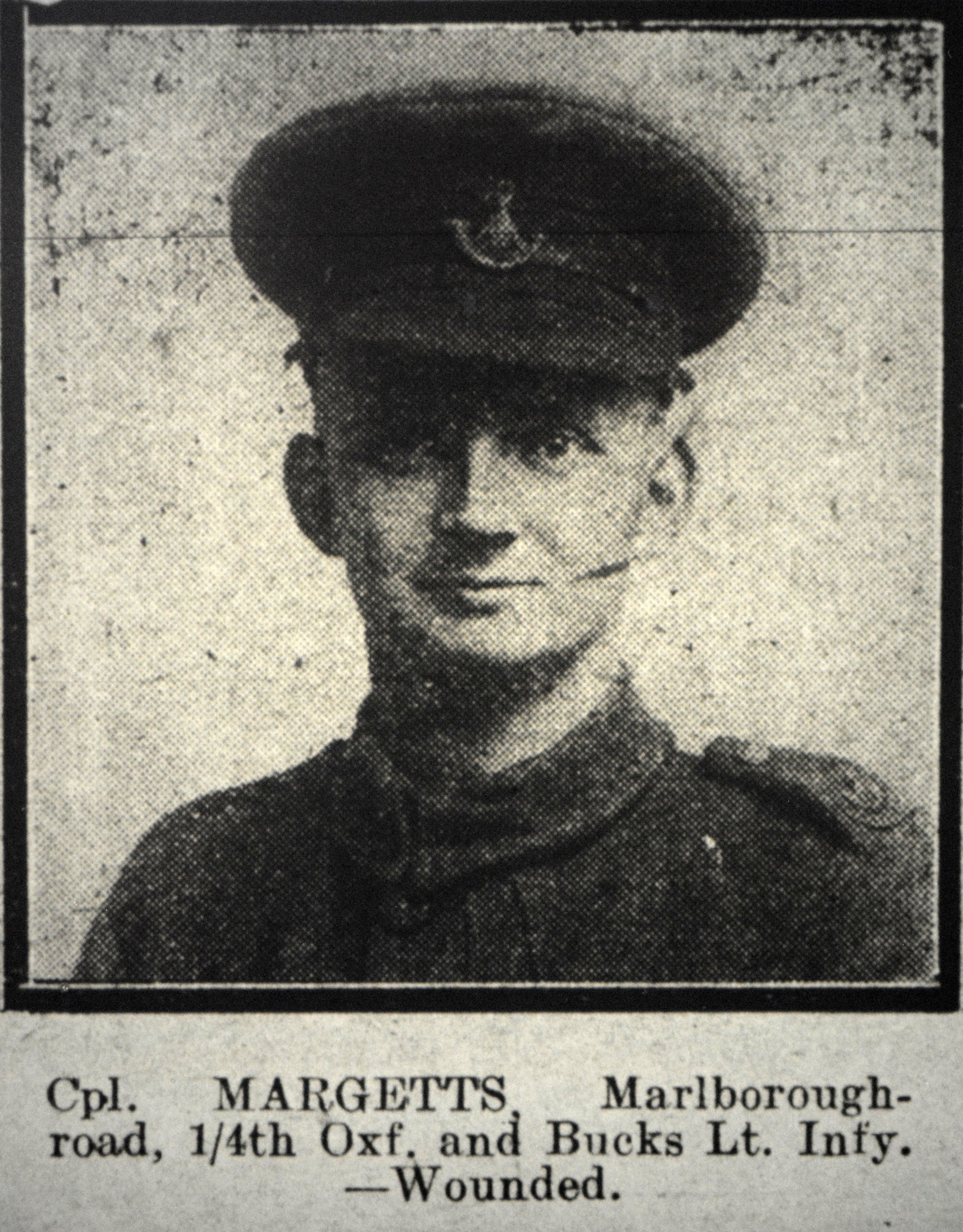
Image from the Oxford Journal Illustrated, 9 August 1916, p.6. |
Lived at 122 Marlborough Road.
Corporal with the 2/4 Battalion of the Oxf & Bucks Light Infantry, service no. 200871.
Commemorated on the Wall of Remembrance at the Tyne Cot Memorial in West Vlaanderen, Belgium. |
Albert Margetts was born in April 1890 in Holy Trinity, the parish just to the north-west of St Matthew's. His father was a general labourer and later a sawyer. Albert joined the Oxford University Press in Jericho to work as a compositor. He was a keen sportsman and was in the OUP football and athletics teams. Together with Ernest Jago (above) Albert is listed on the Oxford University Press war memorial. 356 men from the Press served in the First World War and 45 of them died.
|
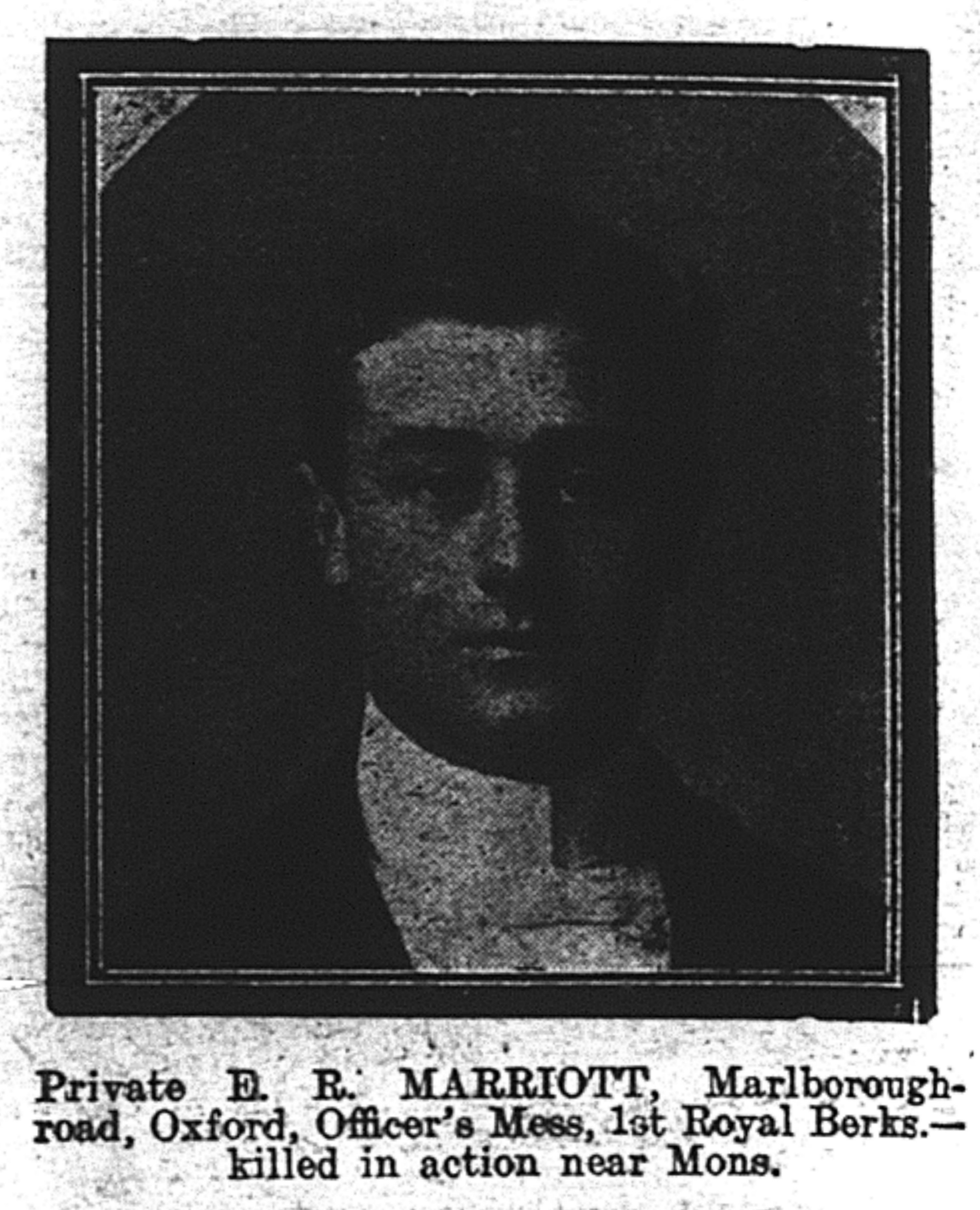
Image from the Oxford Journal Illustrated, 21 October 1914, p.12. |
Lived at 147 Marlborough Road.
Private with the 1st Battalion of the (Princess Charlotte of Wales's) Royal Berkshire Regiment, service no. 9757.
Commemorated on La Ferté Sous Jouarre Memorial, Seine et Marne, France. |
Edward Marriott was born in Kinsale, County Cork, Ireland, in 1893/94, the older of two brothers. Their father James was in the Royal Marines; their mother Christina died when they were young children. James remarried and the family moved to Oxford. Edward worked as a footman before enlisting in Reading; he was killed only months later. His younger brother Alexander had joined the Royal Navy in 1911 when he was 15; he served on various ships as a Signaller in the War, but survived.
|
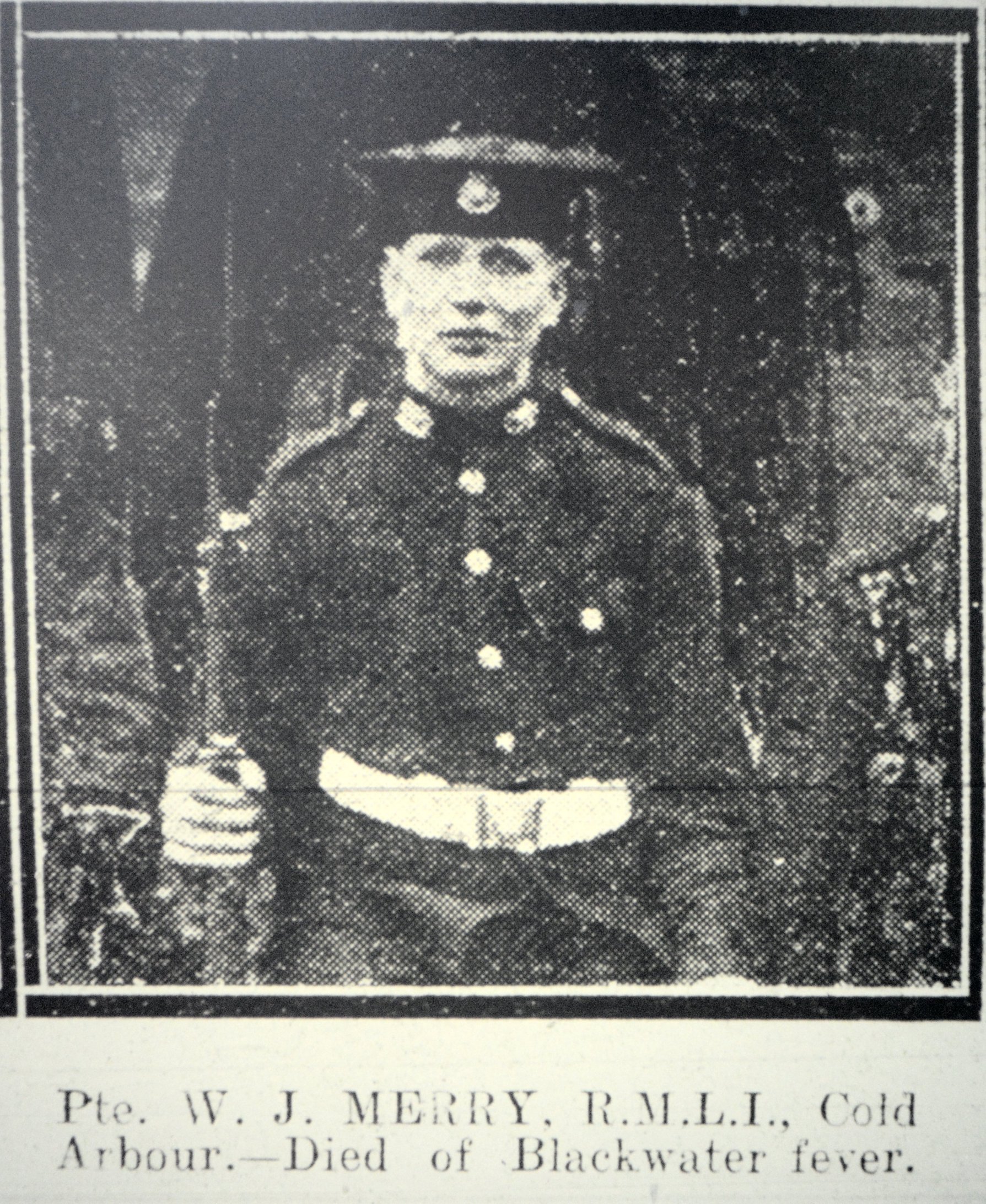
Image from the Oxford Journal Illustrated, 18 April 1917, p.4. |
Lived at 5 Weirs Lane and then at Woodbine Cottage, Abingdon Road (just south of the junction with Weirs Lane), Cold Harbour.
Private in the Royal Marine Light Infantry, service no. PO/18395. Was part of the East African Expeditionary Force.
Buried at Dar es salaam (Sea View) Cemetery, Tanzania. |
William Merry was born in Oxford in 1897, the third of the seven children of Spencer and Ellen Merry. His father was a builder’s labourer and later a painter; his mother was a laundry worker. Spencer Merry and three of his sons all fought in the War, but only William died.
|
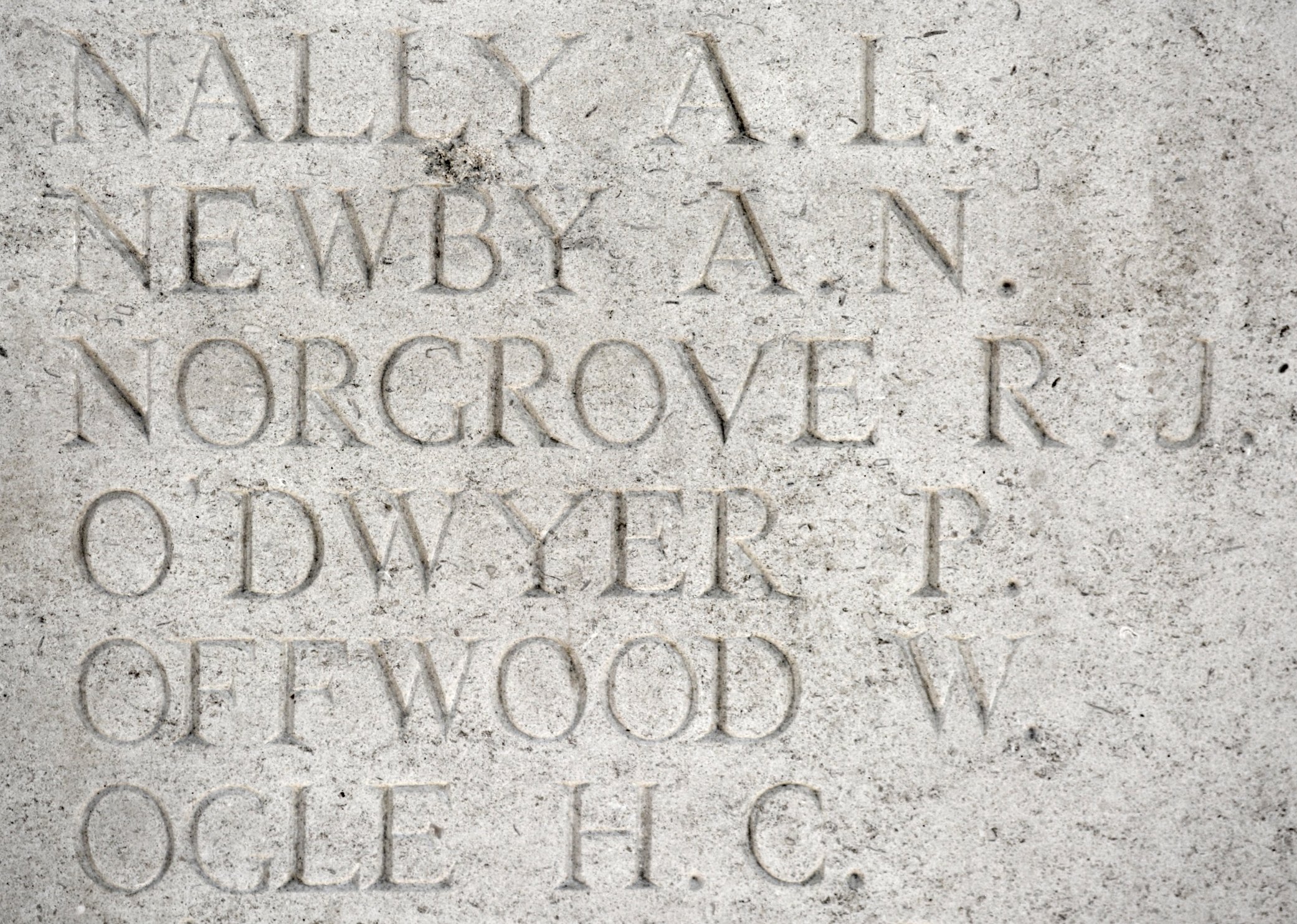
Reginald Norgrove's name on the Pozieres Memorial, France. Image courtesy of Simon Haynes. |
Lived at 12 Edith Road.
Private with the 7th Battalion of the King's Royal Rifle Corps, service no. 24058.
Commemorated on the Pozieres Memorial, on the Somme, France. He has no known grave. |
Reginald Norgrove was born on 13 May 1897 at 12 Edith Road, the oldest of three children. Reginald was particular friends with Horace Tallett and (Charles) George Tyrrell (see below). For many years, until the mid 1960s, this notice appeared annually in The Oxford Times, placed there by Reginald's sister Doris and brother Frank, and by Richard Tyrrell, brother of George Tyrrell, whom Doris married in later life.
|
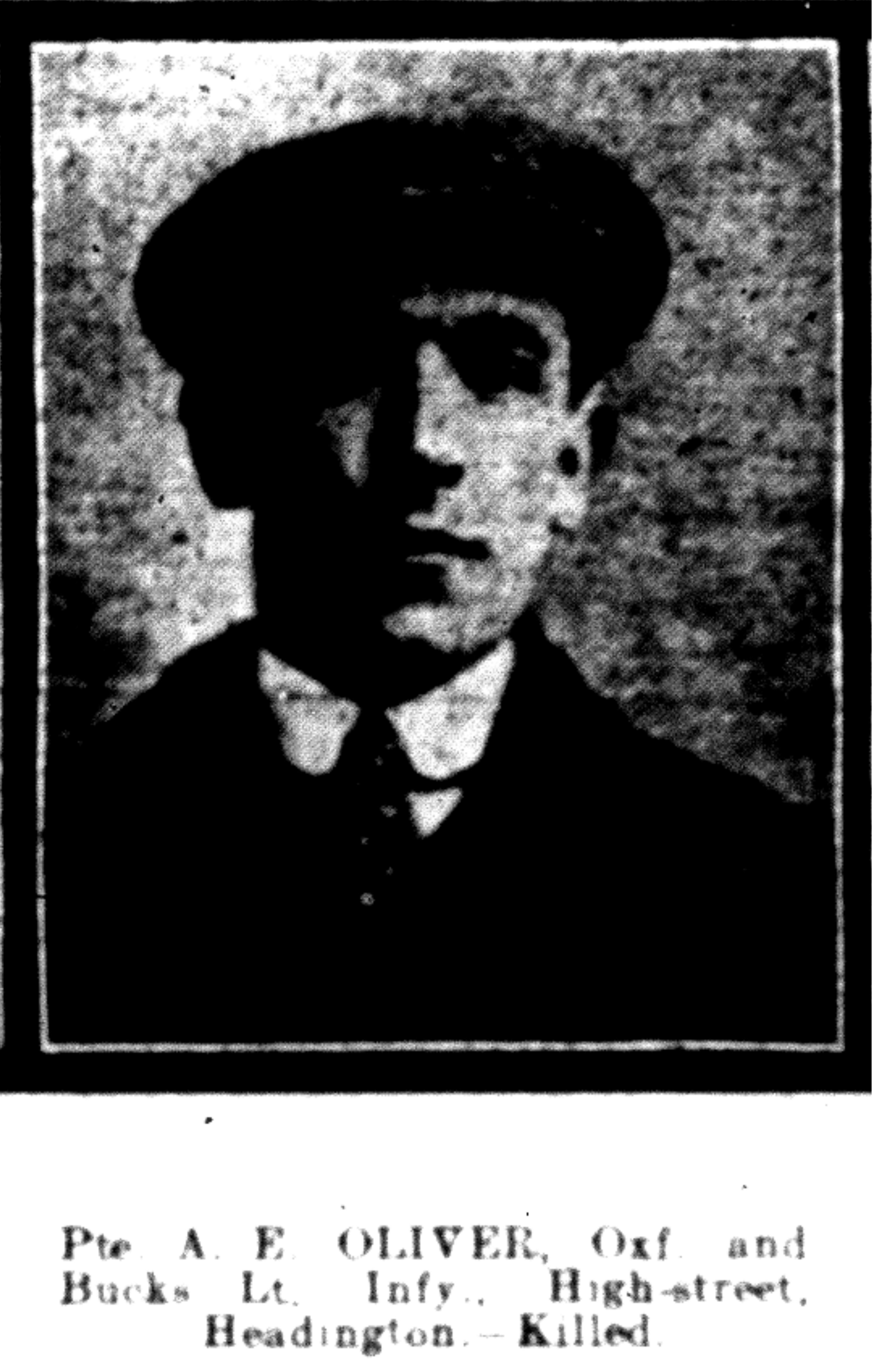
Image from the Oxford Journal Illustrated, 13 February 1918, p.6 Pte AE Oliver had gone missing nine months earlier and was now presumed dead. |
Lived at 2 Jubilee Terrace.
Private with the 5th Battalion of the Oxf & Bucks Light Infantry, service no. 32709.
Commemorated on the Arras Memorial at Pas de Calais, France. He has no known grave. |
Albert Oliver was born in Oxford in the summer of 1887, the only child of Edward and Mary Ann Oliver. Albert’s father was a boatman and by 1911 the family was living at 2 Jubilee Terrace, Grandpont, and Albert was working as a boat-builder, possibly at the oar and scull works of Harris & Son, which was next door to the house. In June 1915 he married Martha Lammas who was from Headington. By this time he had already volunteered to serve with the Oxf & Bucks Light Infantry and was stationed at Great Waltham, near Chelmsford in Essex. Albert and Martha had one child, Stanley, who was only eight months old when his father died.
|
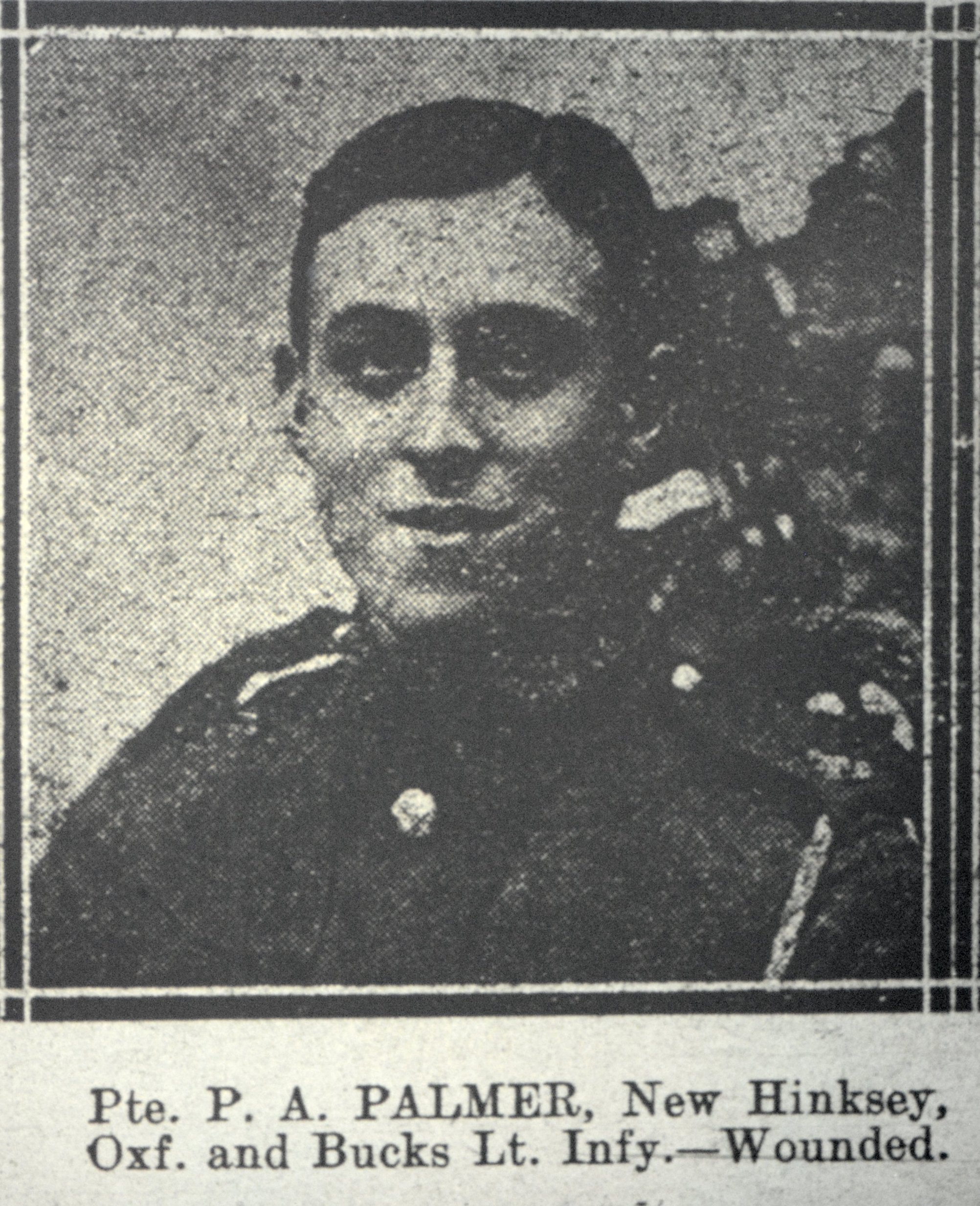
Image from the Oxford Journal Illustrated, 20 September 1916, p.7. It says that Pte Palmer was 'Wounded' when in fact he had been killed. |
Lived at 192 Abingdon Road and then at 17 Sunningwell Road.
Private with the 1/4 Battalion of the Oxf & Bucks Light Infantry, service no. 200290.
Commemorated on the Thiepval Memorial in the Somme, France. He has no known grave. |
Percy Palmer was born in Oxford in early 1896, the elder son of Walter and Ada Palmer. His father worked for Salter's Steamers, the boat-building and hire firm based at Folly Bridge. Before the War Percy worked as a messenger for the City Isolation Hospital at Cold Harbour, at the southern end of the Abingdon Road. Both he and his brother Cyril joined the army, but Cyril survived the War. Percy is also commemorated on the war memorial in the church of St John the Evangelist, New Hinksey.
|
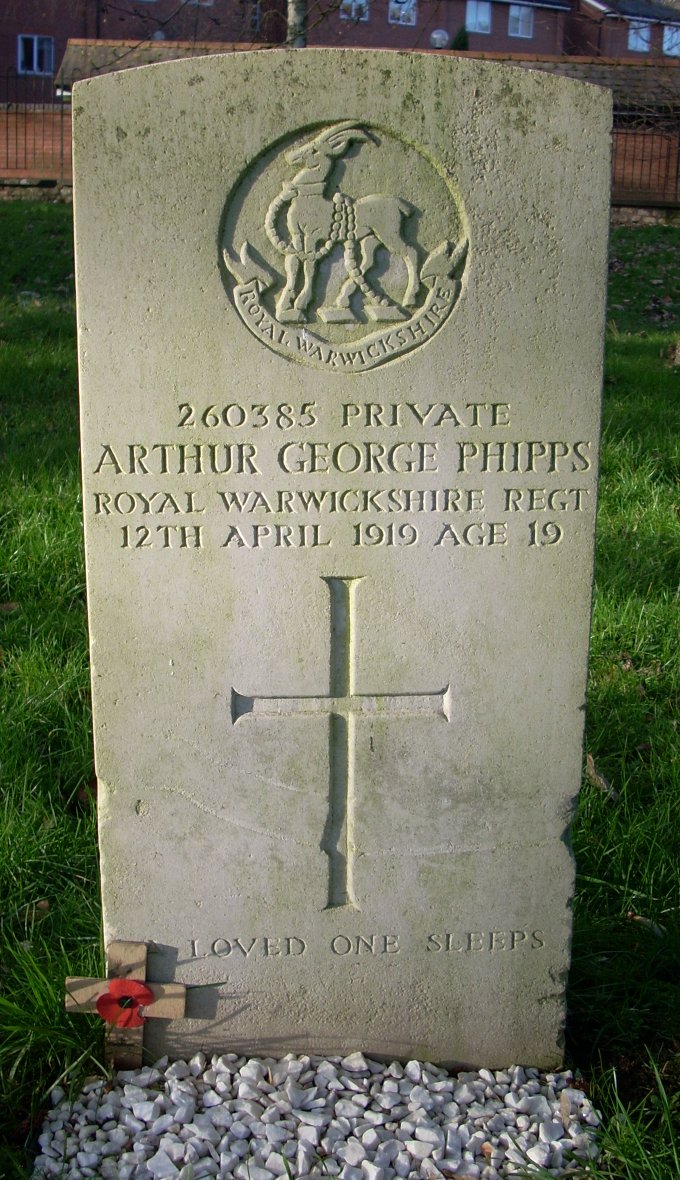
Arthur Phipps's grave in Osney Cemetery in West Oxford. Image courtesy of Anne Kiltie. |
Born at 50 Chilswell Road and later lived at 86 Chilswell Road.
Private with the 10th Battalion of the Royal Warwickshire Regiment, service no. 260385.
Buried in Osney Cemetery in West Oxford. |
Arthur was the nephew of Walter Phipps (see below). He was born in December 1899, the only child of Arthur Phipps, a bricklayer, and his wife Annie. The Phipps were well-known local builders and various members of the extended family had built many of the new houses on the Grandpont estate in the 1880s, 1890s and early 20th century. Arthur died in the Endell Street military hospital in Covent Garden in London, which was opened in May 1915 by militant suffragists Dr Flora Murray and Dr Louisa Garrett Anderson. It was the first military hospital to be run and staffed entirely by women. Fuller biography → |
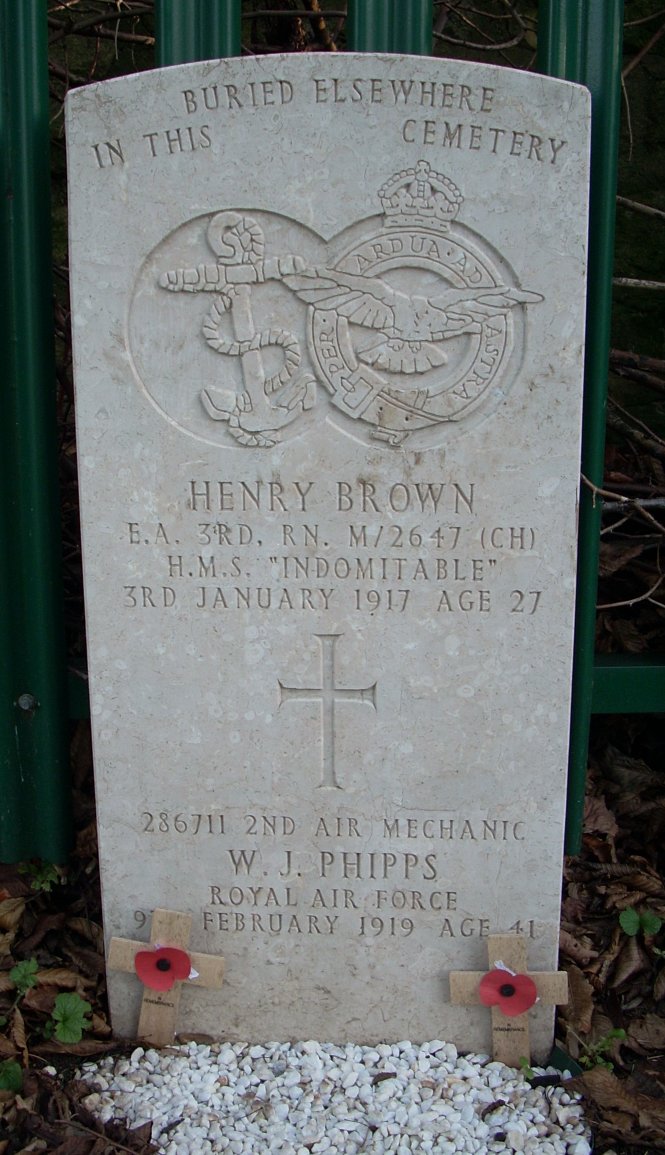
Walter Phipps's grave in Osney Cemetery in West Oxford. Image courtesy of Anne Kiltie. |
Lived at 174 Marlborough Road.
Second Air Mechanic with the Royal Air Force, service no. 286711.
Buried in Osney Cemetery in West Oxford. |
Walter Phipps was the uncle of Arthur Phipps (see above). He was born in 1877, one of the nine children of George (a bricklayer) and Sarah Phipps. By 1891 the family had moved to 174 Marlborough Road in Grandpont, the house in which Walter was to live for the rest of his life. Next door was the family of Alexander Rennie (see below). Walter and three of his older brothers all followed their father into the bricklaying and building trades. He married Annie Radborn in 1901 and they lived at 174 Marlborough Road with Walter's parents and had five children there, all of whom were baptised at the Wesleyan Methodist Chapel in Stewart Street in New Hinksey. Walter did not enlist until 20 August 1918, when he was 41.
|
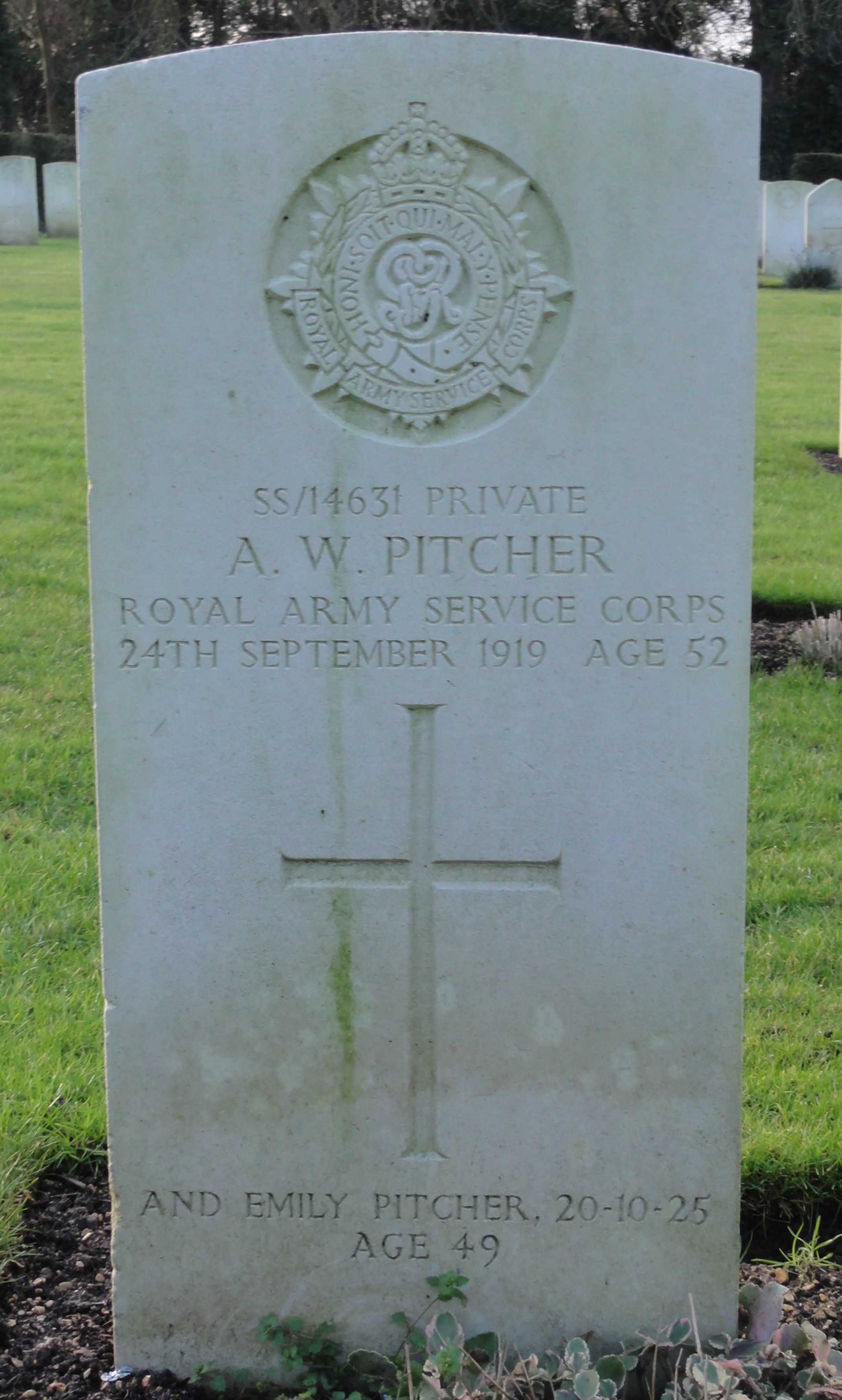
Albert Pitcher's grave in Botley Cemetery, West Oxford. Image courtesy of Adrian Colbrook. |
Lived at 15 Marlborough Road.
Private in the (Royal) Army Service Corps, service no. SS/14631. Transferred to the 18th Company of the Labour Corps, service no. 310712.
Buried in Botley Cemetery, West Oxford. |
Albert Pitcher was born in Melbury Osmond, Dorset, in 1867, the second son of Sedwin and Emily Pitcher. He married Emily Andrews in Cardiff in 1900 and by 1901 they were living in Oxford at 15 Marlborough Road in Grandpont. Albert was a carpet planner and later an upholsterer. By 1911 the couple had six sons.
|
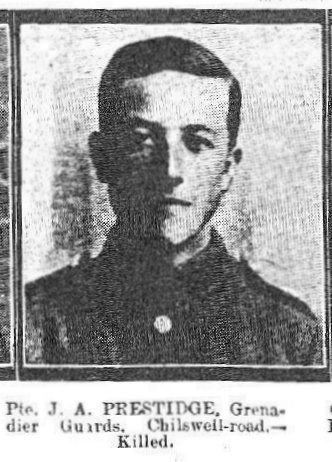
Image from the Oxford Journal Illustrated, 16 January 1918, p.6. |
Lived at 118 Marlborough Road and later at 46 Chilswell Road.
Private in the 3rd Battalion of the Grenadier Guards, service no. 28603.
Commemorated on the Cambrai Memorial, in Louverval, France. He has no known grave. |
James Prestidge was born in early 1885 in North Hagbourne (then in Berkshire, now part of Didcot). He was the first of the ten children of James Prestidge and his wife Henrietta. James senior was a coachman and groom. By 1901 the family had moved to Oxford and were living at 118 Marlborough Road in Grandpont. In April 1912, when he was 27, James junior married Beatrice Miller, who came from Jericho. They had three children, one of who, Una, died in childhood. James's father also fought in the War: he enlisted when he was 50, but lied about his age and said he was 45.
|
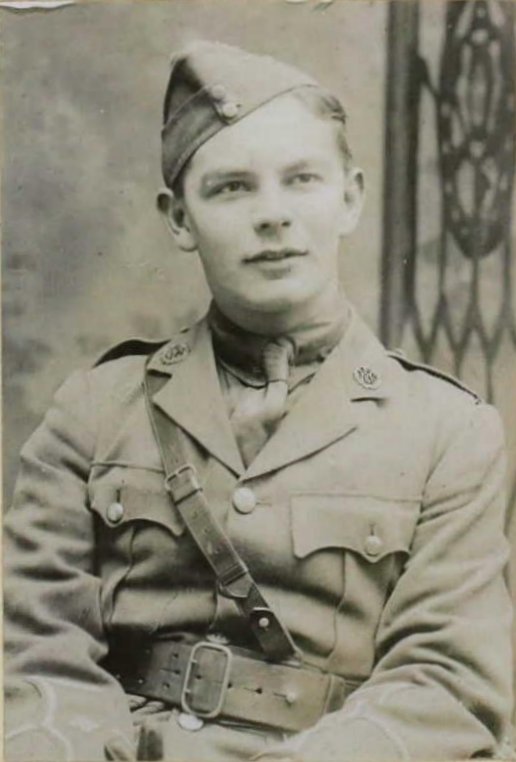
Image from the Royal Aeronautics Club archive. |
Second Lieutenant in the Royal Flying Corps, service no. 82141.
Buried in the Shepton Mallet burial ground with 16 other casualties. |
Frederick Pullen was born in 1899 in Shepton Mallett in Somerset, the only son of Albert and Bessie Pullen. Albert was a prison warder and Frederick spent his early years living at HM Prison Shepton Mallett. He enlisted in the Royal Flying Corps less than two weeks after he turned 18, and spent some time in Oxford undergoing cadet training at the 2 School of Military Aeronautics. He was reported as having rescued a woman from drowning in the River Thames near Folly Bridge.
|
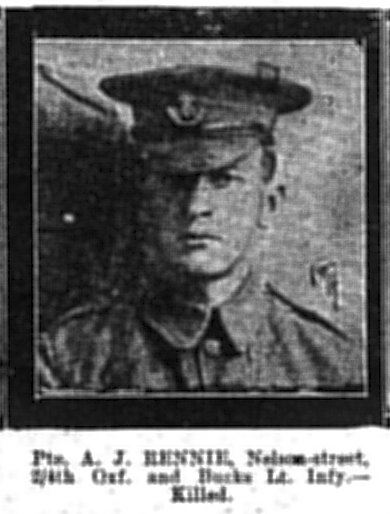
Image from the Oxford Journal Illustrated, 19 July 1916, p.7. |
Grew up at 172 Marlborough Road.
Private in the 2/4 Battalion of the Oxf & Bucks Light Infantry, service no. 3537.
Buried in Laventie Military Cemetery, La Gorgue, France. |
Alexander John Rennie (also known as Jack) was born in March 1890 in Jericho, the son of William and Louisa Rennie and the ninth of ten siblings. The family lived next door to that of Walter Phipps (see above). Alexander worked as a waterman for the university. In the summer of 1914 he married Lizzie Poulter and they went to live at 6 Nelson Street in Jericho; he must have enlisted soon afterwards. Their son Jack was born in January 1915 and died, aged 18 months, only a couple of weeks after his father.
|
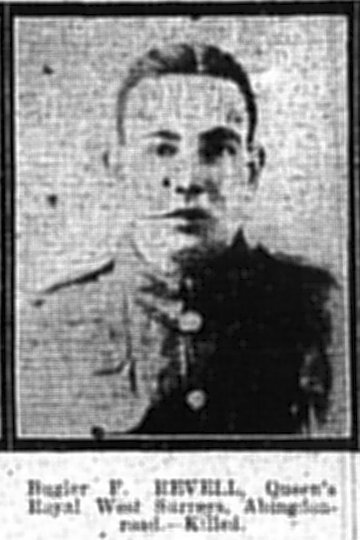
Image from the Oxford Journal Illustrated, 4 September 1918, p.6. |
Grew up at the Farrier's Arms pub, Cold Harbour, at the far southern end of the Abingdon Road.
Private in the 6th Battalion of the Queen’s (Royal West Surrey) Regiment, service no. 108000 (sometimes recorded as 208000).
Buried in the Morlancourt British Cemetery No 2 at the Somme in France. |
Frederick Revell was born in the spring of 1899, the son of Alfred and Annie Revell who were publicans at the Farrier’s Arms in Cold Harbour. He was on of eight children. Frederick's older brother Alfred also fought in the War, but survived.
|
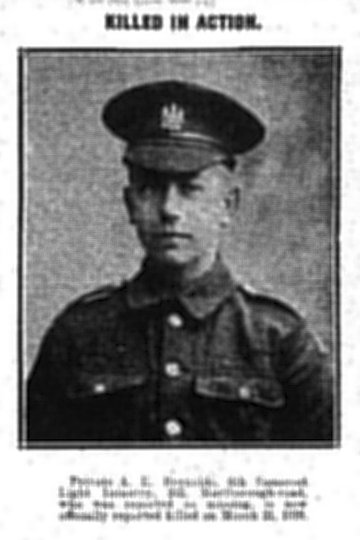
Image from the Oxford Journal Illustrated, 9 July 1919, p.4. |
Lived at 242 Marlborough Road.
Private in the 6th (Prince Albert's) Battalion of the Somerset Light Infantry, service no. 29185.
Commemorated on the Pozieres Memorial, on the Somme, France. He has no known grave. |
Albert Reynolds was born in Oxford in November 1898. He was the cousin of Leonard Reynolds (see below). Albert's father Ernest was a cabinet maker and he and his wife Alice had seven children. They remained living at 242 Marlborough Road until their deaths in 1940 and 1949 respectively.
|
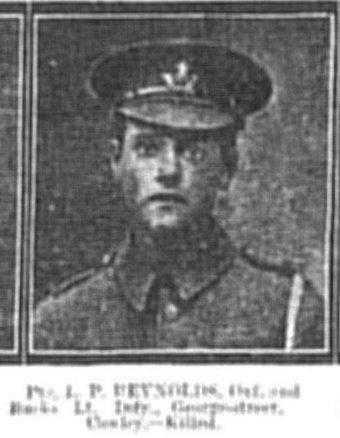
Image from the Oxford Journal Illustrated, 5 December 1917, p.6. |
Lived at 6 Cobden Crescent, then at 64 Sunningwell Road; his family moved to 8 Western Road in 1922.
Private with the 1/4 Battalion of the Oxf & Bucks Light Infantry, service no. 201605.
Buried in Artillery Wood Cemetery in Belgium. |
Leonard Reynolds was born in 1897 in York, the son of George and Emily Reynolds. He was the cousin of Albert Reynolds (see above). Leonard's father was in the Royal Army Medical Corps and so the family moved around the country a lot, and their nine children were born in five differant towns. By 1911 they had moved to Oxford, living briefly at 6 Cobden Crescent before moving to 64 Sunningwell Road. On leaving school Leonard worked as a bookbinder’s errand boy.
|
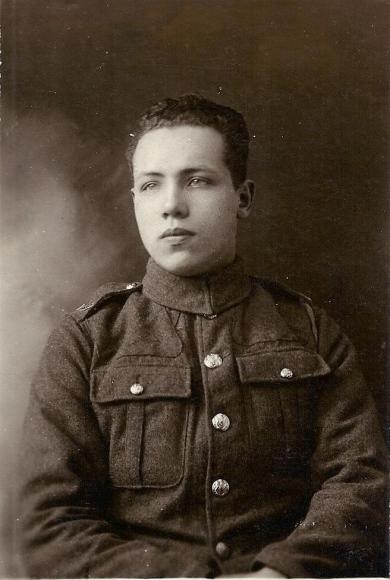
Image from https://www.everyoneremembered.org/profiles/soldier/247397/ |
His parents lived at 31 Edith Road.
Lance Corporal with the 2nd/7th Battalion of the Royal Warwickshire Regiment, service no. 26856.
Buried at the Canonne Farm British Cemetery, Sommaing, France.
|
William (or Billy) Richardson was born in the summer of 1899 in Bicester, the son of a butcher, Ernest Richardson, and his wife Louise. He had two sisters. His parents moved to 31 Edith Road in Grandpont in 1916 or 1917, and although he may not have lived there himself, that is why William is commemorated on the St Matthew's war memorial.
|

Reginald Robinson's signature on his US naturalisation papers, 27 June 1918. |
His family lived at 43 Western Road.
Briefly a Private with the Royal Army Medical Corps, before the First World War.
Died of bronchial pneumonia as a result of Spanish influenza, on 2 November 1918, aged 30, in Seattle, Washington State, USA.
Buried at Lakeview Cemetery, Seattle, USA. |
Reginald Robinson is an interesting case: he shouldn't be on the war memorial because he didn't fight in the First World War. |
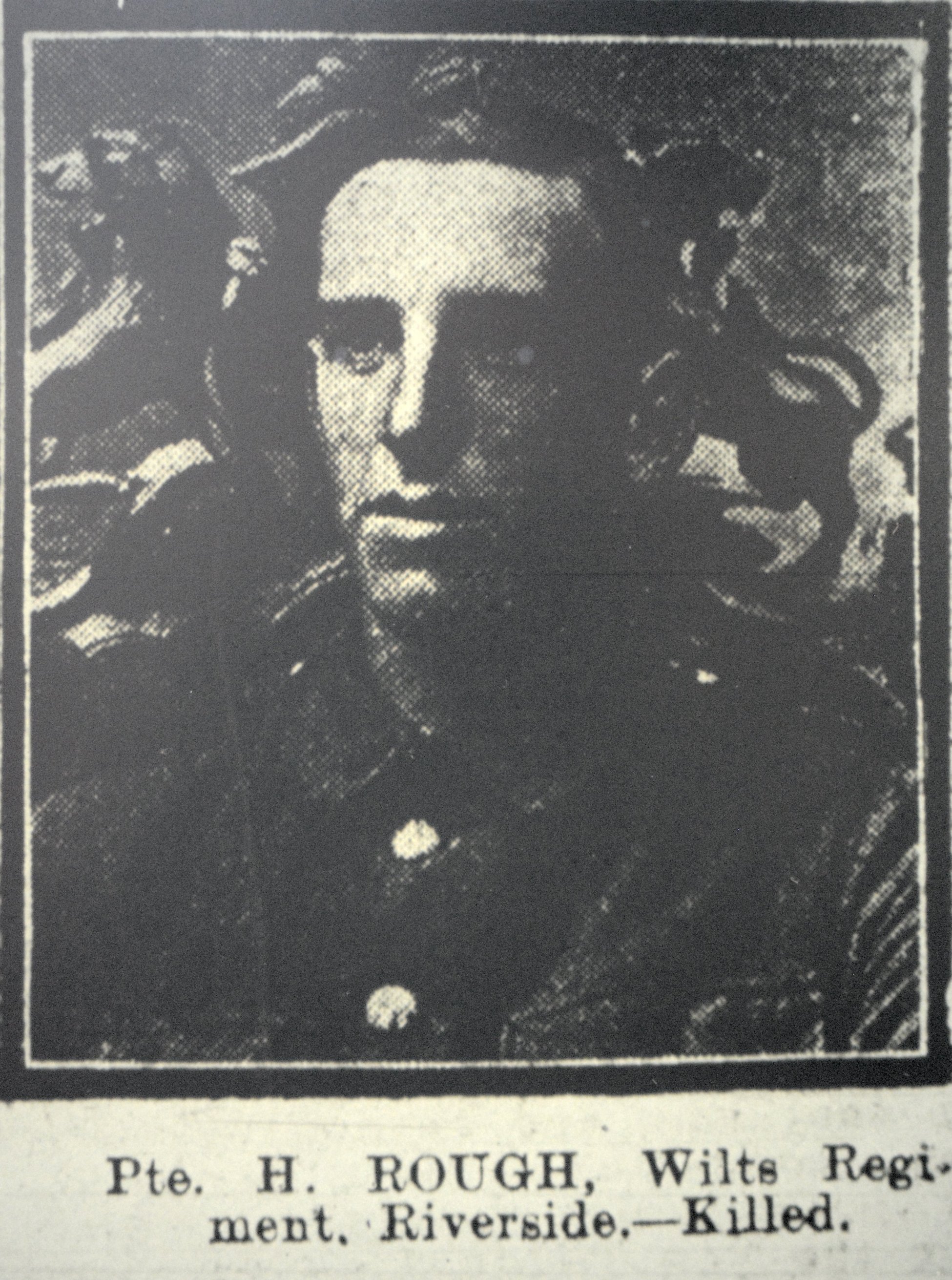
Image from the Oxford Journal Illustrated, 13 June 1917, p.6. |
Lived at Riverside House, near Long Bridges on the Thames towpath.
Private with the 7th Battalion of the Wiltshire Regiment, service no. 14476.
Buried at the Doiran Military Cemetery in Greece.
|
Henry Rough was born in March 1896 into a well-known boat-building family based at Long Bridges, on the River Thames between Folly Bridge and Donnington Bridge. In the 1890s and early 1900s his father Frederick became a leading racing boat builder and the supplier of many of the boats used in the Oxford-Cambridge boat race. In 1913 his workshop at Long Bridges was burnt down by suffragettes, an incident from which he was said never to recover. He died the following year, in December 1914, aged only 56. His son Henry was killed 2½ years later.
|
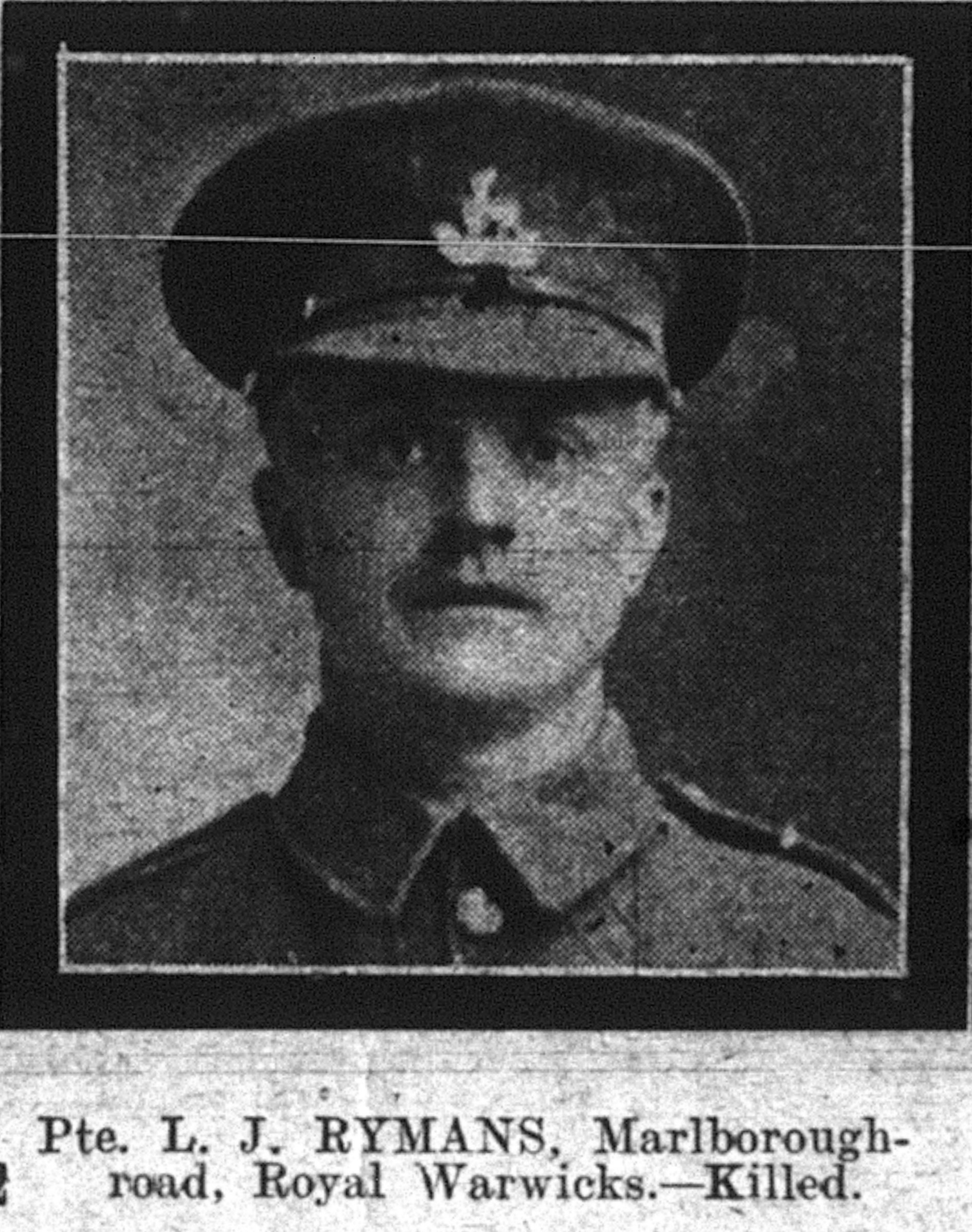
Image from the Oxford Journal Illustrated, 22 September 1915, p.4. |
Lived at 46 Marlborough Road.
Private with the 9th Battalion of the Royal Warwickshire Regiment, service no. 11120.
Commemorated on the Helles Memorial on the tip of the Gallipoli Peninsula in Turkey. He has no known grave. |
Leonard Ryman was born in Oxford in early 1888, the youngest of the six children of Mark and Elizabeth Ryman. Mark Ryman was a bootmaker, who died in 1900, when Leonard was twelve. By 1911 the family had moved to 46 Marlborough Road in Grandpont and Leonard was working as a tailor.
|
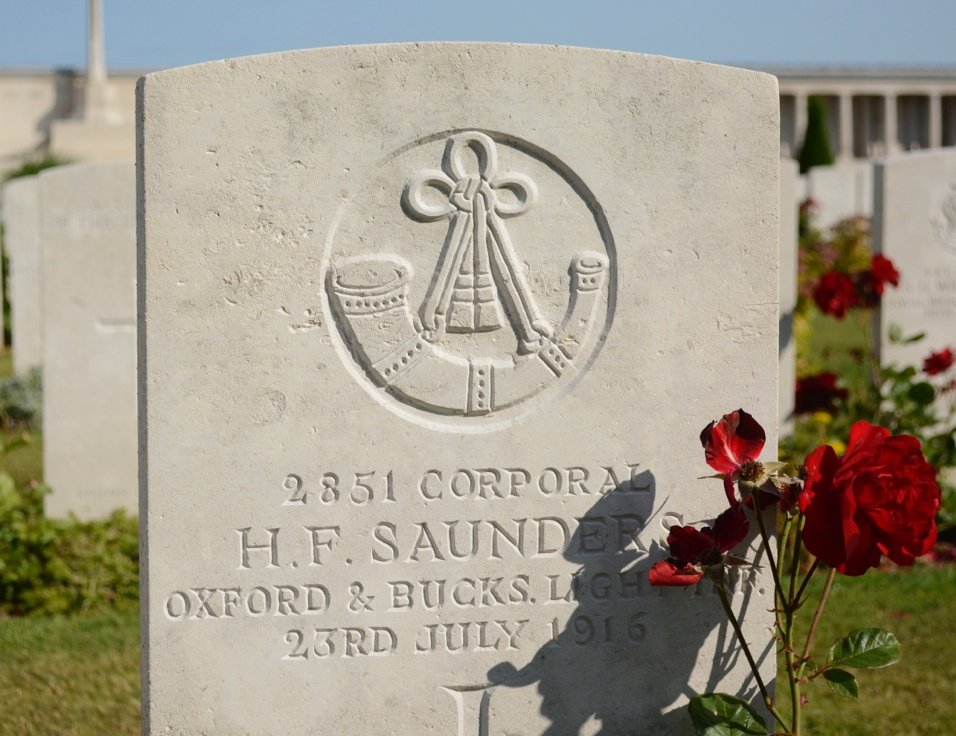
Harry Saunders's grave at the Pozieres British Cemetery in northern France. Image courtesy of Simon Haynes. |
Grew up at 256 Marlborough Road.
Corporal with the 1/4 Battalion of the Oxf & Bucks Light Infantry, service no. 2851.
Buried at the Pozieres British Cemetery at Ovillers La Boisselle in northern France. |
Harry Saunders was born in Oxford in April 1886, the second son of Samuel (a house painter from Cornwall) and Lydia Saunders. He was educated at the National [Anglican] School in the village of South Hinksey. At the age of 14 he was working as an errand boy but by 24 he had risen to become a printer with the firm Alden & Co, on Cornmarket. He was a keen footballer and was on the winning team for the Oxford City Junior Football Cup in 1907-8. Harry's two younger brothers also fought in the War but survived.
|
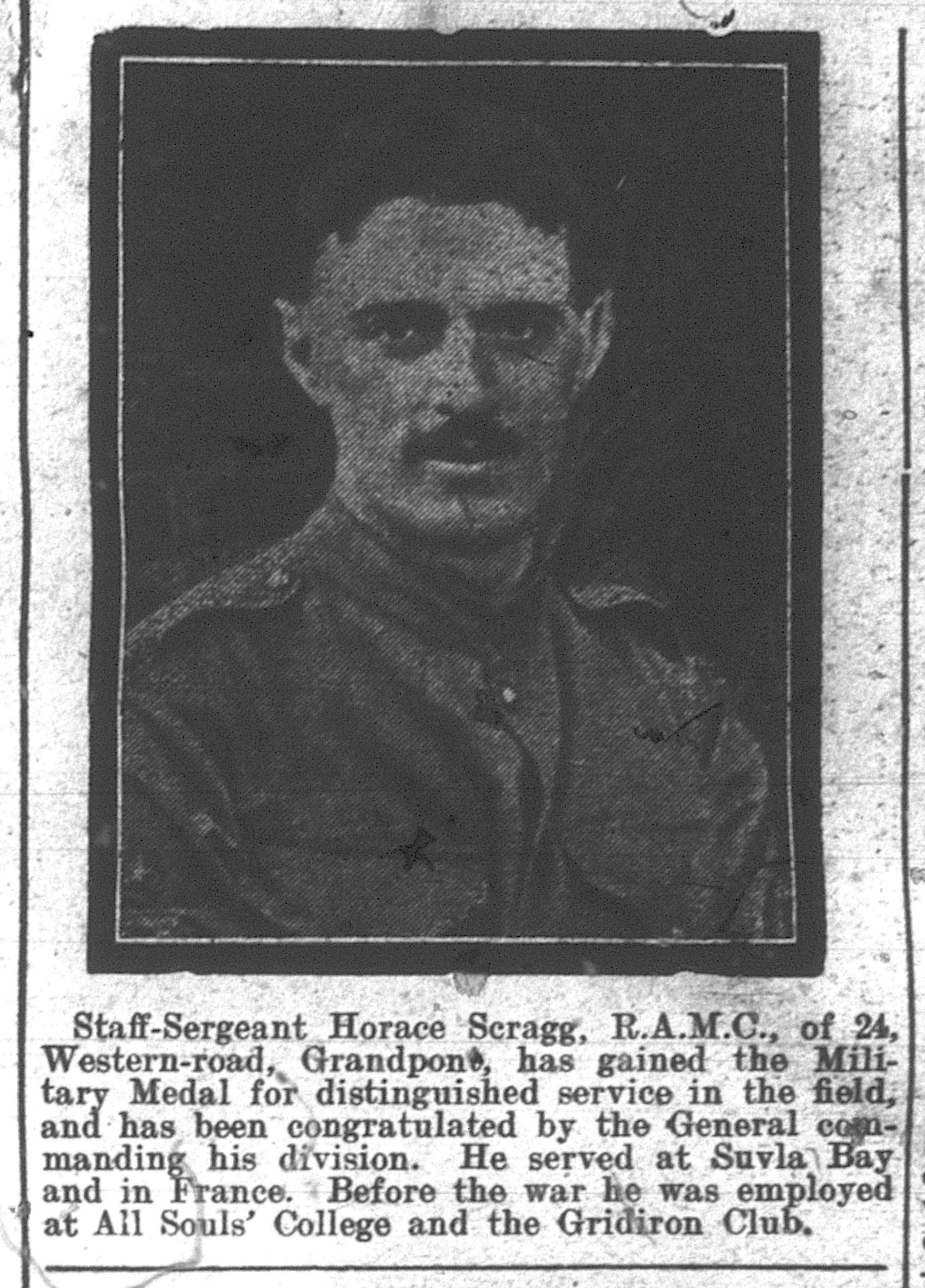
Image from the Oxford Journal Illustrated, 24 October 1917, p.9. |
Lived at 23 Buckingham Street and 24 Marlborough Road; his family subsequently lived at 21 and 24 Western Road.
Staff Sergeant with the Royal Army Medical Corps, service no. 435585.
Commemorated on the Wall of Remembrance at the Tyne Cot Memorial in West Vlaanderen, Belgium. He has no known grave. |
Horace Scragg was born in late 1889 to a tailor, Samuel Scragg, and his wife Ellen, a dressmaker. Samuel died just over a year later, when Horace was still an infant; the couple's second son, Reginald, was born after his father's death. Horace became a college servant at All Souls in around 1904, when he was about 15. He and his brother both enlisted in the Royal Medical Army Corps before the War, and Horace later served in Gallipoli, Cairo, Abyssinia (Ethiopia) and Belgium. During the First World War he was awarded the Military Medal for bravery in the field.
|
|
George Edwin (or Edward) Lovell SIMPSON 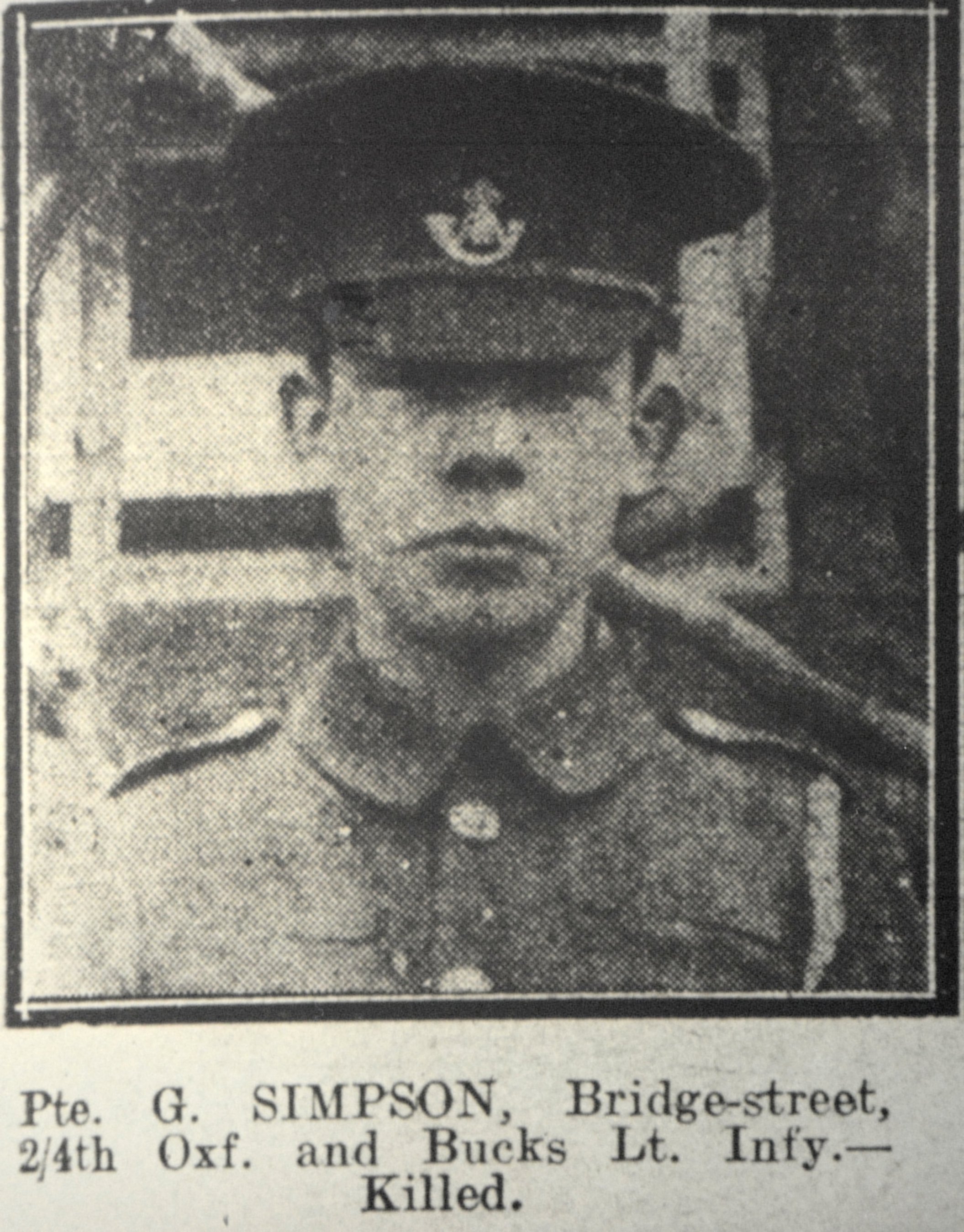
Image from the Oxford Journal Illustrated, 9 August 1916, p.7. |
His family lived at 30 Marlborough Road.
Private with the 2/4 Battalion of the Oxf & Bucks Light Infantry, service no. 4317.
Buried at Laventie Military Cemetery, La Gorgue, France. |
George Simpson was born in October 1896, the son of William and Elizabeth Simpson. William was a bricklayer's labourer and later a carter and grocery porter, and they had nine children. In 1911 George was working as a grocer's errand boy and the family was living on Osney Island. In 1915 they moved to 30 Marlborough Road in Grandpont.
|
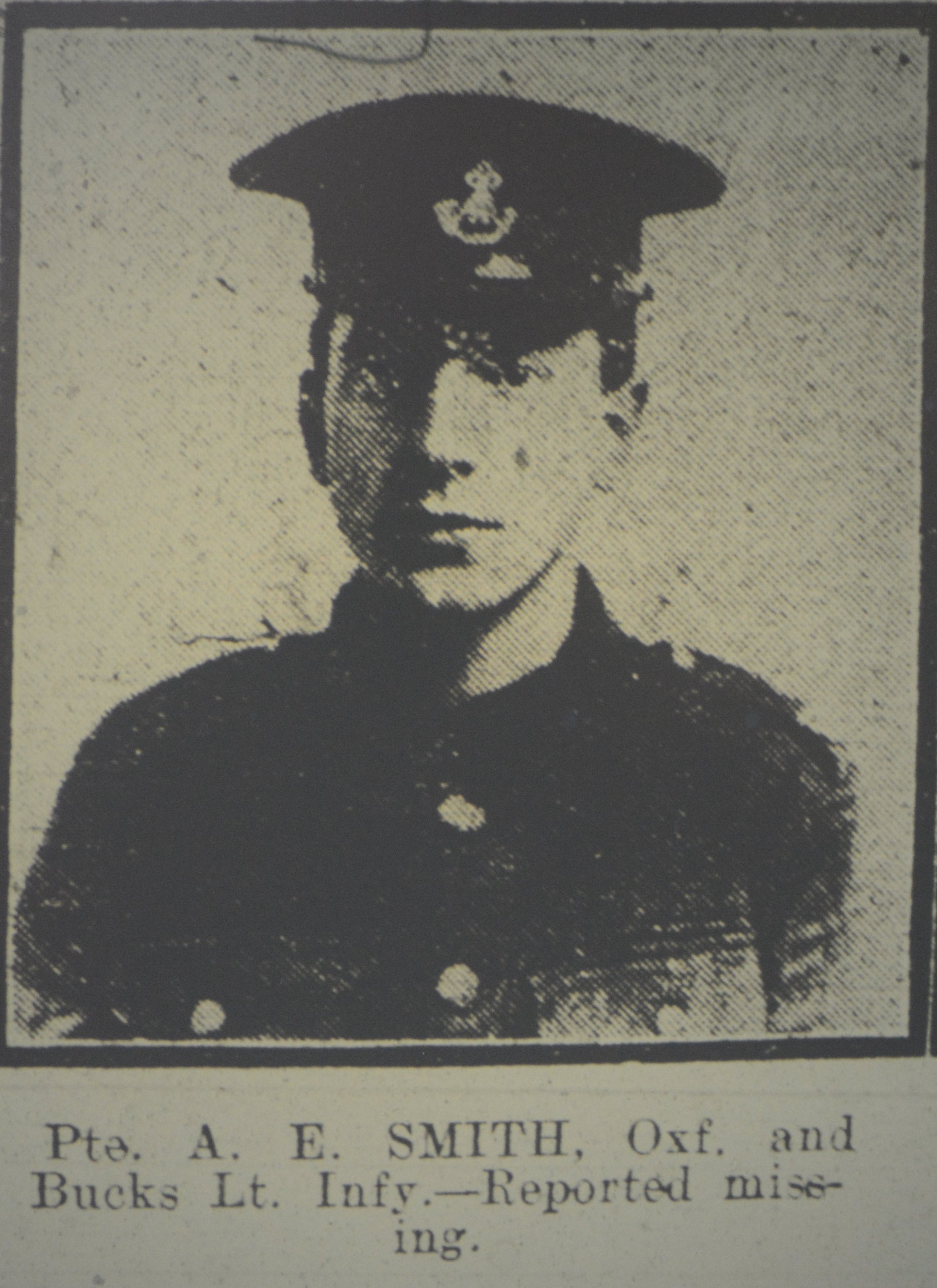
Image from the Oxford Journal Illustrated, 20 June 1917, p.6. |
Lodged at 44 Western Road.
Lance Corporal with the 5th Battalion of the Oxf & Bucks Light Infantry, service no. 32878.
Commemorated on the Arras Memorial at Pas de Calais, France. He has no known grave. |
Albert Smith was born in the summer of 1893 in the Blything area of Suffolk. He was the only son of Albert Smith, a brass founder, and his wife Alice. In 1911 Albert and his father were living in Great Yarmouth, but he subsequently moved to Oxford and in February 1917 he married Edith Edginton at St Aldates church; he was lodging at 44 Western Road at the time. Albert was killed in France only three months later.
|
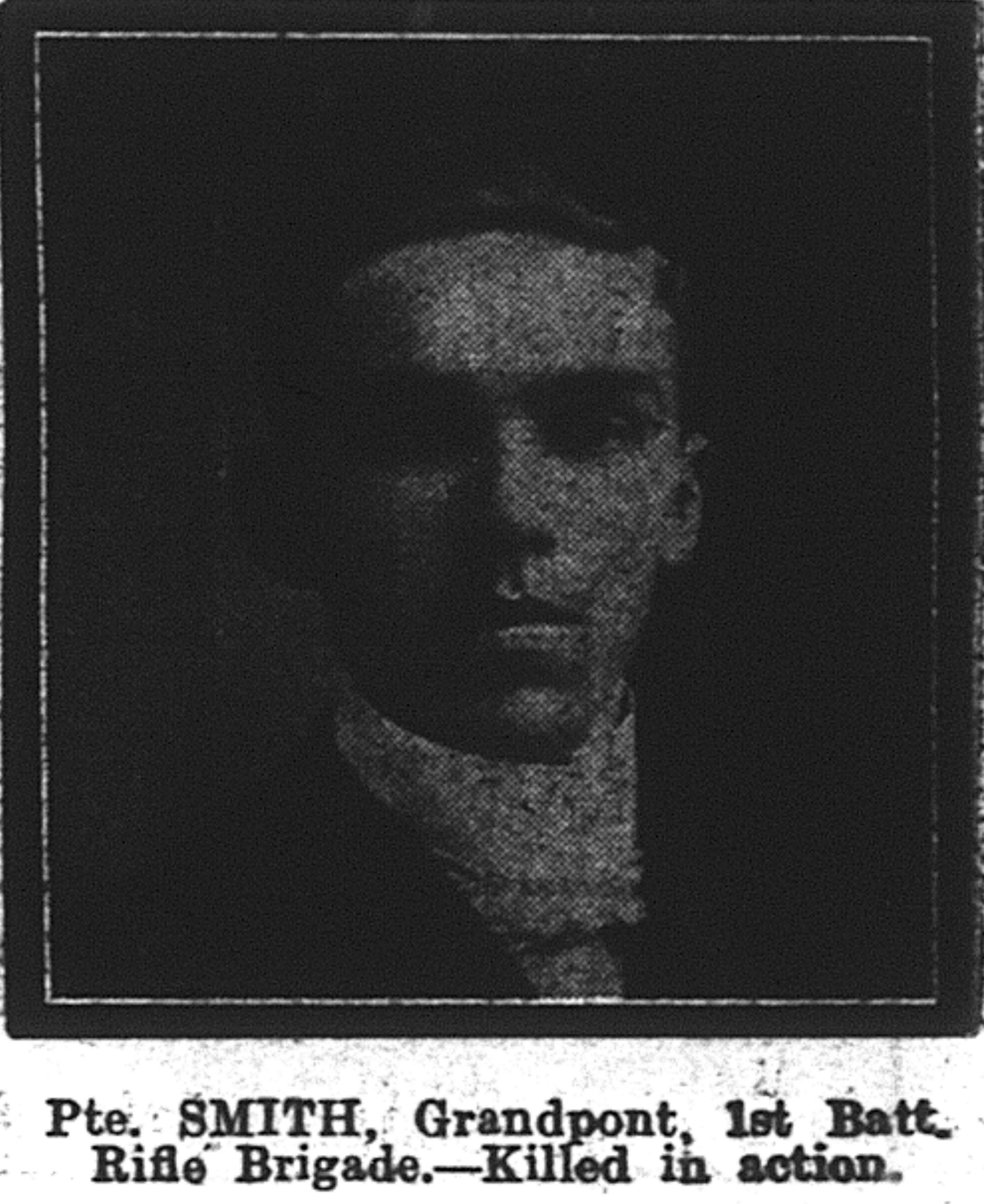
Image from the Oxford Journal Illustrated, 9 December 1914, p.7. |
Lived at 57 Western Road and in 1914 or 1915 his family moved to 102 Marlborough Road.
Rifleman with the 1st Battalion of the Rifle Brigade, service no. 2702.
Buried at Le Touquet Railway Crossing Cemetery, Belgium. |
Edward Smith was born in early 1886, the eldest of the six children of Edward and Charlotte Smith; he was the brother of John Smith (see below). In 1901 Edward was working as an ironmonger's apprentice but by 1911 he had joined the army and was a cook in the Rifle Brigade, stationed at Winchester in Hampshire.
|
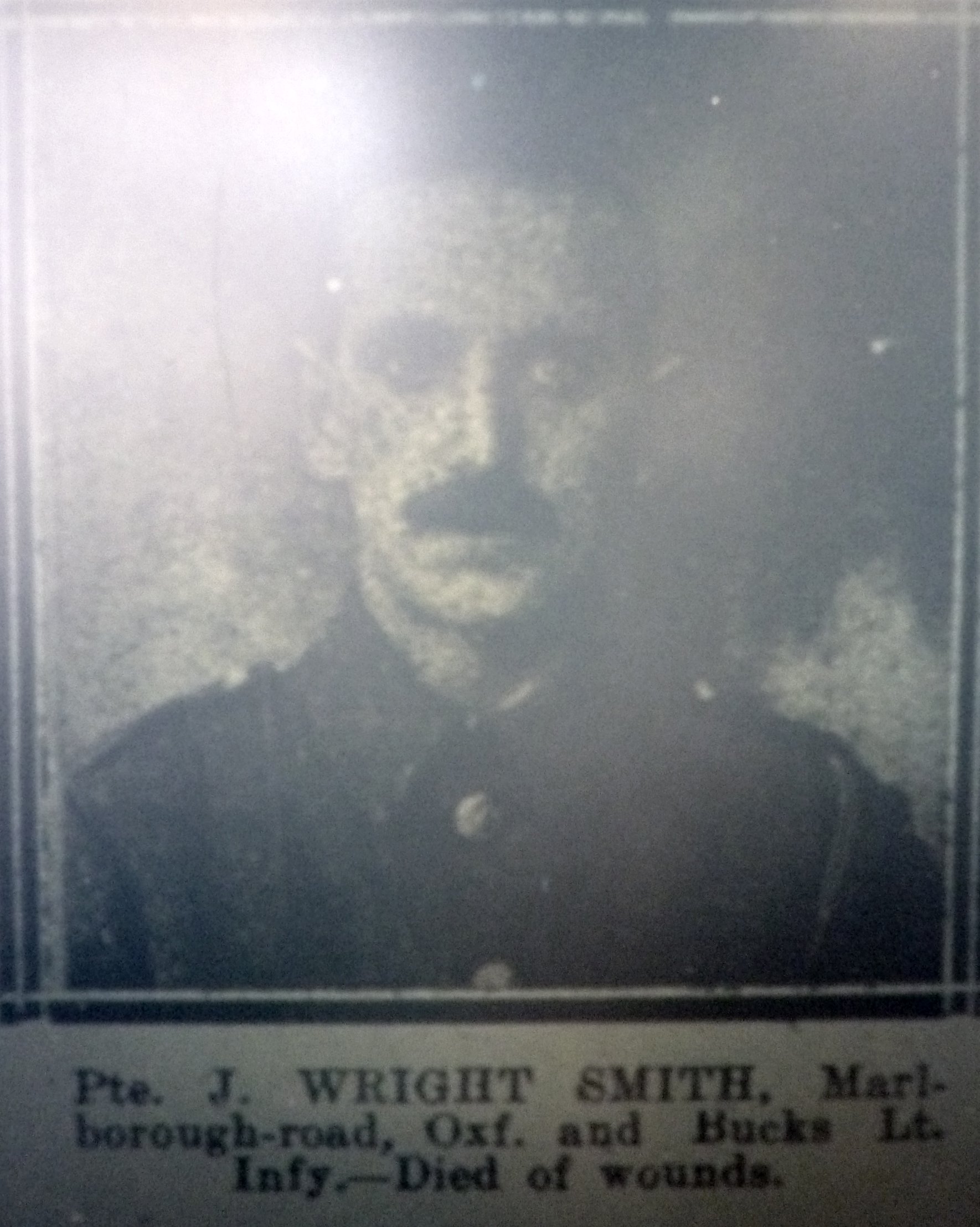
Image from the Oxford Journal Illustrated, 30 August 1916, p.7. |
Lived at 57 Western Road and in 1914 or 1915 his family moved to 102 Marlborough Road.
Private with the 2/4 Battalion of the Oxf & Bucks Light Infantry, service no. 3619.
Buried at Aire Communal Cemetery, Pas de Calais, France. |
John Smith was the third of the six children of Edward and Charlotte Smith and the younger brother of Edward Smith (see above). John was born in Oxford in early 1890 and from October 1913 worked as a college servant at New College.
|

Image from the Oxford Chronicle, 22 September 1916, p.7. |
Lived at 8 and then 16 Western Road.
Lance Sergeant with the 4th Battalion of the Oxf & Bucks Light Infantry, service no. 1700; later Second Lieutenant with the 8th Battalion of the Worcester Regiment, service no. 200152.
Buried at the Sucrerie Cemetery, Ablain St Nazaire, France. |
Ronald Stevens was born in July 1893, the only child of William Henry and Sarah Stevens. Ronald's father had begun his working life as a grocer's assistant but eventually became a grocery business manager. By 1911, when he was 18, Ronald and his parents had moved from 8 to 16 Western Road and Ronald was working as a counting house clerk at Elliston & Cavell, the well-known department store on Magdalen Street (which later became Debenhams). He enlisted with the Territorial Army in November 1912 and was awarded the Military Medal for conspicuous bravery in August 1916.
|
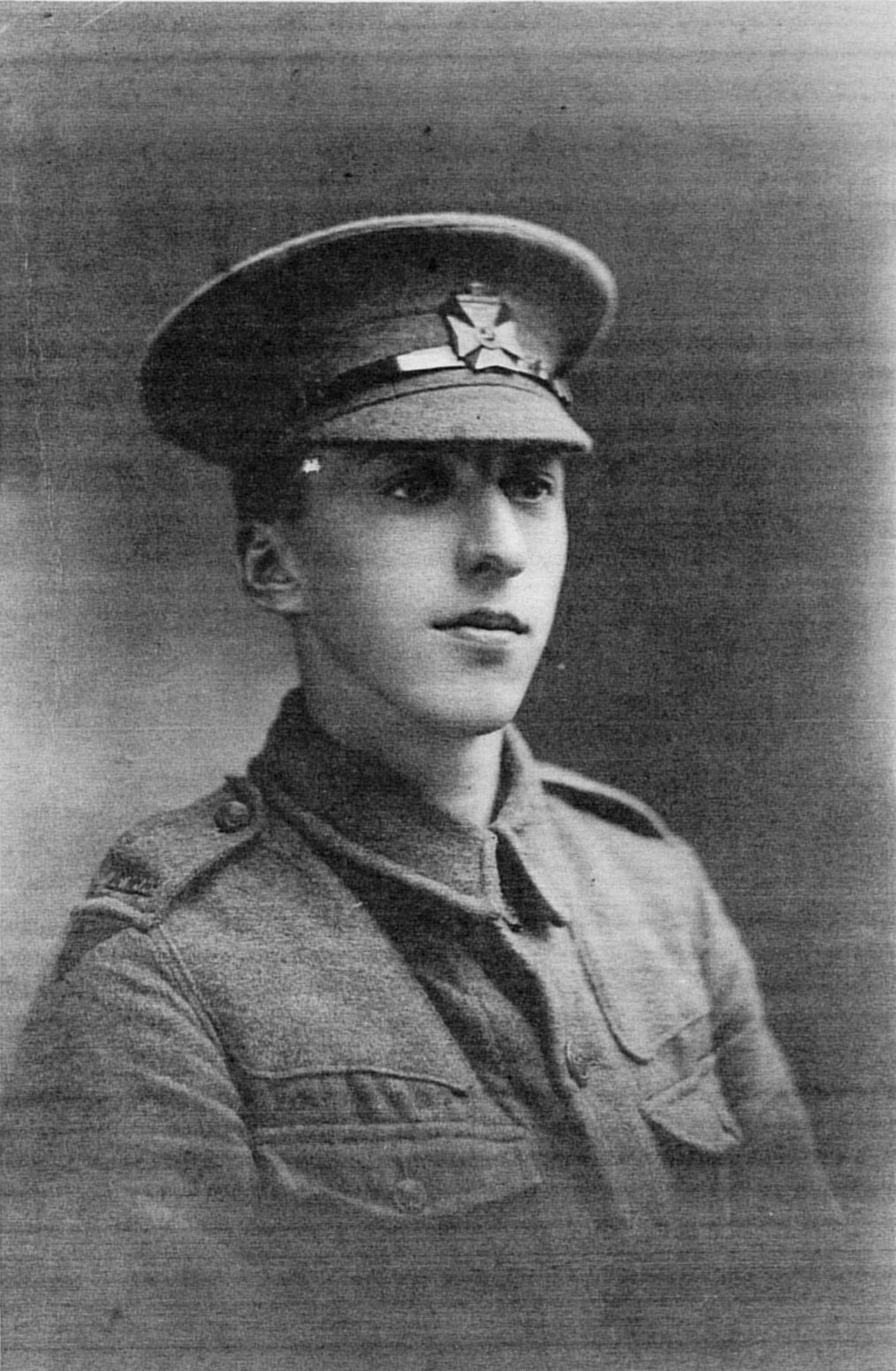
Image courtesy of Jim Tallett. |
Born at 19 Buckingham Street and subsequently lived at 60 Abingdon Road.
Rifleman in the 7th Battalion of the Rifle Brigade, service no. S/28577.
Buried at Hibers Trench Cemetery, Wancourt, Pas de Calais, France. |
Horace Tallett was born in November 1897 at 19 Buckingham Street, and was baptised at St Matthew's church. He was one of the four sons of Albert Tallett and his wife Emma. Albert died in 1909, when the boys were still small. Both Horace and his younger bother Kenneth served in the War, but Kenneth survived.
|
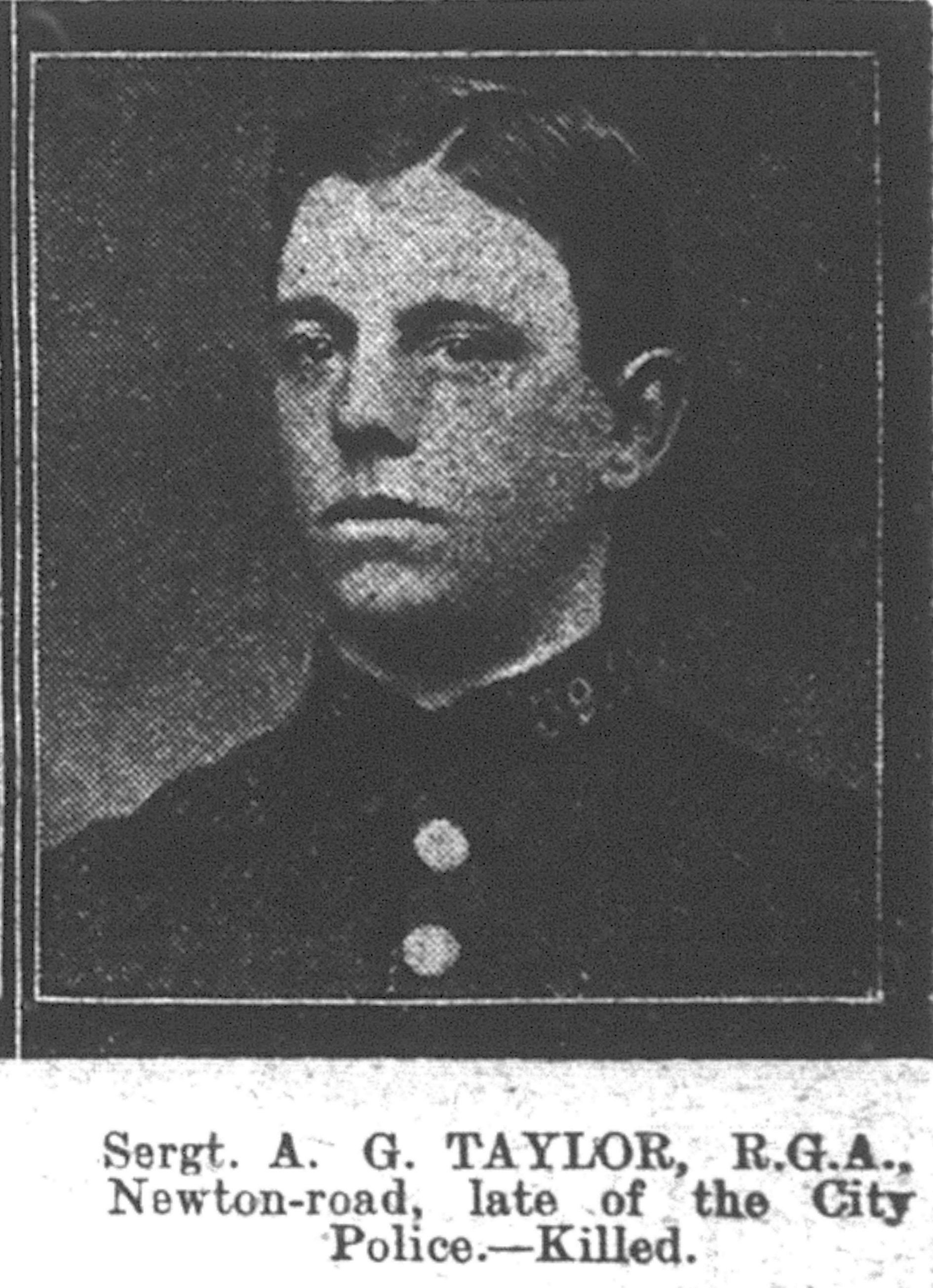
Image from the Oxford Journal Illustrated, 19 December 1917, p.6. |
Lived in Newton Road (possibly at no. 23).
Sergeant with the 132nd (Oxfordshire) Heavy Battery of the Royal Garrison Artillery, service no. 291926.
Buried at the Huts Cemetery, West Vlaanderen, Belgium. |
Albert Taylor was born in Shabbington in Buckinghamshire in March 1890. His parents were Joseph, a farm labourer and stockman, and Maria; he was the fifth of their eight children. Albert joined the Oxford City Police in August 1911 as PC 39. Forty one Oxford policemen fought in the War and four were killed; they are named on the Oxford City Police memorial which is in the church of St Michael at the Northgate on Cornmarket. Three of the policemen who died (including Albert) had enlisted together on the same day.
|
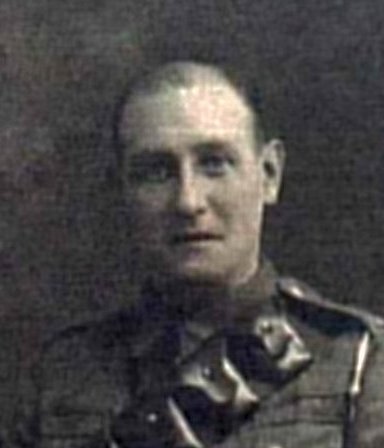
Image courtesy of Annabel Panting. Click here to see the whole photo. |
Lived at 35 Western Road, then at 24 Buckingham Street and then at 17 Western Road.
Gunner with the 59th Division of the Royal Horse Artillery and Royal Field Artillery, service no. 811026.
Buried at Grevillers British Cemetery at Pas de Calais, France.
|
Thomas Townsend was born in November 1877, one of the 14 children of a college servant at Brasenose. Thomas himself worked at Worcester College. In 1900, when he was 22, he married Eliza Sherlock in St Matthew's church. The couple moved to 24 Buckingham Street and had a son, Reginald. In an interview in 1973, Reginald remembered his father with deep affection and as a 'great outdoors man', very fond of swimming (at Long Bridges bathing place) and of punting and rowing - he rowed for the Oxford College Servants' crew. He was also a connoisseur of red wine.
|
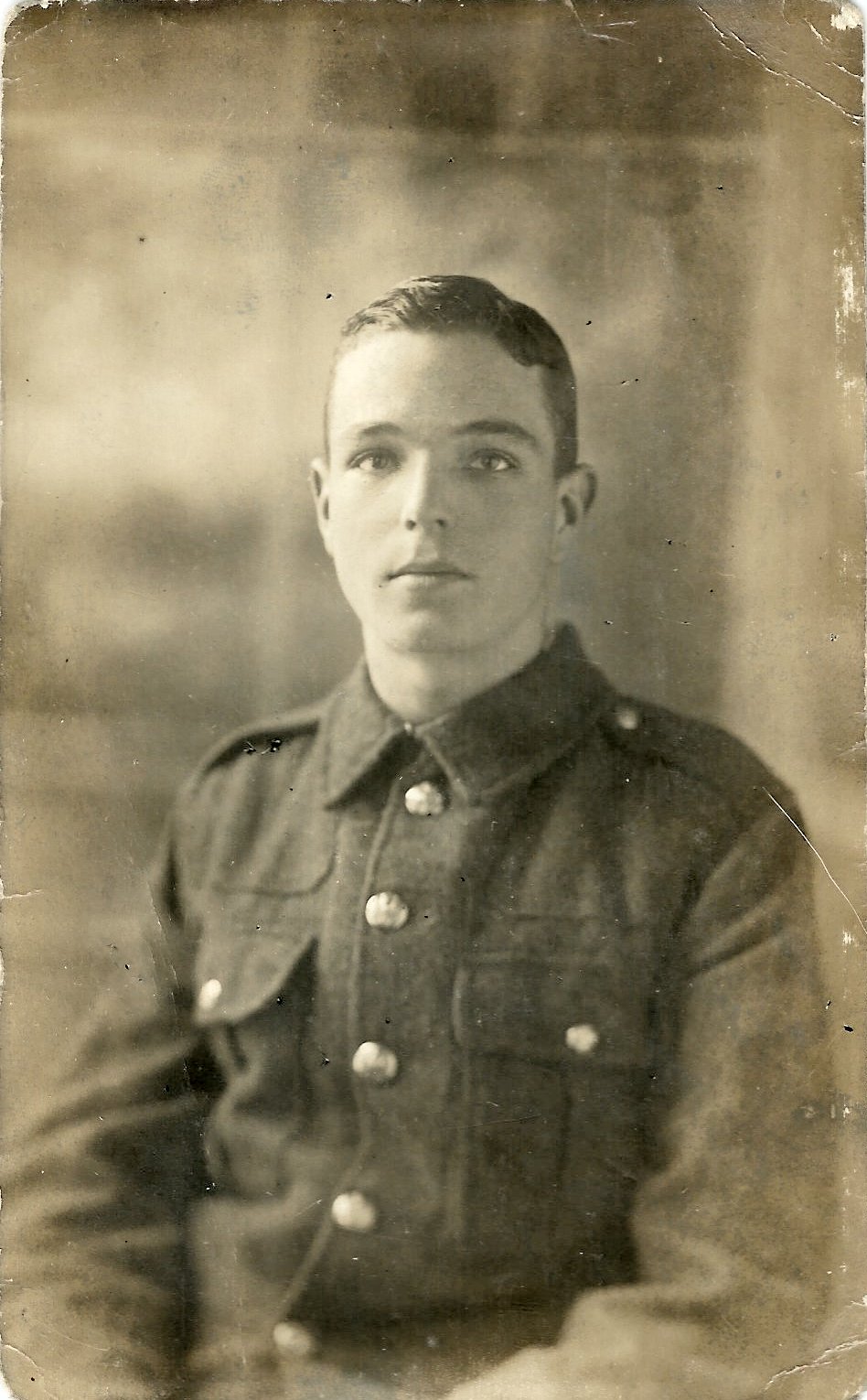
Image courtesy of Geoff Tyrrell. |
Lived at 15 Cobden Crescent.
Private with the 1/4 Battalion of the Oxf & Bucks Light Infantry, service no. 3527.
Buried at the Hebuterne Military Cemetery, Pas de Calais, France.
There is a marble memorial to him on the northern wall of St Matthew’s church. Its design is identical to that of the memorial to William Reginald King (see above). |
Charles Tyrrell (known as George) was born in August 1895, the son of Charles Tyrrell, a clerk at the local St Ebbe's gasworks, and his wife Sarah. George was a member of the 20th Oxford Scout Troop and was heavily involved with the St Matthew's Sunday School. He was educated at the Oxford Wesleyan School and at New College School, and became a chorister at The Queen's College in 1905. On leaving school George worked as a junior clerk for James Langley, a solicitor with offices on Cornmarket, and a year later he got a job at Barclays Bank on the High Street [now the site of the Old Bank Hotel]. George's brother Richard also fought in the War, but survived.
|
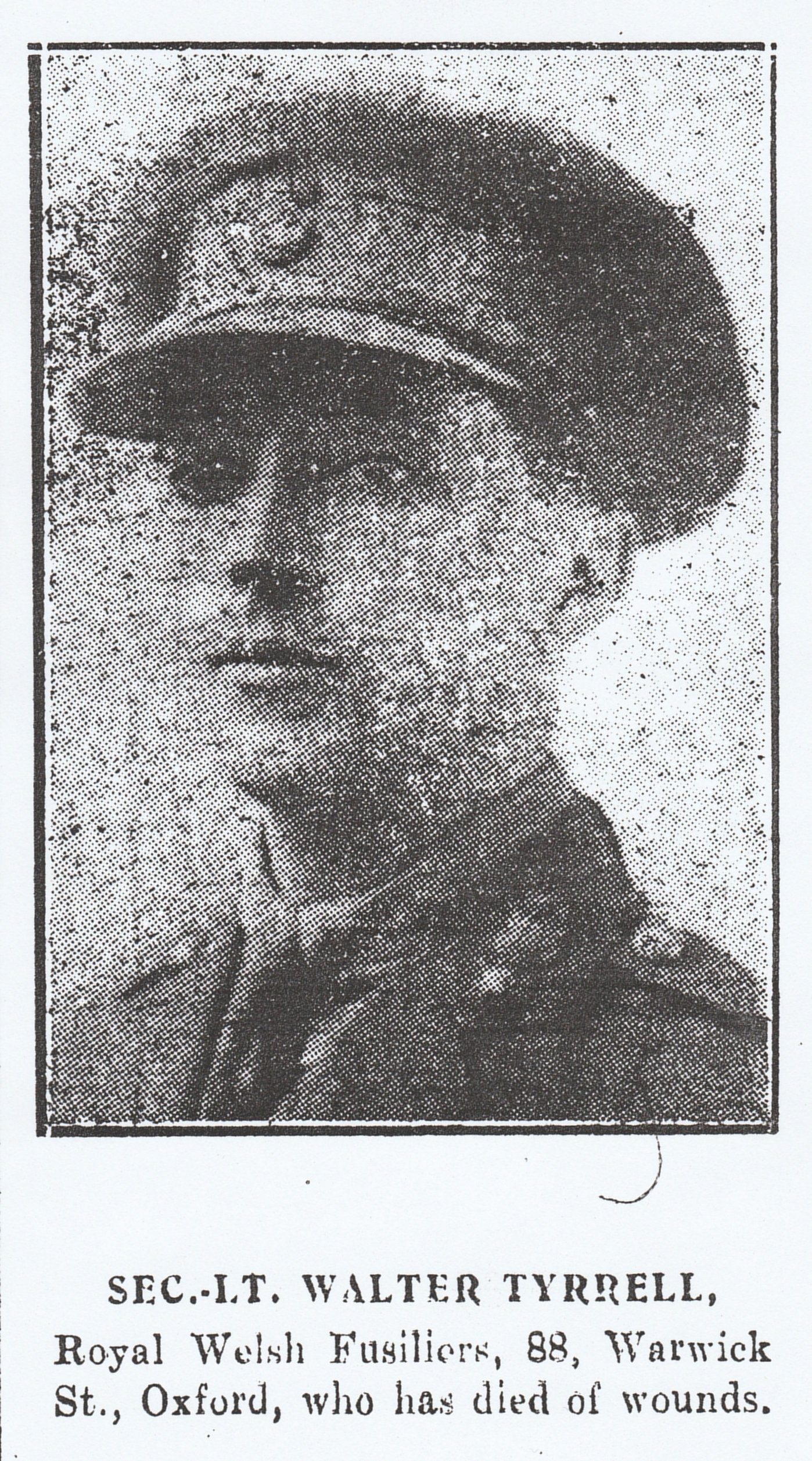
Image from the Oxford Chronicle, 20 September 1918, p.7. |
Lived at 44 and then at 80 Chilswell Road.
Second Lieutenant with the 17th Battalion of the Royal Welsh Fusiliers.
Buried at the Varennes Military Cemetery, at the Somme, France. |
Walter Tyrrell is not named on the St Matthew's memorial, but he lived with his family on Chilswell Road until the outbreak of War, so we feel that he should have been. He was born in the summer of 1888, the youngest of the ten children of Thomas Tyrrell, a house decorator, and his wife Alice, both of whom had been born in Rugby. In the summer of 1914, when he was 26, Walter married Flora Brewer, a draper's assistant from East Oxford. They had two children during the War who were only 3½ and less than 9 months old when their father died.
|
|
Frederick Hedley Lawrence UPFOLD 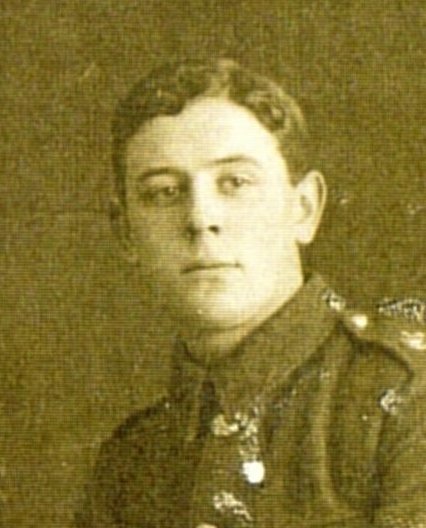
Image courtesy of Michael Jones. |
Corporal with the 2/4 Battalion of the Oxf & Bucks Light Infantry, service no. 1973.
Buried at Merville Communal Cemetery in northern France. |
Frederick (known as Frank) Upfold was born in Tunbridge Wells in Kent in late 1897. He was the son of James Upfold, a Salvation Army preacher, and his wife Sarah, a music teacher. The couple had six children and moved around the country a good deal. According to the Tunbridge Wells Roll of Honour Frank enlisted in Oxford; however, according to the Oxf & Bucks Light Infantry records he enlisted in Tunbridge Wells, but gave his place of residence as Oxford. Perhaps he was lodging in Grandpont, and that's why he is named on the St Matthew's memorial.
|
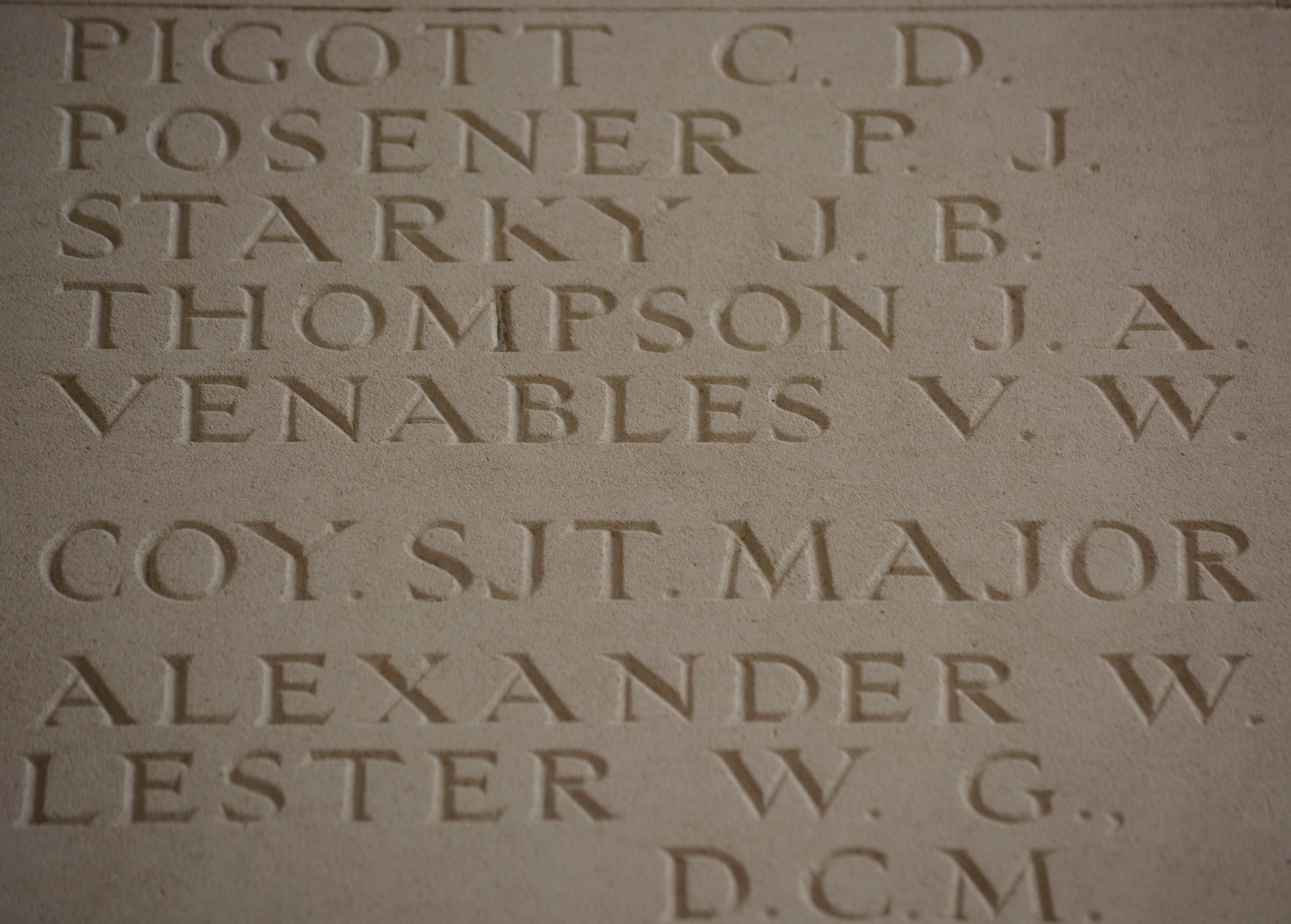
Vernon Venables's name on the Thiepval Memorial in France. Image courtesy of Simon Haynes. |
Lived at the Elms, 158 Abingdon Road.
Able Seaman with the 63rd (Royal Naval) Division (service no. Z/720); then Second Lieutenant with the 3rd Battalion (attached to the 2nd Battalion) of the Duke of Edinburgh's (Wiltshire) Regiment.
Commemorated on the Thiepval Memorial in the Somme, France. He has no known grave. |
Vernon Venables was born in Oxford in August 1893, one of the seven children of Richard and Frances Venables. The family was quite well-to-do: in 1901 they had two live-in mother's helps and Richard was described in the census as 'living on own means', in other words, he had a private income or a pension, and did not need to work. Vernon was educated at the City of Oxford Boys’ High School in George Street, where he was a contemporary of Albert Lucas (see above).
|
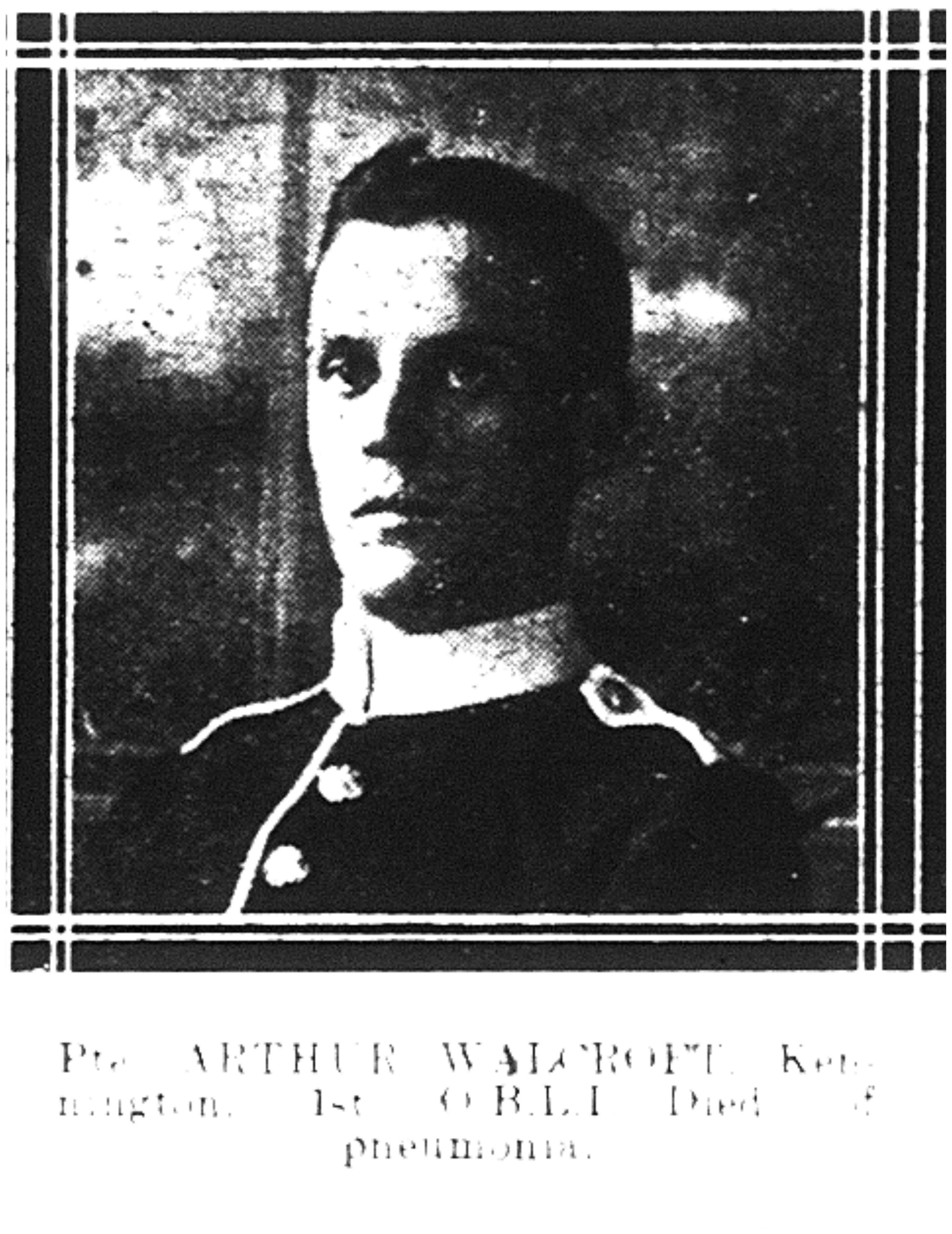
Image from the Oxford Journal Illustrated, 2 February 1916, p.6. |
His family lived at 4 Jubilee Terrace.
Private with the 1st Battalion of the Oxf & Bucks Light Infantry, service no. 9691.
Buried at the Amara War Cemetery, Iraq. |
Arthur Walcroft was born in 1894 in Wallingford (then in Berkshire), the son of Henry and Eliza Walcroft. In 1911 he and his older brother Percy were running a greengrocer's at 17 Great Clarendon Street in Jericho and they, their parents, brother and sister were living above the shop.
|
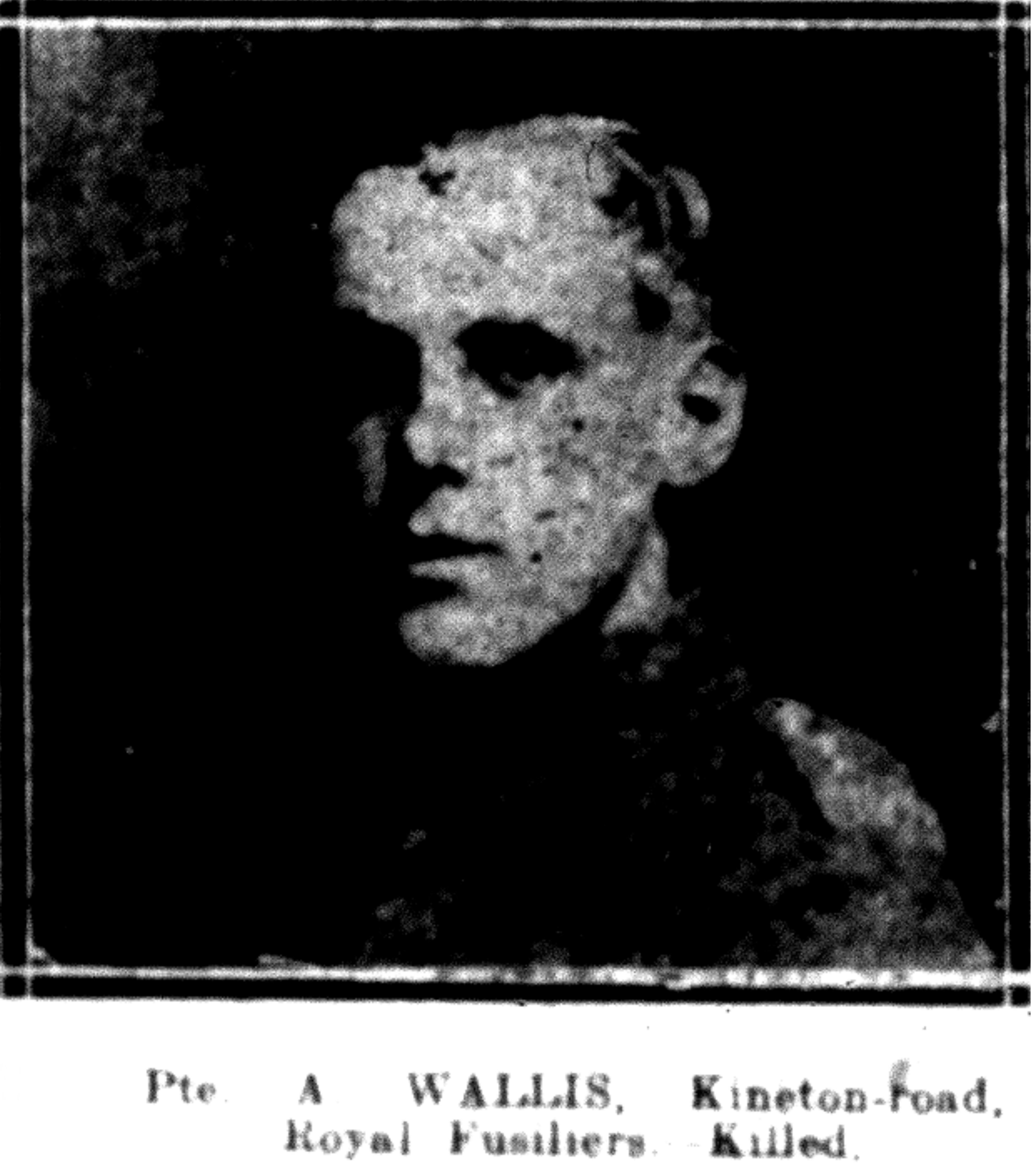
Image from the Oxford Journal Illustrated, 8 November 1916, p.6. |
Lived at 27 Buckingham Street and later at 6 Kineton Road.
Private with the 8th Battalion of the Royal Fusiliers, service no. 9683.
Commemorated on the Thiepval Memorial in the Somme, France. He has no known grave. |
Arthur Wallis was born in late 1896 in Oxford. He had a younger sister, Florence, and their father was originally a blacksmith but later a cycle-maker. Their mother died when the children were only six and four respectively. By 1906 they had moved to 6 Kineton Road; Arthur's uncles Thomas and Albert lived next door at nos. 4 and 2 and were cycle-makers as well.
|

Image courtesy of Bill MacCormick. Click here to see the whole photo. |
Lived at 19 Edith Road.
Private with the 1st/14th Battalion of the London Regiment (London Scottish), 'C' Company, service number 6406.
Commemorated on the Thiepval Memorial in the Somme, France. He has no known grave. |
Ernest Webb was born in the summer of 1889 in Oxford. He was one of ten children; his father Frederick was a blacksmith. By 1897 the family had moved to 19 Edith Road. Webb is a common surname in Oxford and there were at least three other Webb families living in Grandpont around this time, in Marlborough Road and in Western Road, (as well as others in New Hinksey), possibly all related. Ernest worked as a coal merchant's assistant. Two of his older brothers, William and Jesse, also fought in the War, but survived.
|
|
Arthur Lindal [or Lindley] WHITELEY 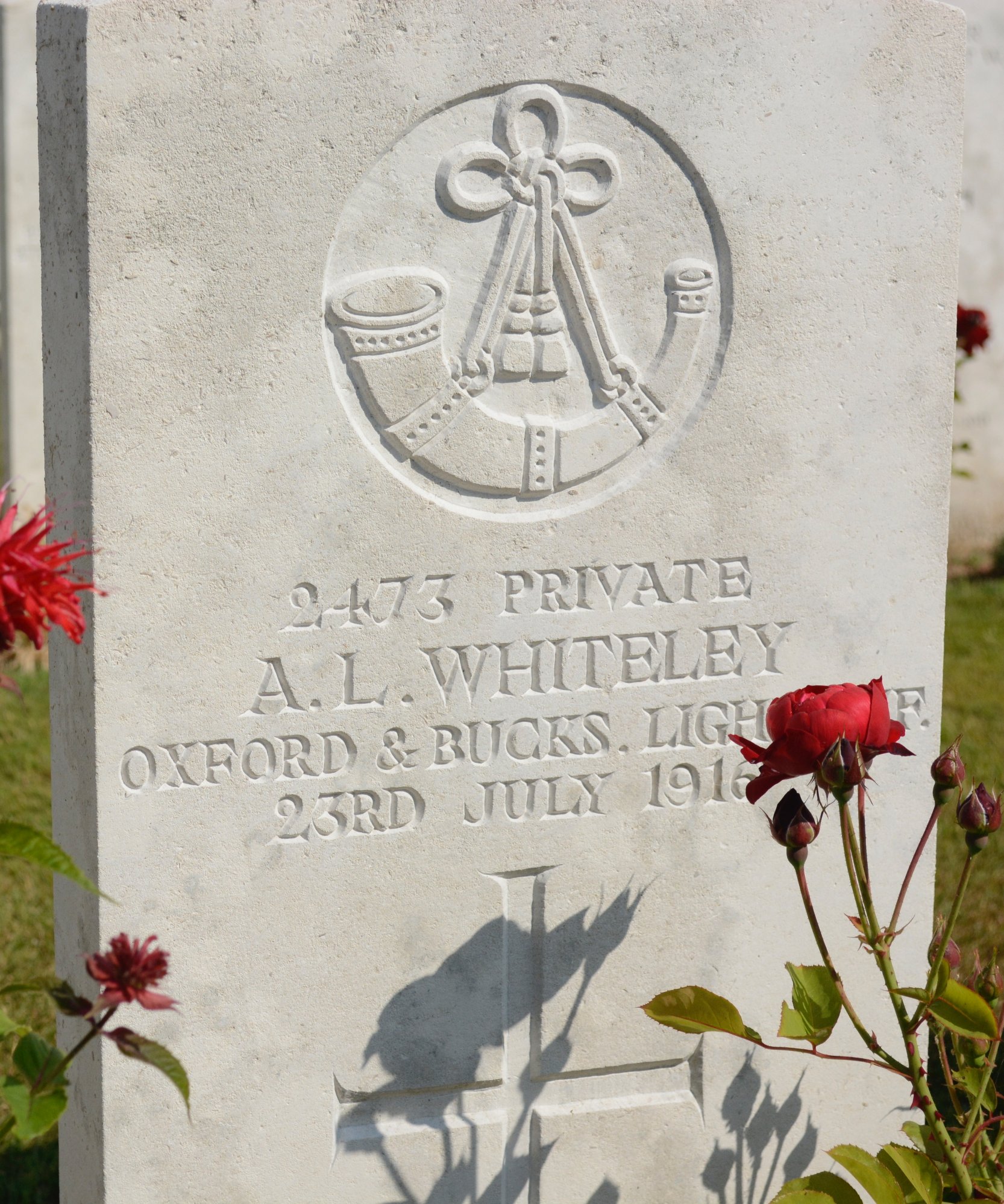
Arthur Whiteley's grave at Pozieres British Cemetery on the Somme, France. Image courtesy of Simon Haynes. |
Private with the 1/4 Battalion of the Oxf & Bucks Light Infantry, service no. 2473.
Buried at Pozieres British Cemetery, Ovillers La Boiselle, on the Somme, France. |
Arthur Whiteley was born in 1877 in Great Horton near Bradford in Yorkshire. When he was 14 he started work for the Post Office. A year later he joined the Midland Railway as an assistant porter at Ashwell Station on a wage of 6 shillings a week. He and his wife Amy lived in London and then on the Isle of Wight and had two children. It's not clear when (or indeed if) they moved to Oxford, nor why he is named on the St Matthew's war memorial (though he did serve with the Oxf & Bucks Light Infantry).
|
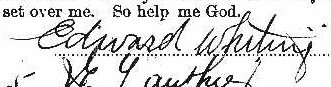
Edward Whiting's signature on his attestation (sign-up) papers for the Canadian Expeditionary Force, September 1915. |
Lived at 37 and later 122 Marlborough Road.
Private with the 14th Battalion of the Canadian Infantry (Quebec Regiment), service no. 120750.
Commemorated on the Canadian National Vimy Memorial near Arras in France. |
Edward Whiting was born in early 1881 in Oxford. He was the son of a tailor, Edward Whiting, and his wife Flora, a shirtmaker, who had eight children. Edward junior was a college servant. In 1911 he married Florence Hymus and had a daughter Eileen; they sailed to Canada in July 1913 and settled in Quebec.
|
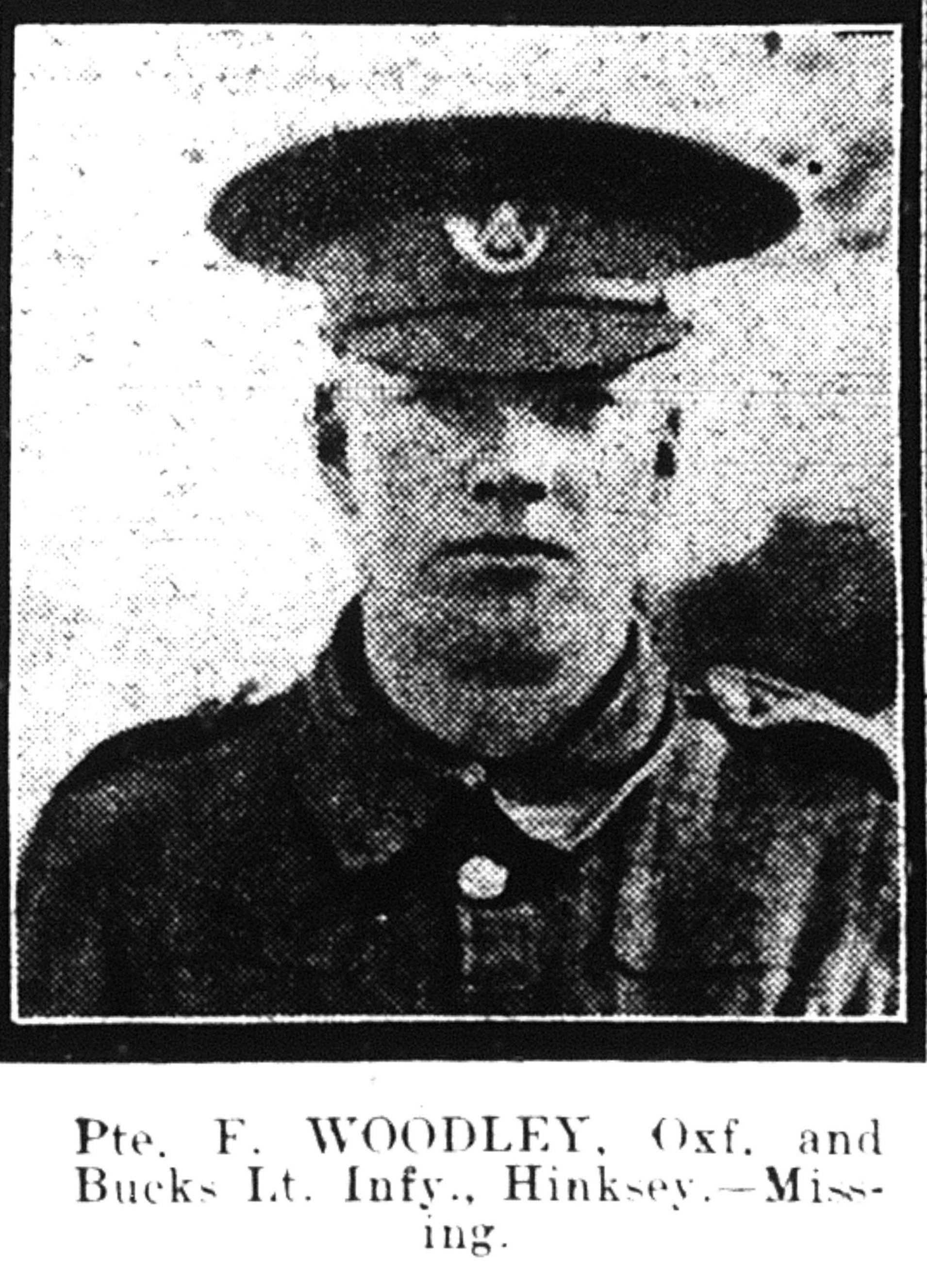
Image from the Oxford Journal Illustrated, 11 July 1917, p.6. The caption says that Pte Woodley was 'Missing' but in fact he had been killed 11 months earlier. |
His family lived at 236 Marlborough Road.
Private with the 1/4 Battalion of the Oxf & Bucks Light Infantry, service no. 201415.
Commemorated on the Thiepval Memorial in the Somme, France. He has no known grave. |
Frederick Woodley was born in St Ebbe's in October 1893, the son of a rag sorter, William Woodley, and his wife Mary. He was the younger brother of William Woodley (see below). Frederick and William joined the same battalion within a few months of eachother in 1915, and died together at the Somme.
|
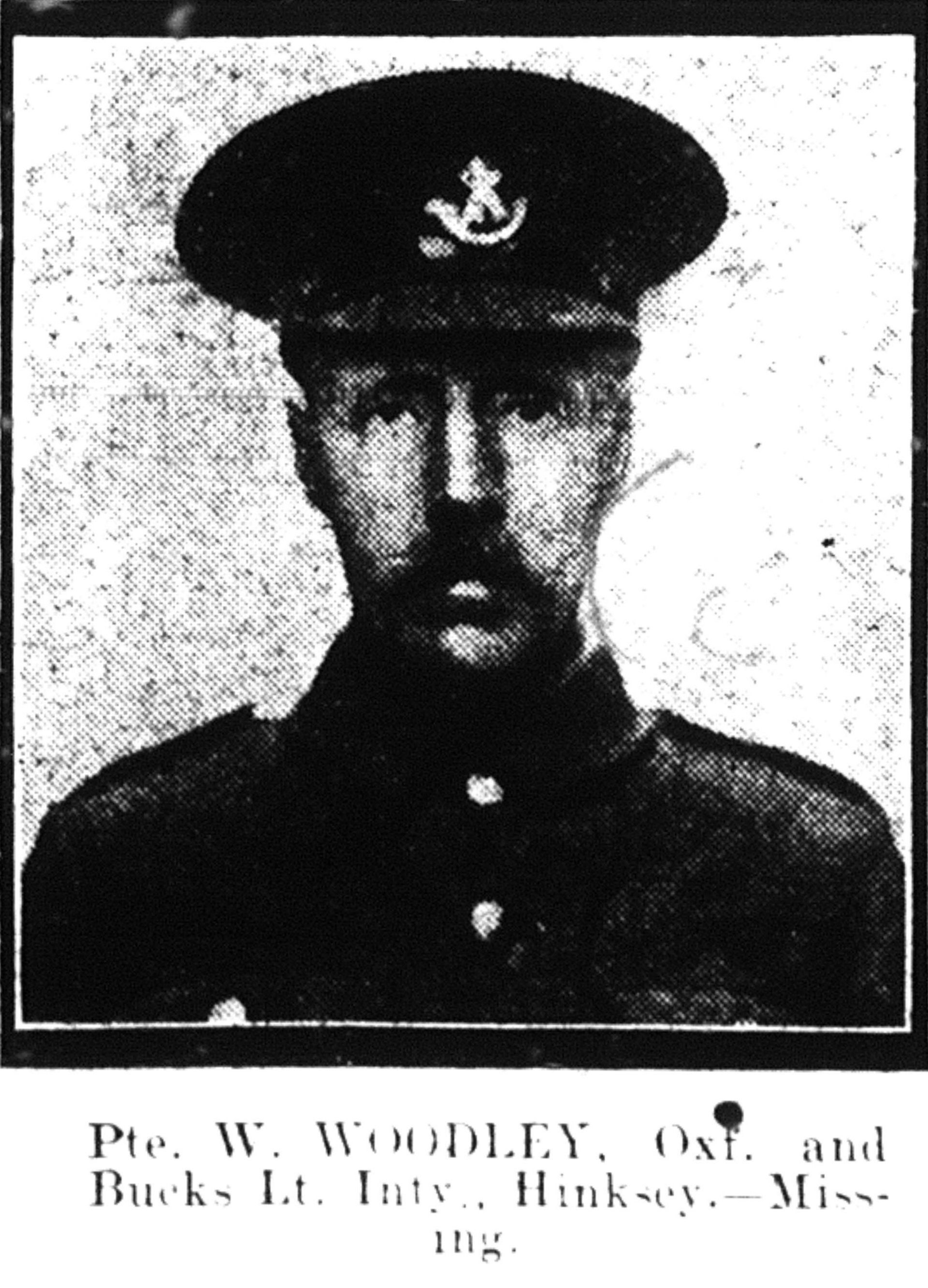
Image from the Oxford Journal Illustrated, 11 July 1917, p.6. The caption says that Pte Woodley was 'Missing' but in fact he had been killed 11 months earlier. |
His family lived at 236 Marlborough Road.
Private with the 1/4 Battalion of the Oxf & Bucks Light Infantry, service no. 202332.
Commemorated on the Thiepval Memorial in the Somme, France and buried at the London Cemetery and Extension, Longueval, France. |
William Woodley was born in St Ebbe's on 15 January 1884, the second of William and Mary Woodley's 13 children. He was the older brother of Frederick Woodley (see above). On leaving school he joined his father in the rag dealing trade, but by 1911 they had both become general labourers. Frederick and his brother William enlisted with the same battalion within a few months of eachother in 1915, and died together at the Somme.
|
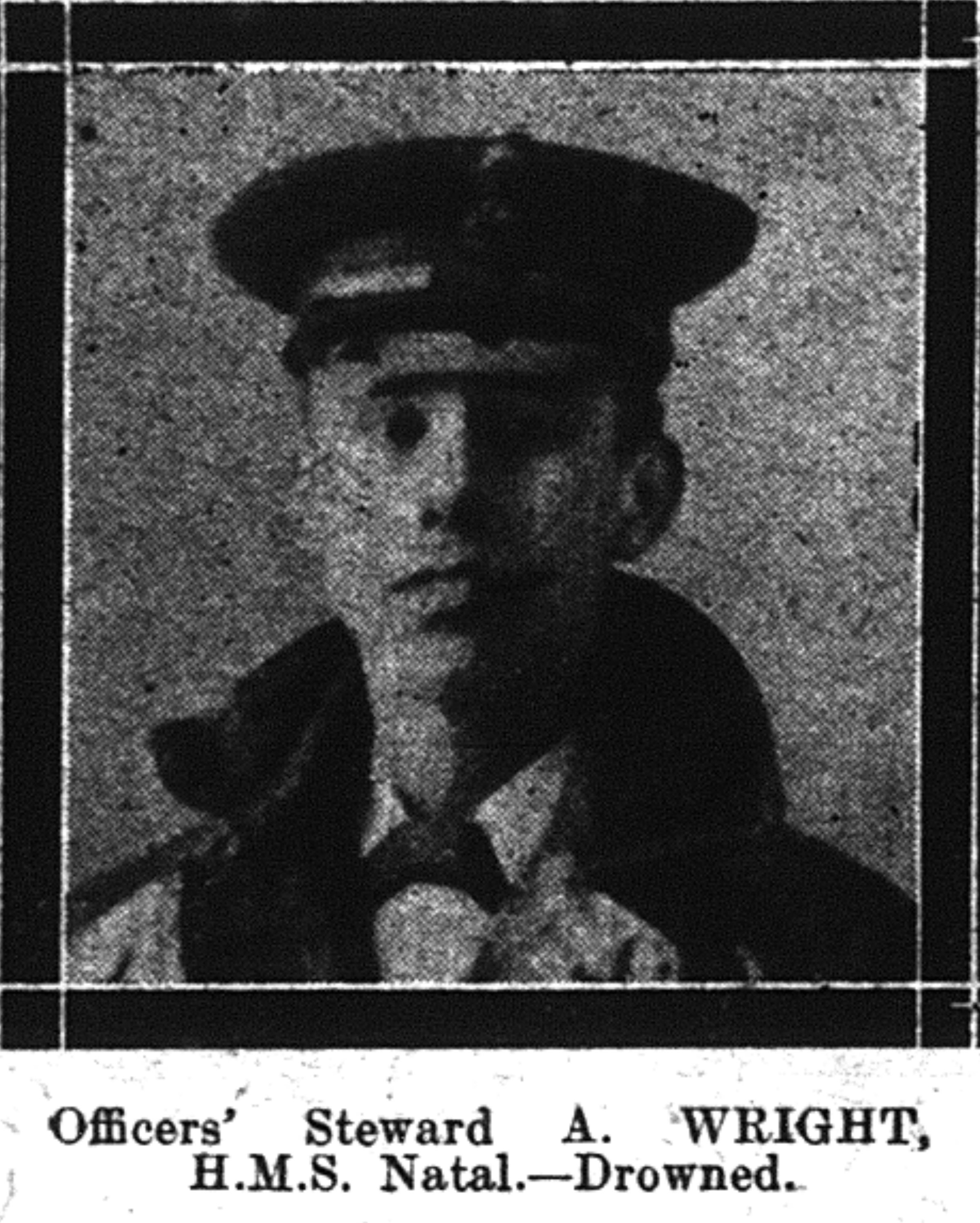
Image from the Oxford Journal Illustrated, 19 January 1916, p.6. |
Lived at 49 Marlborough Road.
Officer's Steward 3rd Class in the Royal Navy, service no. L/6016.
Commemorated on the Chatham Naval Memorial in Kent. |
Arthur Wright was born in St Aldates in March 1896, the seventh of the eight children of John and Mary Wright, and one of two brothers killled in the War (see Ernest Wright, below). Four of the couple's other children died in infancy. Even though they lived in Grandpont, the family were very much connected to St Aldates church and Arthur sang in the choir there and later joined the bell-ringing team. He was also a keen athlete and a good runner. When he left school he followed his older brother Ernest into the printing trade and became a compositor.
|
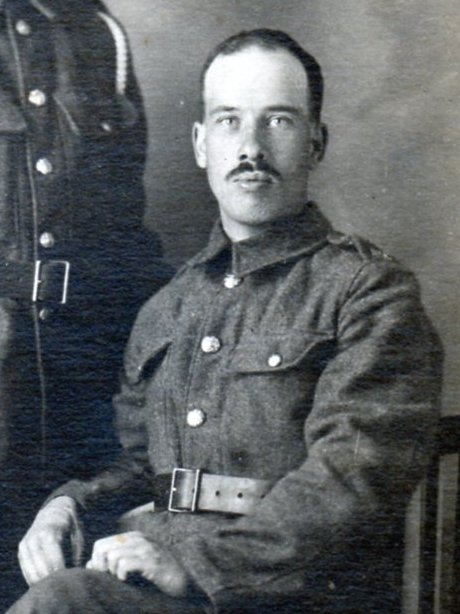
Image courtesy of Clive Browning. |
Lived at 49 Marlborough Road.
Lance Corporal in the Army Services Corps (Motor Transport), in the Mediterranean Expeditionary Force, service no. 131588.
Buried in the Baghdad (North Gate) War Cemetery, Iraq. |
Ernest Wright was the oldest brother of Arthur Wright (above). He was born in February 1887, the first of the eight children of John and Mary Wright. By the time he was 14 he was working as a porter in a bookshop. He later moved into the printing trade and worked as a compositor. On Boxing Day 1910, when he was 23, Ernest married Ethel Silvester and in February 1915 their son Reginald was born. In October that year Ernest enlisted with the army and joined the Mechanised Transport section of the Army Service Corps.
|
 Died of wounds on 11 May 1917, aged 27, in northern France.